The Dakota War Goes Digital

Every golden moment in my research career is tied to the feel of old paper beneath my fingertips. So I will be the last one to counsel researchers to settle for sources available on the Internet!

At the same time, having done almost all of my research the time-intensive way –making trips to research libraries –I welcome the digital age: images of manuscripts and other original documents available on the web.

The Sources tab on the navigation bar at the top of this page captures documentary sources (most of which I have consulted in their original form) that now are available digitized on the Internet.

The Minnesota Historical Society’s Dakota Conflict of 1862 Manuscript Collections — familiarly known in research circles as M582 –is the grand-daddy among the research links I’ve added so far. Not because it is authoritative. But because it is HUGE. And because it is composed of unpublished manuscripts.

The MHS Library catalog entry (linked above) says: “This compilation comprises a variety of small collections of letters, reminiscences, reports, diaries, and related materials dealing with Minnesota’s Dakota Conflict and related activities of 1862-1865. They primarily detail the personal experiences of both white and Indian participants or witnesses, including raids and killings, construction of fortifications, hostages’ experiences, the execution at Mankato of 38 Dakota, and the subsequent Sibley and Sully punitive expeditions into western Minnesota and Dakota Territory. A few items offer insight into the background and causes of the conflict…. These items were received separately or removed from groups of unrelated materials. Additional Dakota Conflict manuscripts that are intrinsically related to collections of personal or family papers remain with those papers and are not included here.”

Within M582, “Collections are arranged alphabetically by the name of the participant about whom they contain information, who may or may not be the author of the materials.” While this systems makes microfilm users dependent upon the indexing sense of those who cataloged the collection, digitization makes the collection even more accessible because it is now digitally searchable.

On the pull-down Sources menu, select MHS 1862 Manuscripts and use the digitized Catalog  to search for manuscripts of interest. Note the roll number for each item, then follow the links on the MHS 1862 Manuscripts page to the corresponding digitization.

A user note: Although the digital roll images are available from MHS as PDFs you can browse directly on your computer, the files are so large that loading and navigating are slow. The version hosted on archives.org is easier to use.

Posted in Doing Historical Research, Minnesota Historical Society | Leave a comment

Lamson’s Daughter Tells the Story of Little Crow’s Death

Two roadside memorials point to the place in Meeker County, Minnesota, where Nathan Lamson shot Little Crow on July 3, 1863.

Researching the beam story, I strayed upon a new telling of the story of Little Crow’s death related by Nathan Lamson’s daughter, Mary Elizabeth. Mary was 57 in 1913 when her story appeared in the Mankato Free Press on December 27, 1913:

“Mrs. Mary Elizabeth Lamson, 1011 Sixth street southeast [Minneapolis?], a daughter of Mr. Lamson, was a child of five at the time of the shooting and recalls many of the events of those exciting days.

“My father owned a farm about two and one-half miles from Hutchinson in the direction of Lake Belden, but we had abandoned the farm and were in Hutchinson with other settlers for protection against Indian attacks,” said Mrs. Lamson of the shooting of Little Crow. “Our temporary home within the stockade consisted of a covering of poplar poles with hay, and blankets spread over brush to form a place to sleep. So many families had fled to Hutchinson in haste without bringing food with them that the supply was short and I can remember crying myself to sleep because of hunger and dread of Indians.

I can recall seeing the Cross family, the mother and two little children* who had been murdered within a hundred yards of the stockade. In some way I eluded my father and went over to see them. They had not been scalped, simply chopped with an ax and I never forgot that awful sight.

On the third of July [1863] my father and brother Chauncey left Hutchinson to look after the stock which had been [clipping fragment missing]…. old fashioned muzzle-loading rifles so common in those days.

As they were following an old logging road which lay through heavy timber, my father cautioned Chauncey to be more quiet for there was always the possibility of an Indian lurking in the brush. Chauncey laughed at the idea, but did not finish his reply before he exclaimed, “There’s two, father.”

The men separated, one going into the brush at either side of the roadway. Little Crow and his son, the Appearing One, had been picking berries and saw my father and brother at the moment they were discovered. Both parties fired at the same time. None of the shots took effect and my father reloaded. At his second shot, he saw one of the Indians leap to his feet, cry out and fall forward. A second shot from one of the Indians wounded my father in the shoulder as he crouched in the bushes. The ball plowed a furrow about six inches in length across his left shoulder and caused him great difficulty in reloading his rifle.

Nathan Lamson crouched near the spot where he had entered the timber afraid to move because he feared there might be other Indians nearby. Chauncey crawled away after the second exchange of shots and returned to the stockade in Hutchinson about eleven o’clock that night. My father remained on the scene of the shooting until morning.

“Where’s my papa?” I demanded when Chauncey returned.

“Oh, he’s all right,” said Chauncey. “He’s out there in the woods.”

My mother fainted when my brother returned alone and I recall begging the rough old doctor who was attending her not to let my mother die.

At daylight my father returned to the stockade and a few hours afterward, Albert, my youngest brother, was born in the rude shelter of poplar poles we called home.

Soon after my father came in, bleeding and tired, the mounted soldiers from the fort lined up to go after the body of the Indian. I remember that an older brother of mine was second from the captain as they set out. When they returned they had the body of Little Crow on a blanket in the bottom of a wagon. With other children, I climbed up on the wheel of the wagon to see the Indian.

“Oh, look at the Indian my father shot,” I cried.

The body of Little Crow was placed near McGraw’s store where all the village might see it. He had been shot through the stomach. Of this I am certain for I heard my father repeat it many times. There was no wound or bullet hole in his head.

The body of Little Crow was buried near Hutchinson and I recall the men of the town starting out for this task. Years afterward Governor Merriam requested the guns of my father and Little Crow be sent down to St. Paul. Little Crow had a double-barreled shot gun, which is now in the possession of a brother of mine living in British Columbia.

My father was particularly bitter against the Sioux for a half-sister of mine, Harriet Adams, had been captured by a party of them and kept captive twenty-one days [fragment missing]…. Her young baby was [killed by] the brutes.

[Fragment missing.] …ways promised me Little Crow’s beaded moccasins which he took from the body, but these were lost….

Mrs. Lamson is one of the five surviving children of a family of 20. J.B. Lamson of Annandale, Minn., is the only one living in this state.”

I’ve never before heard that captive Harriet Adams was Nathan Lamson’s daughter and that her dead baby was Lamson’s grandchild.

I’ll be updating the text of this post to fill in the missing text when I have a chance to look up the microfilm and to follow the internal clues that the story was probably reprinted from the Minneapolis Tribune.

*Note on the “Cross family:” When I could not find any mother and two children surnamed “Cross” among the known dead in Meeker County, I checked with Curt Dahlin, who currently maintains the most comprehensive lists of identified dead. Curt suggests the description matches Mrs. Spaud and her children.

*****

Source: “Anniversary of the Hanging Thirty-Eight Sioux Indians –Daughter of Nathan Lamson of Minneapolis Recalls Stirring Pioneer Days –Slaying of Little Crow is Described By Mill City Woman” Mankato Free Press, December 27, 1913. Clipping from the Executions subject file at the Blue Earth County Historical Society.

Photo: Carrie Reber Zeman October 3, 2011.

The marker which today is scarred with dents from modern bullets, is located one half mile south of Highway 15 on County Road 18 in Meeker County, MN.

Posted in Little Crow | 18 Comments

It Started with The War in Words

On October 15, 2011,  Zabelle Stodola and I were on a panel on discussing the challenges and rewards of interdisciplinary work on Indian captivity narratives at the Western History Association annual meeting in Oakland, California. This is the story we shared about why we brought A Thrilling Narrative of Indian Captivity back into print after 149 years of obscurity.

*****

“A Literary Scholar and a Historian Co-Edit A Thrilling Narrative of Indian Captivity by Mary A. and John B. Renville (1863)”

 Western History Association, October 15, 2011.

Zabelle Stodola’s Comments:

“In 1989, I began work on a book called The War in Words: Reading the Dakota Conflict through the Captivity Literature which was published ten years later by the University of Nebraska Press. My idea was simple: as a way of charting changes in the captivity narrative genre, I would focus on the captivity narratives generated by a single US-Indian war. I was familiar with a few narratives from the US-Dakota War of 1862, a bitter and brutal six-week war fought in Minnesota during the early days of the larger Civil War, and I knew that the people involved interpreted and remembered the war very differently. So I liked the fact that I would not produce a master narrative, but rather analyze a series of competing but, I would argue, equally valid perspectives. I was also interested that some of these captivity narratives were by and about mixed and full blood Dakota as well as by and about European Americans.

But as I quickly discovered when I visited first the Newberry Library and then the Minnesota Historical Society to do archival research, if my idea was simple, the US-Dakota War was and is both complicated and (still) contested, almost 150 years later. As a literary scholar, I am used to working with historical data, but I am proud of the fact I am not a historian and that I am quite comfortable with ambiguity! Actually, I relish it. However, in this instance, I realized I had better get my history right, or at least, as right as it could be, partly because so much misinformation about this war has been bandied about and exploited for propaganda.

Enter Carrie Zeman, an independent historian working on aspects of the Dakota War, to whom I was introduced by then resident historian at the Minnesota Historical Society, Alan Woolworth….”

To read the rest of Zabelle’s comments, and mine, go to “The Story of the 2012 Edition” on the “About the Book” tab.

Posted in A Thrilling Narrative | Leave a comment

The Next Chapter

Sunday April 29, 2012, the Mankato Free Press ran a pair of articles (see the “In the News” tab at the top of this page) opening  the latest chapter in the story of the mystery beam at the Blue Earth County Historical Society. Based on the old photo of the beam shared by MHS and the documentary evidence I summarized in my Execution Artifacts Report (permanently filed under “Research” above) BECHS now believes their beam is the same one John F. Meagher donated to the University of Minnesota in 1881.

Does that mean that this beam is from the 1862 gallows? Meagher made that claim for his beam and at this point, I have no concrete reason to doubt him. So my working hypothesis is that the beam’s attribution is genuine.

But in 2012, we don’t have to take Meagher’s word on it. BECHS has announced it will lead scholarly research based on the best evidence: the beam itself. That’s exactly the outcome I hoped for and I’m pleased.

BECHS has devoted a web page to their research on the timber so the public can follow along.

They’ve also asked me to help. I’m happy to. This is what public history is all about.

Posted in Blue Earth County Beam | Leave a comment

The 19 foot by 9 inch Splinter

This week I finished my first-pass research  on the execution artifacts, including my findings on the beam reputed to be from the gallows that executed 38 Dakota men in Mankato in 1862:  Execution Artifacts Report in PDF form, “A Veiled Cabinet of Curiosities: A preliminary report on Minnesota’s 1862 execution artifacts.”

This is the photo that cracked the mystery:

The reverse side of this photo reads, “Beam from Scaffold where 38 Sioux Indians were hanged, Mankato, Minnesota, December 26, 186[sic] original timber in museum at University.”

It is obvious that people are captivated by the story of this artifact. Even if most of America has never heard of this controversy, it has consumed thousands of words in debate in articles and editorials and letters to the editor in the Mankato Free Press, the newspaper that broke the story of the controversy. A dozen historians and archivists at four institutions have  gone out of their way to materially contribute to my research –unprecedented cooperation. I spent a month I might have spent doing a dozen other things researching and writing the report.

Why?

If I was cynical I would posit self-interested motives: the desire of some to reinvent their public image and/or to emerge from the controversy with their donor base intact. Others, perhaps who feel they were deceived and manipulated, may wish to publicly vindicate themselves.

I suppose those who are cynical will question whether I waded in because the book I edited has just been released. For the record: my inquiry has been driven by the timing of MHS’s 1862 exhibit development, and the timing of BECHS’s recent revelations about their timber.

But beneath all of the potential motivators, I think this huge artifact has taken on a modern life of its own because, as I concluded my report, “The story of 1862 gallows beam still festers beneath the state’s skin like a 19 foot by nine inch splinter.”

One hundred and fifty years later, we’re discovering that the stories we’ve all believed about 1862 are closer to being kissing cousins with Paul Bunyan and Lake Woebegone than they are to being established historical fact. It is deeply unsettling to understand that we’ve all been duped by sources we trusted to give us the straight story.

After all, we consume media every day. If a news outlet reports an object is 24 feet long by one foot square, the specificity leads us to believe the reporter or someone he interviewed used a measuring tape, right? What if the reporter simply estimated?

We also all depend upon historical organizations, the institutions that in our broad social contract we’ve tasked with being the keepers and purveyors of historical memory. We expect them to supply the information we need to help us to consider our collective stories.

For example, up until now we’ve understood that the President of the Blue Earth Historical Society (BECHS) in 1927 deemed this beam a genuine artifact of such historical significance that he went out of his way to bring it back to Mankato. Now we must also consider the facts that the President of BECHS in 1927 was the son of one of the men who built the scaffold and as a six year old was an eye-witness to the mass execution.

How does this change the received story? It significantly complicates it.

We’ve never looked at the mass execution as the period equivalent of the first men walking on the moon or Princess Diana’s wedding: a spectacle so significant that parents in the 1862 crowd hoisted young children onto their shoulders to give them a clear view of the gallows and admonished, “Remember this. It is a sight you’ll never forget.”

That’s one of the reasons this piece of wood has such power: 150 years later, it carries more angst than the deaths of the ten men said to have been executed on it.

Until now non-Native Minnesotans and Dakotas alike have tended to view the 1862 gallows as a monument to what they did to us. In 2012, both sides are being asked to consider what we did to them.

The truth cuts painfully deep both ways.

*****

Photo credit: Institutional files, the Minnesota Historical Society. Photo discovered by Benjamin Gessner of the Minnesota Historical Society and used with permission of MHS.

Posted in Blue Earth County Beam, Opinion | Leave a comment

“The scaffolding must have been sufficient to build the state capitol”

Truth be told, one of the reasons I love doing history is that there’s always something new just around the corner. Today, filing sources that I pulled to write about the execution artifacts, I encountered two more newspaper clippings about the burning of the 1862 scaffolding timbers.

Both clippings are from the Pay Family subject file at the Blue Earth County Historical Society. I found them only because I was interested in Benjamin D. Pay and his son, William H. Pay. But these clippings are highly relevant for the story of what became of the majority of the timbers re-purposed from the 1862 gallows.

Or, in this case, William H. Pay says, what didn’t happen to the timbers.

This article, like the one I previously cited, is dated July 23, 1896. But this one is from the competing paper, the Mankato Free Press. There’s another tip about doing history. If a newspaper makes a sensational claim and it is a two- (or more) paper town, chances are you’ll find another editor trying to correct the other paper’s stories.

So here’s the Free Press version of the story about the 1896 fire in the old warehouse at Second and Walnut streets. The competing paper’s story is the second article transcribed here.

OLD LANDMARK BURNED

Something of Its Early History –Want [sic] be Rebuilt

“At about ten o’clock last night the old frame building at the corner of Second and Walnut streets, nearly opposite the opera house, was discovered to be on fire,and the department was called out. The building was so badly burned, being nothing more than tinder, that the remains were pulled down. There are suspicions that the fire was of incendiary origin. The building was among the oldest in the city, the last purpose to which it was put being a cooper shop, blacksmith shop, and paint shop. It has not been used for some time and was of no value.

The burned structure was erected in the spring of 1865 by B. D. Pay, and was used by him until 1870 as a livery barn. It was strongly built of native lumber, oak, elm and basswood. In 1870 Mr. Meagher purchased it and has since rented it for various purposes.

Mr. Meagher, who owns the property, intends to tear down the remains of the building, and will not rebuild at present. The old building was not worth insuring.

Someone asked Mr. Meagher for permission to burn the building up on the night of the fourth of July, to add to the illuminations, but Mr. Meagher informed him that there was a severe penalty attached to setting fire to buildings in the city limits,even if he had been willing to have the building burned.”

Five days later, On July 28, 1896 a short notice in the Free Press noted:

“The relic hunters who imagine they are getting a part of the old scaffolding on which the Indians were hung, in the remains of the of building that burned last week, are way off. W. H. Pay, whose father built the barn, says none of the scaffolding went into the building. The scaffolding must have been sufficient to build the state capitol, to judge the reports of different buildings in which it was put. Like the rope used to hang Guiteau, there is no end to it.”

 So there you have it. My report isn’t even public yet and I’ve already revised one point: the end of note 28 on page 34. Like I said, there’s always something new around the corner.

[“Guiteau” was Charles Guiteau, who assassinated President Garfield in 1881 and was executed by hanging in June, 1882. According to this period newspaper story Guiteau’s executioners received unsolicited donations of hanging rope sufficient to hang many men.]

Posted in Blue Earth County Beam, Doing Historical Research | Leave a comment

“The No Win War”

The May 2012 issue of Minnesota Monthly magazine contains a well-written article by Gregory J. Scott about the controversy of commemorating the U.S.-Dakota War of 1862: “The No Win War.”

If you are new to the subject –as I was twenty years ago despite having grown up in Minnesota –Scott’s article is a great introduction to the modern story. If you’re an old-timer, you’ll welcome the look inside the Minnesota Historical Society as they grapple with the ramifications of their institutional history.

If you are a Minnesotan or are interested in Minnesota history, this is not just an institutional story. It is our story. The Minnesota Historical Society, charged by the Legislature to be the collective memory for the state, has not been an objective, dispassionate collector and purveyor of history.

For historians like me who have been quietly documenting the fallout of these institutional policies for decades, thoroughly convinced from our past experiences that MHS would never cooperate with outing its own stories, this new era of cooperation and transparency is disconcerting.

But it is very welcome.

The Minnesota Historical Society just ditched plain-vanilla history to feature Rocky Road.

Posted in Commemorating Controversy | Leave a comment

Up in Smoke, Twice?

I’m writing a paper on the provenance of a collection of 1862 execution-related artifacts, inluding the mystery beam in Blue Earth County and have a pile of sources on my desk to digest, including a newspaper clippings file.

Clippings files are a staple  in research libraries and in private collections. Researchers (volunteers or staff) looking up something else, say an obituary or an event in a newspaper, happen to see something of unexpected interest. So they copy the incidental story and file it by subject. Then the next time someone asks a question like, “What do you know about John F. Meagher?” the library may have a ready-reference: a clippings file on that subject.

Files of newspaper clippings are tricky to use as sources. They are typically not exhaustive studies. Instead they catch fragments of a story the way the high-tide line on a beach catches flotsam from the ocean. When we create clippings files, we are like beachcombers collecting the interesting things we encounter on our daily walk on the beach.

The resulting collection can be fascinating. But even when a clippings file was created by a historical organization or an esteemed historian it is merely a jumping off place for in-depth research, not the jackpot at end of the research rainbow.

Paging through the clipping file on the beam created by the Blue Earth County Historical Society, augmented by some clippings from Alan Woolworth’s research files and passed on to me by a colleague who shared his own research, I found a classic example of the limitations of clippings files.

I want to share the problem I unexpectedly encountered because it is so common in the history world and the solution is not what inexperienced researchers tend to do: jam the facts together to make a story reconcile the way they expect it should.

One of the clippings on my desk, dated July 1898, reported that an old warehouse belonging to John F. Meagher’s estate had just burned down. With it, the Mankato newspaper reported, the last relics of the 1862 scaffold went up in smoke: the beams from the gallows Meagher had used to frame the building.

That story was familiar to me: somewhere in the file I remembered the same story as reported by the competing Mankato newspaper. I located the other clipping and began scanning to see if it had reported anything materially different.

The first thing that caught my attention was that in the second clipping, the warehouse was reported as belonging to Meagher, not to his estate. The next thing I noticed was that the fire was reported as being spotted at 10:00 PM at night, not at 5:00 PM (which in Minnesota in July is bright daylight) and there was no mention of connecting buildings that had burned at the same time.

That sent me back to the date written on the clipping. To my surprise I found the second clipping was dated two years and three days earlier than the first one. I checked my biographical information on Meagher. He was alive in 1896, the year of the earlier fire. He died in 1897. So the following year, the clipping dated 1898 correctly referred to the building’s owner as Meagher’s estate.

The problem: two newspaper stories dated two years apart welcomed the loss of an ancient wooden fire trap –by this time, almost all of Mankato’s original log and frame structures had been replaced with brick and stone buildings –and both nostalgically noted the loss of the gallows timbers.

How could one building, John F. Meagher’s gallows-framed warehouse, burn to the ground twice in two years?

It probably did not.

The simplest possibility is the easiest to check out. The photocopy of the 1898 story (pictured above) includes the newspaper’s original banner and date at the top of the page. The 1896 story was dated by the person who clipped it. The handwritten date could be a mistake and the two stories, despite the differences in reportage, could refer to a single fire in 1898. I can check that by looking at the reels of microfilmed newspapers.

However, it also seems possible that the legend of Meagher’s warehouse might have outlived its demise in 1896. After Meagher’s death, when another of his warehouses burned, that second conflagration might have elicited the same old story: virtually the last traces of the 1862 gallows had just gone up in smoke.

Or, if I can verify the clipping dates and find some corroboration for other details reported, Meagher may have re-purposed the scaffolding timbers in two different structures (not one) which burned two years apart.

Of course, one timber is rumored to have outlived the rest: the beam in storage in Blue Earth County. As these newspaper clippings show, the real story may be more thickly shrouded in myth than the beam under wraps in its white sheet.

For the Blue Earth County Historical Society’s position on their beam and measured photos of it, see their web page 1856 Military Bridge Timber.

*****

My transcriptions of the two newspaper stories:

[Mankato Weekly Free Press July 29, 1898]

BIG BON FIRE.

OLD SHACKS MAKE FUEL FOR THE FLAMES

Four Old Frame Structures Cleared Out by Monday’s Fire

–Mankato’s First City Hall Was One of Them

–Gallows Timber is Destroyed

–Twelve Buildings Were on Fire at One Time

–Narrow Escape of the Milwaukee Freight Depot and Other Buildings

Mankato narrowly escaped a great conflagration Monday afternoon. Had the winds been blowing in any direction great damage would have been done, and it was, remarkably good work by the fire department was the only thing that prevented a disastrous spread of the flames. The old wooden buildings that encumbered one of the alleys furnished fuel for a hot fire, and the experience should not be lost, for the council should at once take steps to condemn all similar dangerous fire traps in the vicinity of business property….

The fire was discovered about five o’clock by John Frescholtz, who shouted to a bicycle rider to give the alarm. Mr. Fresholtz had just driven into the alley to put up his horse in the barn back of his mother’s store. When he opened the door of the barn, he saw fire coming through the board partition that separated his barn from the one used by Benack & Harris. The fire was then under much headway. Mr. Frescholtz states that the fire seemed to come in with a rush, as though driven by an explosion….

An alarm was turned in from box 26, but before the fire department could arrive the buildings were a mass of flames. They were as dry as tinder and warmed by the sun, and ready to go off in a flash as soon as fire should touch them. Just north of the Benack & Harris barn was a warehouse used by the firm, separated from the barn by a board partition. This made three buildings built together, each separated from the other by a board partition. Some twenty feet north of these buildings was large frame warehouse, also occupied by Benack & Harris. All four of these buildings were destroyed, the first three being burned to the ground.

The fire was a hot one, and the roofs of the adjoining buildings in every direction were set on fire. At one time, twelve buildings were on fire in this way….

A large number of streams of water were turned on the fire and on adjoining buildings….

Benack & Harris saved their horse and wagon, but lost a cutter, a can containing 50 to 100 gallons of gasoline, a can containing 50 to 100 gallons of kerosene, both cans being in the small warehouse next to the barn, 100 bushels of charcoal etc. Furnaces, stoves and other hardware were flooded by water and injured more or less. Mr. Benack put the firm’s loss at $300 to $400 with no insurance.

Mrs. Fresholtz’s horse and buggy were saved. She lost a barn, corn crib, farm machinery etc. The loss is estimated at $450. She formerly carried $500 insurance, but had dropped it.

Three of the burned buildings belonged to the Jno. F. Meagher estate and probably $500 would cover the loss….

Historic Buildings

One of the warehouses destroyed was at one time the town hall of Mankato. It was built in 1857, and was a substantial two-story structure, with a second floor used as a hall. The late Jno. Meagher owned the building and had his store on the first floor. When Mr. Meagher built his new brick block, he moved the old frame building back to the alley and used it as a warehouse.

The gallows upon which the thirty-eight Sioux Indians were hung was used as timbers for one of the warehouses that burned, according to James Shoemaker.”

*****

[Clipping identified: “M. R. July 23,1896”]

PIECES OF THE SCAFFOLD

Were in the Old Warehouse Burned Last Night

THE INDIAN HANGING RECALLED

John F. Meagher Bought the Scaffold at Auction And Some of Its Uprights Were Put Into the Warehouse

–Relics Worthy of the Name

–A Vision of Early Days

“Fire last night destroyed the old frame building at the southwest corner of Second and Walnut streets, belonging to John F. Meagher. The structure has not been occupied in years and there was no insurance.

The origin of the fire is only a matter of speculation. A passerby noticed the flames at about 10:00 p.m. and within five minutes the entire structure was enveloped in smoke and glare. The hose was turned upon it and the surrounding property protected from danger and with hooks and pikes the shaky framework was pulled to pieces.

This old hulk is one of the few of the rapidly disappearing landmarks of early days. It was built in the winter of 1863 by Mr. Meagher, who was at that time buying grain on the streets of the little town. There were no railroads and he used the place as a storage house from fall to spring.

In the building are half a dozen timbers which formed the uprights of the scaffold upon which the thirty-eight Sioux Indians were hanged. Immediately after the execution a government quartermaster came up from Quincy and sold the scaffold at auction, and Mr. Meagher, being the highest bidder purchased it. The cross beams were used in Mr. Meagher’ hardware store which occupied the ground upon which the H.C. Akers ‘ hardware store was built. When it gave way to the modern structure Mr. Meagher sent one of the beams, with the notches upon which the ropes were tied, to the state university.

On the second floor of the old hardware store was the city hall,and for years it was the only place for public meetings and entertainments. Vice-president Colfax and Galusha A. Grow, the well-known Pennsylvania congressman, delivered political orations in this hall during the summer of 1859.

The destruction of the old grain warehouse last night was perhaps a matter of congratulation to the new generation, but to the pioneer, to whom it conjures up a picture of years agone, it is an occasion of genuine sadness and regret.  The historical beams are mixed up in the charred ruins that lie across the street, but they may be easily singled out by the dark color and the peculiar hardness of the wood. They are four inches square and sixteen feet long, and anybody who has a sharp jack-knife can procure a relic that will be highly prized as time goes on.”

Posted in Blue Earth County Beam, Doing Historical Research | Leave a comment

What We See is What We Think We See

In history, as in life, what we see is what we think. Or maybe more precisely, what we see is what we think we see.

Have you ever brought home a piece of fruit from the grocery store only to discover a bruise that was hidden by your hand when you were turning the fruit this way and that in the store? The perfect melon that appeared worth the price fifteen minutes ago actually has fast-creeping rot.

What we see is what we believe as long as other possibilities remain hidden from our view.

A month ago, I introduced you to the story of the Blue Earth County (Minnesota) Historical Society’s much-storied beam, which for almost a century has borne the reputed identity as a fragment of the state’s True Cross: the scaffold that executed 38 Dakota men in Mankato, Minnesota on December 26, 1862.

As that post outlined, BECHS now disputes the legitimacy of that identification. Their accession books show another timber, a piece of a bridge, accessioned around the time they acquired the scaffold beam. But the possession of two timbers is beyond the memory of any living person. Today BECHS has only one beam.

Within the past ten years, BECHS has denied at least one white historian access to its beam on the grounds that it is from the scaffold and therefore falls under NAGPRA protections. But now BECHS has determined this Native American funerary object is merely a bridge timber.

You could probably tell from the tone of my post that I’m not satisfied with BECHS’s conclusion. This is not because I have trump cards up my sleeve proving the beam is indeed from the scaffold;  I don’t.

Rather, that bridge-beam conclusion is just too convenient to go unquestioned. It deflects public attention at the very time media everywhere will be revisiting the story of the largest mass execution in the history of the United States –upon its 150th anniversary in December, 2012.

In other words, BECHS may be seeing what it wants to see.

I would like to see outside historians to weigh in on the question. (Several years ago, someone pitched the beam story to PBS’s History Detectives. Instead, the producers chose to investigate a teaspoon engraved with an image of the 1862 executions.)

Here’s what I think: This question of the notches in the beam –the artifacts which led BECHS to the bridge conclusion –may be a historical red herring. It could be irrelevant evidence, not key.

1.) Meagher, the original owner of the beam, according to old Mankato newspaper stories, purchased the entire scaffold at auction in 1863. The majority of the lumber in the scaffold (depicted above),  was not notched for rope –although presumably all of it bore other cuts and holes from joinery. Meagher used the auctioned timbers to frame an addition on the back of his hardware store.  This means there were many piece of lumber in Meagher’s possession that legitimately were part of the scaffold.

2.) Among the many scaffolding timbers, only four 24-foot long pieces likely were notched for ropes.  So the question of whether any of the multiple notches in the BECHS beam might have been created for ropes –BECHS’s chief reason for discrediting the scaffold identity –may be irrelevant. BECHS’s 19 foot piece may be a genuine relic of an un-notched part of the scaffold, with the extant notches simply marking its re-purposed uses over time.

3.) It is true that the notches have long been attributed to those carved for the ropes. But that would be logical. Seeing any notches in a beam said to be from the scaffold, people would naturally imagine the notches once accommodated nooses. That conclusion, then, seems to authenticate the claim for the timber.

My conclusion:  it is possible the timber is true relic of the executions even if further investigation disproves the theory that any of the extant notches were created for noose ropes. There are simply too many avenues of inquiry yet to be explored. Like the species of wood in the beam, the diameter of the noose rope at MHS, and this beam’s provenance prior to its return to Blue Earth County in 1927.

What we see is what we think we see. From what I can see, we need to gather more evidence before we know we think about this beam.

*****

Photo credit: “Mankato Hanging Monument,” in Plains Art Museum, Item #49.

Illustration credit: painting by J. Thullen, 1884, in the collections of the Minnesota Historical Society, Google Images.

Posted in Blue Earth County Beam, Opinion | 1 Comment

Ite Maza Speaks

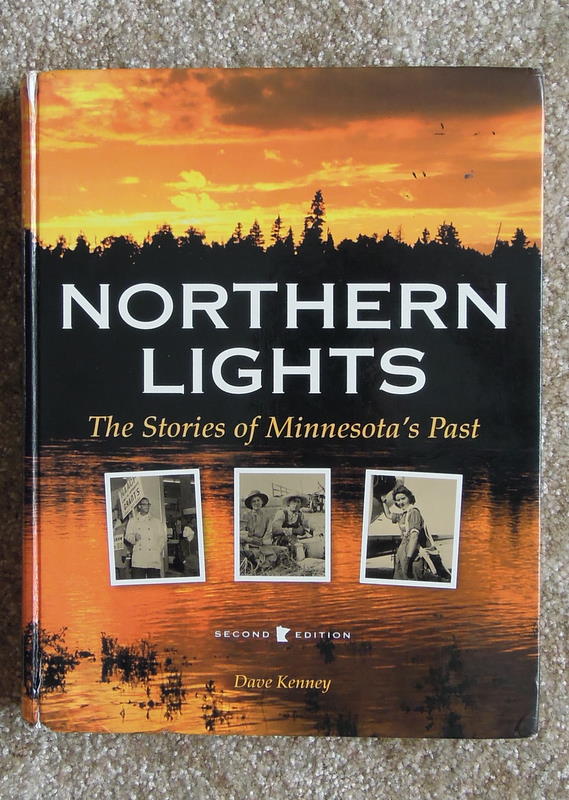
I’m rounding up primary sources for my daughter’s sixth grade history teacher to supplement Northern Lights: The Stories of Minnesota’s Past (Minnesota Historical Society Press, 2003). Sixth grade isn’t exactly the coolest time to be proud of your mom, except when she just wrote a book about the next topic in your history book :).

My choices for supplementary primary sources on the U.S. Dakota War of 1862 (Chapter 9 in Northern Lights) are not texts written for sixth graders, although I hope they find them accessible. Rather, I’ve chosen texts that nuance the story we’ve all inherited.

First up, the oldest recorded text on my list: a rumination on the choice some Dakota people made to give up the hunting and gathering life ways of their ancestors, and to take up Euro-American-style subsistence agriculture. In sixth grade terms: Why would some Dakota choose to turn from hunting to farming to feed their families?

What does the decision of some Dakota people to become farmers have to do with the Dakota War? Farmers were among the leaders of the Dakota opposition movement known as the Peace Party. As I develop from their recollections of the war in my introduction to A Thrilling Narrative, the Dakota farmers who actively opposed the war were also fighting for Mni Sota Makoce.

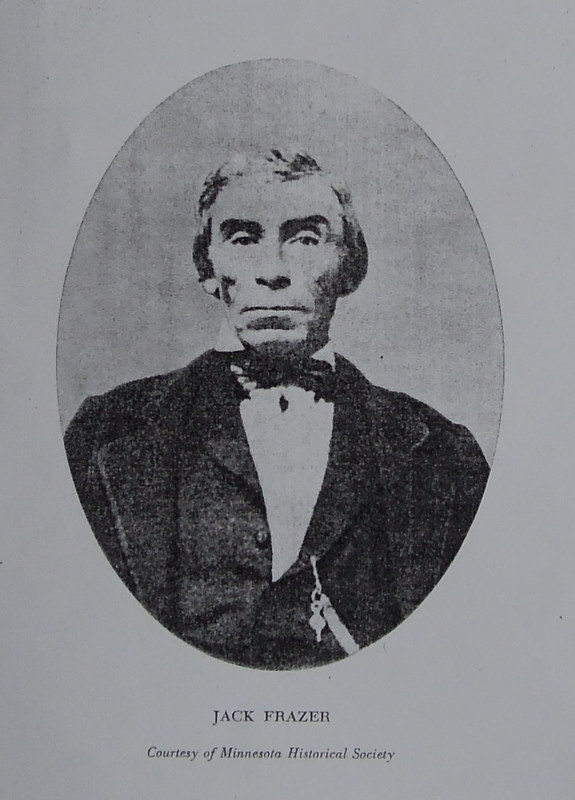
Ite Maza (Ee-tay Ma-za), whose English name was Jack Frazier, was not a member of the Peace Coalition. He was not on scene, having escaped with his wife from his home at the Lower Sioux Agency, where he working as a trader’s clerk, to Fort Ridgely the afternoon of August 18. Even so, his words are important because they are among the earliest extant speeches written in the Dakota language (recorded c. 1839) and reflect his thinking at the time he was leaving traditional ways of subsistence.

One hundred years later, Dakota linguist Ella Cara Deloria traveled to the Minnesota Historical Society where she copied several hundred pages of Dakota language material from the Riggs and the Pond Papers. She later translated it for Franz Boas, whose papers, including Deloria’s translations, came to rest in the archives of the American Philosophical Society in Philadelphia where I copied them in 2005.

*****

“In the long ago, there was desperation; and so men pitiably attempted to make life possible; and behold they saw that whatever they pierced with… arrowheads of bone and stone died; and so they did not let go of [making] them. But in those times, the beasts that walked the earth were very plentiful; in those times beavers in hordes filled all the bodies of water wherever water lay; consequently, life was possible; they kept alive.

Today, even if someone tried to live in that way, he would fail, he could not live, and he would meet with hardship…. [N]ow man can live now only from working the soil, planting; aside from that there is nothing possible to live by. Now then, that is the way it is; nothing exists beyond and better; that is all. He who honors the soil, thereby makes a man of himself to a far greater degree….

But you say, “Who in the world would follow the way of the Big Knives, and achieve anything thereby!” This you are wont to say; and all white men, Big Knives (Americans) and all, are not wise, you are wont to say; and they are foolish, as grown up as they are, yet childishly they gather firewood and plant gardens, and labor like women, you say, and you ridicule them. But, O Pshaw! That rather is not right; you yourselves are the greater fools! In that you depend only on the women, and you consider the white men’s and Big Knives’ customs as ridiculous….

Yet when they meet you they think, “Ah, poor thing, I guess I’ll give him some food.” But then when you come outside again, having filled up your bellies, you give some shouts; but if there was any sense in you, you would look about you, and if you did, you would observe some beings very huge, and in that case, you might say, “These things are cattle…[c]ome on all, someone shoot one dead, that we may eat it!”

It is your Dakota way, that all you can do is wish for the killing of things. That is the one thing you do naturally, as you grow up; you have wisdom for that. Why shouldn’t you be like that? Your forebears grow up in that same way. All things take after their parents that is why you are as you are.

Take the beasts of the field, they also grow as they do, the mother, eating grass, is seen doing it by the young, and that is what he comes to take for granted. And because he grows up like his parent, he pins his faith on the thought, “Only by means of grass can I live.” And he does not put his trust in anything beyond that. He grows up with his eyes turned to the ground, yet he, though an animal, lives well…. It would seem he has made gardens all over the earth, for he lives suffering for the lack of nothing. But when he must suffer, he does suffer. The earth is very possibly undergoing change. It is alarming. Now in turn, all the grass is withering away; and so, though it once seemed that the beasts of the field had great gardens all over, when the snow covers all, then they suffer.

Now, therefore, men living on earth can only practice labor; and urge themselves on to activity. Naturally! It is because labor is the only means of subsistence, that all wise men place planting at the highest value…. Such things that are conducive to maintaining life, you hold as of value; and you speak disparagingly of [planting]; and you make it sound very hard. Obviously you have no intention of working, that is why you call it bad. But no, there comes a time when you do like what comes out of the ground –and that is when it is cooked!

For a while, first, as a beginning, just on purpose, because I am not pleased with the deeds of my people the Dakotas, I have said words about them, but that is all I shall say….”

Excerpts from “Miscellany” by Joseph Frazier as recorded in Dakota by Samuel and Gideon Pond c. 1839, free translation by Ella Cara Deloria in “Texts from the Minnesota Manuscripts.” Franz Boas Papers. American Philosophical Society, Philadelphia. Transcribed by Carrie Reber Zeman, 2009. Paragraphing added. (Soft brackets) are Deloria’s; [hard brackets] are mine.

Sources on Joseph (Jack) Frazier (Ite Maza, Iron Face) c. 1802-1869

Deloria, Ella Cara, translator. Unpublished manuscript, “Texts from the Minnesota Manuscripts” Numbers 1 (speaker: Joseph Frazier, excerpted above), 26 (speaker: Iron Face) and likely 27 (unidentified). Franz Boas Papers, American Philosophical Society.

Frazier, Jack Iron Face: The Adventures of Jack Frazier Frontier Warrior, Scout , and Hunter A Narrative Recorded by “Walker-In-The-Pines” (Henry Hastings Sibley). Edited by Theodore Blegen and Sarah A. Davidson. Chicago: Caxton Club, 1950.

Sneve, Virginia Driving Hawk  Completing the Circle. Lincoln: The University of Nebraska Press, 1995. pp. 37-48.

Photo from the flyleaf of Iron Face: The Adventures of Jack Frazier, attributed to the Minnesota Historical Society.

Discussion Questions

What reasons did Jack Frazier give for his choice to become a farmer?

In what ways were traditional Dakota life ways linked to the land?

Frazier said,”The earth is very possibly undergoing change,” he described as being like winter. Based on your reading in previous chapters of Northern Lights, what factors were changing Mni Sota Makoce, the Santee Dakota homelands?

What did other Dakotas think of Frazier’s choice to become a farmer? How do you know?

What did Frazier think of other Dakotas’ choice to remain hunters? How do you know?

Posted in Northern Lights | Leave a comment