Clubs, Hatchets, Knives and Beams Part 1

Clubs, Hatchets, Knives, and Beams:

European American/Native American War Artifacts and the Ethics of Display

By Zabelle Stodola, University of Arkansas at Little Rock

June 2012

I’m Zabelle Stodola, Carrie Zeman’s co-editor for  A Thrilling Narrative of Indian Captivity: Dispatches from the Dakota War, which the University of Nebraska Press formally released on 1 June 2012.

Unlike Carrie, who is a public historian, I’m a literary scholar who has published extensively on Indian captivity narratives, defined as stories of people captured by Native Americans.[i] Mary and John Renville’s narrative interests me so much because their captive experience was protective (among John’s kin), not punitive (among enemies) like many of their fellow captives. Who the Renvilles were and what happened, or didn’t happen, to them fundamentally affected how they told their story.

Apart from A Thrilling Narrative, my two most recent books are The War in Words: Reading the Dakota Conflict through the Captivity Literature (University of Nebraska Press, 2009) and Women’s Indian Captivity Narratives (Penguin, 1989).

My research for both The War in Words and A Thrilling Narrative immersed me in the past and present politics of the US-Dakota War. But as a first generation immigrant to the United States with a very mixed ethnic background—English, Armenian, Irish, German Jewish—I  am an outsider to Minnesota history, with no particular stake in it.[ii] That, plus the fact that my academic qualifications lie in literature and what’s called cultural studies, means that I have a different perspective than most commentators on whether purported beam fragments from the scaffold on which 38 Dakotas were hanged simultaneously on 26 December 1862 should be exhibited.[iii]

I cannot say that my approach is necessarily more objective than those of you with close ties to the state and its history. But I can say that my subjectivity is political and professional, not personal. Thus I see the current debate in the context of artifacts connected with past white/Indian wars and with captivity narratives and other memorials (visual as well as verbal) from those conflicts. Some of these memorials include the club supposedly belonging to King Philip (Metacomet), who held Mary Rowlandson in 1675/76; and the hatchet and knife with which—according to tradition—Hannah Dustan killed and scalped (yes, scalped) her native captors in 1697; not to mention the infamous scaffold beam  as well as other Dakota War-related items.

I’d like to consider—and I’d like you to consider—a range of questions connected with what I’m calling “the ethics of display.” In this series, space precludes my ability to address all the issues below,  but they are there for you to reflect on:

  • What if anything is intrinsically precious about these artifacts?
  • Are some of them truly relics rather than inert pieces of evidence?
  • Should they be accessed and displayed?  If so where?
  • Who should own them?
  • Should they be available to researchers, descendants, and the general public or to only some of these constituents?
  • Who decides?
  • Do such decisions constitute censorship?
  • Does display hamper or help “truth and reconciliation” efforts, especially concerning bitterly contested wars and horrific atrocities? In other words, if these items are visible, do they aid closure or do they foster further discord?
  •  If neither, do these objects at least perform an important purpose by conveying information and making history real?
  • What functions do such artifacts serve at commemorative milestones?
  • Can authenticity and provenance be definitively proved?

To explore these questions I will use information on two early American women who became the subjects of famous captivity narratives, Mary Rowlandson and Hannah Dustan, and also revisit the current controversy over displaying artifacts from the US-Dakota War, itself the subject of countless captivity narratives.[iv]

*****

This is a seven-part series running daily June 15-21, 2012. The last installment will include a link to the full article in PDF form. –Carrie Zeman

*****

Notes to Part 1 

[i] While I have published mostly on Indian captivity narratives, there is a whole field now called Captivity Narrative Studies which analyzes stories of captors and captives from any background. In fact my book The War in Words: Reading the Dakota Conflict through the Captivity Literature (Lincoln: University of Nebraska Press, 2009) looks at various forms of confinement and captivity including the accounts of Native Americans imprisoned by European Americans after the US-Dakota War.

[ii] In the interests of full disclosure, my husband and I own a cabin in the Superior National Forest which has been in his family since the early 1960s. Also, one set of his grandparents—long since dead—lived in St. Paul.  But that’s the extent of our connection to the state.

[iii] The website http://encyclopedia2.thefreedictionary.com/cultural+studies provides a brief and helpful definition of cultural studies. The first sentence defines the term as an “interdisciplinary field concerned with the role of social institutions in the shaping of culture.”

[iv] The name is variously spelled Dustan, Dustin, and Duston. I have chosen to spell it “Dustan,” but later in the essay I preserve other spellings if different sources employ them. One of the best known of the US-Dakota War captivity narratives, which appeared in two editions right after the war, is by Sarah F. Wakefield.  See Six Weeks in the Sioux Tepees (Minneapolis: Atlas, 1863 and Shakopee: Argus, 1864). For a modern edition see Kathryn Zabelle Derounian-Stodola, ed., Women’s Indian Captivity Narratives (New York: Penguin, 1989), 237-313.  My anthology  also contains Rowlandson’s and Dustan’s accounts. I will discuss artifacts relating to Wakefield’s story later in this posting.
Posted in Blue Earth County Beam, Commemorating Controversy, Minnesota Historical Society, Zabelle Stodola | 4 Comments

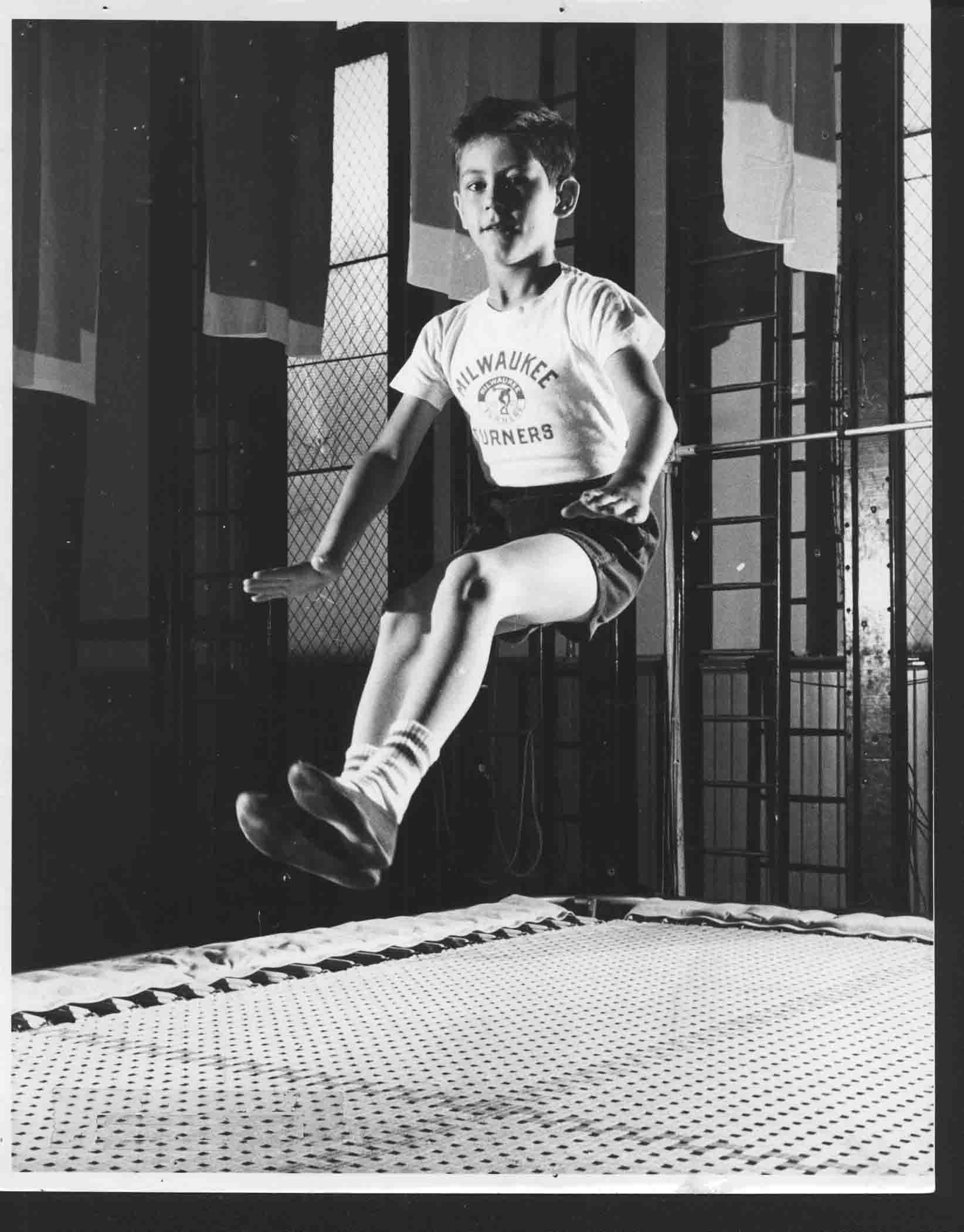
…And So Were German Turners

On the seventh day, God rested from creation. On the seventh day, Turners recreated.

When my friend Lois Glewwe mentioned a few weeks ago that she’d happened upon a 19th century missionary organization whose sole goal was to convert Roman Catholics to Protestant Christianity, I laughed and emailed back, “Irish-Catholics were ‘heathen,’ too!”

I was thinking of 19th century characterizations of the Germans of New Ulm. The prejudice against New Ulmers was so strong that it birthed a German counter-narrative to the master narrative preached by European-Americans whose ancestors were longer-settled in America.

For example, 19th commentators who today we might loosely characterize as WASPs — White Anglo-Saxon Protestants –characterized the women of New Ulm who are said to have led the November 9, 1862  attack on the Dakota prisoners outside that city as savage, vengeful Amazons. But the German counter-narrative held that the women were deranged by grief, having chosen (oddly) to disinter and rebury their war dead the same morning they knew the condemned Dakota men would be passing by town.

In fact the anti-German sentiment is so strong in the early literature that I remember years ago being surprised to discover that in 1862, there were significant German immigrant settlements in Renville County. (Renville County is on the opposite side of the Minnesota River, northwest from New Ulm, Brown County.) Without the early histories railing against the Renville County Germans and thus highlighting them, for years I wasn’t aware Germans lived there.

Of course, I was wrong. That may seem silly to anybody who has worked specifically on German immigration to Minnesota, in particular experts in the history of Renville and Brown Counties. But the impression I formed was that “Germans” and “New Ulmers” were synonymous.

Why? The answers are probably more complicated than the one that occurred to me when I began studying the Germans in Renville County who had been invisible: they were largely German Evangelical Christians while the Germans of New Ulm were largely German Turners.

German Evangelicals were Protestant Christians. Turners were atheists and openly proud of it.

The historical consequence? Google “New Ulm Uprising” to see how pervasive is that now-arcane name for the U.S. Dakota War of 1862. It wasn’t because New Ulm was epicenter of the war (the Lower Sioux Agency was). It could be in part because New Ulm was the closet town of any size to the Lower Reservation.

But geography had nothing to do with the reasoning played out in the media in the 19th century. As New Ulm historian John Isch develops in his 2009 essay,”Divine Retribution?” New Ulm’s atheism was said to have caused the 1862 war as surely as the ‘godless immorality’ of Sodom and Gomorrah brought the wrath of God down upon those cities in the Old Testament. In the Bible story God unleashed fire and brimstone; in 1862 he was said to have unleashed Indians.

In other words, as authors like Harriet Bishop asserted in her 1863 book Dakota War Whoop, Turners got what was coming to them.

Or, as Mary Butler Renville wrote in her 1862 journal, “God may have visited New Ulm in offended wrath, for we have reason to believe they burned the Savior in effigy only last Sabbath, (Aug. 17th;) and their laws are strictly against selling lots to any person who will aid in supporting the gospel.” (the Berlin (WI) City Courant, January 29, 1863; A Thrilling Narrative, 2012 edition, p. 151-52).

I was not aware that Isch had written this article when I was editing the new edition of Renville’s story; I would have cited it because Isch has pages to explore a story I had to summarize.

It has probably been a hundred years since the last historian seriously credited the myth of Godless New Ulm. But that idea continues to infect stories people tell today. (My Google search turned up sources dated 2010 in which living people still refer to the war as “the New Ulm Uprising.”)

Why is that important? Because if we want to come any closer to understanding what happened in 1862, we need to do more than triangulate the available sources to find the majority story. If that was the case, we could confidently conclude the Turners of New Ulm burned an effigy of Christ the Sunday morning before the 1862 war began.

Instead, we can only conclude that the story was very early on accepted as factual even though today, we’d almost certainly asses it as a myth rising up out of the prevailing prejudices of that day.

For the German Turner story of what they were actually up to the morning of August 17, 1862 when they lit the bonfire that immolated their own reputation, read Isch’s article for the rich story I condensed in my note.

Then consider that all human being breathe the air of the times in which they live. Their actions and words reflect what they believe to be true. So we must also consider their mindset, not just what they reported.

Have you found this to be true? Or maybe you disagree? Either way, I hope you’ll feel free to comment.

Photo credit:10-Milwaukee Turner, not sourced, Google Images.

Posted in A Thrilling Narrative, Commemorating Controversy, Doing Historical Research, truth-telling | Leave a comment

Irish Catholics Were “Heathen,” Too

guest post by Lois Glewwe

You never know what you might find while searching for a historic figure on the Internet. I was looking for R. McQuestern, who was mentioned in Robert Cressell’s little book  Among the Sioux: A Story of the Twin Cities and the Two Dakotas. McQuestern was the author of a biography of Dr. Thomas S. Williamson.

The only McQuestern who showed up was a Mrs. McQuestern who was listed as making a donation to the American and Foreign Christian Union in 1861. I’d never heard of this organization so I continued searching and found the following information on the website of the Presbyterian Historical Society in Philadelphia, PA.

“The American and Foreign Christian Union (AFCU) was founded in New York City in May of 1849 with the express purpose of converting Roman Catholics to evangelical Protestantism, both in the United States and abroad. Union members considered this task to be an essential step toward their larger goal of converting the world to the American Protestant and democratic way of life.”

It’s significant that the AFCU was founded through the union of three other societies which were established in the 1840s, a time of heavy Irish Catholic immigration to America. The American Protestant Society (1844-1849) directed its efforts toward converting foreign-born American Catholics. The Christian Alliance (1842-1849) focused on Italian Catholics born in Italy and elsewhere. The Foreign Evangelical Society (1839-1849) spread Protestantism by providing financial support to groups and individuals in Catholic and non-Catholic countries.

I must admit that I had to laugh at what today seems such an absurd effort. I’d had no idea that the anti-Catholic prejudices of the Minnesota’s missionaries to the Dakota, extended to an official organization with such a blatant purpose.

The PHS website explains that leading clergymen of the Presbyterian, Congregational, Baptist, Lutheran, Dutch Reformed and Methodist Episcopal churches comprised the constituency of the Union. “The AFCU relied upon voluntary contributions from members of the various sympathetic evangelical Protestant denominations and received its strongest support, throughout the 35 years of its active missionary work, from those of the Presbyterian and Congregational churches.” By 1860, the organization had 73 workers they were supporting across the United States.

Given the AFCU’s close ties to Presbyterians and Congregationalists, it’s safe to assume that the Ponds, the Riggses, and the Williamsons were aware of the organization’s conversion goals, if not actually numbered among its financial supporters. There is thus a certain delicious irony in the fact that a French Canadian Roman Catholic, Joseph Renville, probably did more to promote the acceptance of the missionaries among the Dakota people than anyone else in Minnesota history.

What happened to the AFCU? In 1884, the organization apparently abandoned American Roman Catholics to their self-chosen fate and focused solely on converting Catholics through the work of The American Church in Paris. The organization still exists today. Their website offers the following statement:

“The American and Foreign Christian Union (AFCU) Organization exists solely for the purpose of supporting the ministries, in Christ’s name, of the American Church in Paris (ACP), the American Church in Berlin (ACB) and the Vienna Community Church (VCC).”

–Lois Glewwe

*****

Lois A. Glewwe, former Director of Rights and Reproductions at the Philadelphia Museum of Art, and past executive at several Minnesota historical organizations, is writing a biography of abolitionist and teacher Jane Smith Williamson, whose prolific correspondence is a window into the close personal relationships between Dakota people and Protestant missionaries in mid- and middle west in the 19th century. Glewwe’s most recent publication, “The Journey of the Prisoners” in Trails of Tears: Minnesota’s Dakota Exile Begins (Prairie Echoes, 2008) tells the story of the vigilante attack on a wagon convoy of shackled Dakota prisoners outside New Ulm, Minnesota, in the wake of the 1862 war.

Photo credit: “Celtic Cross” not sourced, Google Images

Posted in Doing Historical Research, Opinion, Uncategorized | 1 Comment

The Pond Dakota Heritage Society Invites You…

The 1856 Gideon Pond House, Bloomington, MN. Home base for the Pond Dakota Heritage Society.

A few of you have asked how to connect with other people interested in the shared history of Dakota and non-Native people in Minnesota. The simplest way is to look for a local historical group in your area. If you live within driving distance of Minneapolis-St. Paul, you are welcome to come check out the Pond Dakota Heritage Society. I am on the board, which makes me biased :). But I think our public history programs are a great way to meet others who share similar interests.

While our mission statement encompasses the full sweep of Dakota history in Minnesota, this summer our programming focuses on the U.S. Dakota War of 1862. Here’s just a sampling. If you’d like to be on our email list to receive our full program schedule (including naturalist programs, 19th century living history, and Dakota language revitalization), leave me a comment and we’ll add you to the list!

History in the Making: Minnesota Tragedy The U.S. Dakota War of 1862 This Sunday June 10 at 2:00 PM at the Minnesota History Center in St. Paul. You are welcome to join members of the Pond Dakota Heritage Society for a behind the scenes preview of the new 1862 exhibit being installed at the Minnesota History Center. Exhibit developer Kate Roberts will talk about the process of taking the exhibit from concept to reality in the gallery where the most recent exhibit revisions are mocked-up for viewing and comments.

The exhibit opens to the public June 30. Due to the subject matter (war) and the reading level, I’d recommend this for sixth graders on up. It is an accessible  introduction to the war for those with no prior exposure, but contains enough new material to engage those familiar with the story. Plan to spend a couple of hours or to come back more than once to absorb the story. For exhibit hours see the MHS website.

Book Release Celebration The board of the Pond Dakota Heritage Society invites you to a party for the release of A Thrilling Narrative, which won the Society its first Legacy Grant, Sunday June 24, 2012 at 2:00 PM at the Gideon Pond House in Bloomington. Guests of honor will be: Alan R. Woolworth, one of the living legends of Minnesota history, a friend and mentor to whom we dedicated the project; Glenn Wasicuna, one of a handful of living first-language speakers of Dakota, who translated John B. Renville’s 19th century Dakota letters for the book; Gwen Westerman, who lent her sense of the poetry and power of the Dakota language to the English translations and wrote the Foreword; and my friend and co-editor Zabelle Stodola. We’ll share about how a German-Irish Minnesota historian, an English professor of literature from Arkansas, a native speaker of Dakota from Sioux Valley, Manitoba, and a Dakota poet/artist/professor of humanities came to collaborate on A Thrilling Narrative. We’ll also share food, visit, and sign books.

The Dakota Prisoner of War Letters Sunday July 15, 2:00 PM Oak Grove Presbyterian Church, Bloomington. In the wake of the Dakota War of 1862, Dakota men imprisoned at Davenport, Iowa wrote letters to relatives in their own language. The letters that survived have remained inscrutable, locked in mid-19th century Dakota manuscripts. 150 years later, the prisoner’s voices and stories are being recovered in a book of translations made by two of their descendants, Dr. Clifford Canku and Rev. Michael Simon. We are honored to host Dr. John Peacock, who wrote the Introduction for the book (Minnesota Historical Society Press, November 2012) and who will be discussing the letters, their writers, their context, and the translation process. Dr. Peacock is Professor of Native American Studies at the Maryland Institute College of Art, Baltimore, and is an enrolled member of the Spirit Lake Dakota Nation. Sponsored by: The Pond Dakota Heritage Society; Oak Grove Presbyterian Church; the Plymouth American Indian Initiative; the Bloomington Historical Society, and the Traverse des Sioux Library System.

“Our Children Are Dying With Hunger”: Malnutrition, Morbidity and Mortality on the Sioux Reservation in 1862 Thursday July 26 At 7:00PM at Turner Hall in New Ulm, MN. For decades, historians have struggled to reconcile Little Crow’s claim of starvation on the eve of the U.S. Dakota War of 1862 with the documented availability of food on the Sioux Reservation. Independent historian Carrie Reber Zeman argues that staple foods ripening in agency fields and available from Federal warehouses and traders’ stores are historical red herrings. Primary sources suggest that Dakota children were dying of debility and disease due to the invisible menace of chronic malnutrition, compounding the food crises among Dakota traditionalists the summer of 1862.

History in the Making: What Makes a Good Story? Writing Narrative History Sunday August 12, 2:00 PM at the Gideon Pond House in Bloomington. Many people have an idea for a book they’d like to write, but don’t know where to start. Scott W. Berg, author of the forthcoming historical narrative 38 Nooses: Lincoln, Little Crow, and the Beginning of the Frontier’s End (Pantheon, December 2012) and a member of the creative nonfiction faculty at George Mason University in Fairfax, Virginia, talks about the art and craft of moving from idea to book. When do you know that you’ve done enough research to start writing? What is the role of style, plot, setting, and character development in a work of narrative nonfiction? This is the second event in the Pond Dakota Heritage Society’s “History in the Making” series, featuring a diverse set of practitioners of history taking us behind the scenes of their work.

The Dakota War Trials of 1862-63: Kangaroo Court or Merited Justice? Sunday August 26 2:00 PM at the Gideon Pond House in Bloomington. In the aftermath of 1862 Dakota War, more Dakota men were convicted and sentenced to death by a military court in Minnesota than in any other group of trials conducted in American history. Walt Bachman, a Minnesota trial lawyer for 22 years who worked on more than 100 Hennepin County homicide cases, will discuss the prosecutions of almost 400 Dakota men in terms non-lawyers can understand. In some respects, Bachman concludes, the trials were even worse than is commonly understood. But in other ways, he believes, key trials were more fair and just than is usually acknowledged. Come and judge for yourself. Walt Bachman is the author of Northern Slave, Black Dakota: The Life and Times of Joseph Godfrey, PDHS’s second Legacy Grant winning-project, forthcoming from Pond Dakota Press in 2013.

Posted in A Thrilling Narrative, Alan Woolworth, Minnesota Historical Society | Leave a comment

Children, Trauma, and Memory

In Part I of this series, But Is It True?, I suggested a couple of research techniques scholars routinely use to fact-check stories. The story, in this case, is about Little Crow’s death as related by Mary Elizabeth Lamson, whose father, Nathan Lamson, and brother Chauncey, killed Little Crow on July 3, 1863.

Katie, a reader, pointed out, “What sort of credence/impact does an account like this have? On one hand, she was actually there and at an impressionable age, so she may remember well. On the other, events often develop into family legend, and this was written fifty years afterwards. How would you go about verifying which memories are accurate and which aren’t?”

Since about 1990, interest in subject of how children form memories has mushroomed; the scholarly literature has grown along with it. I’m going to ignore the journals for now and point you instead to a fascinating piece of popular literature on the shelf at your local library, The Boy Who was Raised as a Dog and Other Stories from a Child Psychiatrist’s Notebook by Bruce D. Perry and Maia Szalavitz (Basic Books, 2008).

The book is about children, memory and recovery from trauma, making the whole book relevant if you are interested in children’s memories of the Dakota War of 1862.  Although we know them as adults at the time they told their stories, many of the most familiar narrators, like Mary Elizabeth, were children in 1862.

And if you consider the way the war shattered families –Dakota and settler alike –you’ll appreciate that many of the children of 1862 had access to very few of the resources that we now know facilitate healthy recovery from trauma.

If you have time for only one chapter, skip ahead to Chapter 7, “Satanic Panic” where the authors’ case is one you may remember in the news: the rumored “satanic ritual abuse” of children in Gilmore, Texas, in 1993. I’ll transcribe a short excerpt to give you   the flavor of the authors’ discussion:

“[N]arrative memory is not simply a videotape of experiences that can be replayed with photographic accuracy. We make memories, but memories make us, too, and it is a dynamic, constantly changing process subject to bias and influence from many sources other than the actual event we are “storing.” What we experience first filters what comes afterwards….” That is the subject of the first half of the book: the idea that the worldview children hold at the time they encounter trauma influences how they experience it and therefore how they remember it.

“[W]hat we feel now can also influence how we look back and what we recall from the past. As a result, what we remember can shift with our emotional state or mood. For example, if we are depressed we tend to filter all of our recollections through the haze of our sadness.” (Perry and Szalavitz p. 155-156)

What does this have to do with assessing the accuracy of Dakota War sources? Among other things, it suggests is that our job as consumers of history is a little trickier than we learned in that high school unit on primary and secondary sources. Privileging primary sources over secondary sources as evidence is still a great start. But even primary sources may not be not be “the truth, the whole truth, and nothing but the truth” because the human mind is not a machine.

You know this is true if you’ve researched any aspect of history: you may find a dozen eyewitness to  a single event and despite the number of primary sources, find little consensus about what actually happened.

You also know this is true if you read my original post containing Mary Elizabeth Lamson’s story. She remembered seeing the bodies of Mrs. Cross and her children, who actually survived the war; the slain settlers brought into Hutchinson stockade were members of  the Spaud family.

“So what?” some may say. “We have to grant that seeing any bodies, even if they were not scalped but had been ‘simply chopped with an ax’ would have been an ‘awful sight’ for a five-year old.”

I agree. And I’d add  that it is equally reasonable to expect a child might recall those wounds more accurately than she recalled the identities of the wounded; she was only five.

But, I would press, how did Mary Elizabeth come by the knowledge that the bodies had not been scalped, but that the gore she saw was ‘simply’  attributed to bludgeoning with an ax? I hardly think that a five-year old, even on the more earthy 19th century frontier, had a CSI ready-reference for distinguishing wounds made by a knife versus an ax versus a gunshot.

If you read Mary Elizabeth’s story carefully, mentally sorting for the parts that may be fragments of her own memories of spending the greater part of her five-year-old year living in a sappling-ribbed hut in a stockade during the Dakota War of 1862, you’ll see that most of the memories presented in her story were likely influenced by other people’s experiences and stories, not just her own.

Does that make this story unreliable as a source? No. It just recognizes that this is a pretty typical source: a mixed bag of memories. A real, very human story.

Mary Elizabeth’s story is a great one to question because very little is riding on it. But consider that the lore of the Dakota war we have inherited is based on stories just like this one. If you are familiar with the story, consider your bookshelf. How many of your sources predate 1995? That’s how little the study of memory has impacted the Dakota war literature.

Almost everything we know about the war has been related to us by authors who took primary sources like Mary Elizabeth’s at face value. But worse than passing on little bits of misinformation, like the mix-up between the Spaud and the Cross families, history has transmitted major problems rising out of the confidence that memories are daguerreotypes –19th century photographs –of actual experience.

Let me invent an example: What if Mary Elizabeth’s story was a key primary source in the story of Little Crow’s death? Today we would recognize that five-year old Mary Elizabeth was not with her father and brother on the road that went by the berry patch where Little Crow and his son, Wowinape, were picking berries. On that key story within her own story, Mary Elizabeth is a secondary source, repeating family stories she was told.

There is no reason to suspect in this case, that she did not report the story in good faith. But the family story had already been filtered and polished for the consumption of women and children (her mother and siblings) –and, betting on human nature, in ways that made her father and brother appear heroic –before Mary Elizabeth heard it for the first time. So she is a primary source on her family’s story of the death of Little Crow. But there may be quite a difference between her family’s story and what actually transpired July 3, 1863 in that berry patch.

The war’s early historians were not paying much attention to interpretive nuances like these. That’s why, 150 years later, the story of the Dakota war of 1862 is new. We’re not just telling the same old stories. We are looking at the old stories in new ways.

Posted in Commemorating Controversy, Doing Historical Research, Little Crow | 2 Comments

But Is It True?

Thank you so much for the great questions you’ve been leaving in the comments on posts here! Your curiosity has given me a better idea of who is reading and the varied backgrounds you bring to these stories.

I’ll start with Katie’s great question on a post I made publishing a new first-person story on the death of Little Crow told by Nathan Lamson’s daughter. Katie asked, “I’m not familiar with the “rules” of historical research. What sort of credence/impact does an account like this have? On one hand, she was actually there and at an impressionable age, so she may remember well. On the other, events often develop into family legend, and this was written fifty years afterwards. How would you go about verifying which memories are accurate and which aren’t?”

I’ll tackle the last question first. Because was only sharing this story, not basing a historical argument on it, I did not investigate all of the angles I would if the story seemed key to something I was interested in. But the question still stands: when you read a story like this, how do you know if it is true?

The grave marker for Mary Elizabeth’s father, Nathan Lamson in Champlain Cemetery, Champlain, MN. According to the inscription on this marker, Lamson’s sole claims to fame were that he lived to be 96 and that he “KILLED LITTLE CROW 1863.”

First, start with the narrator: the person telling the story. You’re looking for basic information like, did this person really exist? Is there any outside evidence that she was where she claimed to be at the time she said she was there? Katie is right: stories like this one become the stuff of family legend and Mary Elizabeth, if she really was Lamson’s daughter, would have heard it over and over again even if she was born after it happened.

So I’d begin with a census check, looking for verification of basic details. Like it is reasonable to think Mary Elizabeth appears, about age four, in Lamson’s household in the 1860 Federal Census. (If you don’t have a subscription to an on-line genealogy database like Ancestry.com, your local library probably has a subscription that you can use for free at the library.)

While I had Lamson census records open, I’d also check the 1865 Minnesota or the 1870 Federal census to see if her newborn brother, Albert, survived. With a birth story so dramatic, I might find him retelling a similar story in another source. That story, in turn would help me evaluate his sister’s story. So if the story was of high interest, skipping ahead in Albert’s life to find the towns where he was living during anniversaries of the 1862 war might lead me to newspaper interviews or stories about his birth. It might even lead to an answer to the question of whether baby Albert, as a grown man in 1913, was living in British Columbia; he could have been the brother who inherited Little Crow’s gun.

If Mary Elizabeth’s basic story was panning out, in this specific case, I would turn next to historical sources about Hutchinson, looking for other first-person narratives. The stories of the siege, the fort, and of Little Crow’s death are practically origin stories for the city of Hutchinson and related stories have been avidly collected by local historical organizations. In fact, Mary Elizabeth’s story is probably not news in Meeker County, even if it is new to me.

Sometimes local stories are collected in a major publication, like a county history book. Older county histories are often available on Google Books or transcribed on local historical society websites.

But if this story was really important to me, I would not miss a research trip to the libraries of the local historical organizations in Meeker County. Local people are obsessive collectors of their own arcana. Local historical societies also keep contact information for interested researchers, who are sometimes living descendants.

The whole point is to try to uncover as many first-person stories from people like Mary Elizabeth who were there –the more stories the better. Then we can compare multiple recollections to each other, not simply rely on her story.

But even though I enjoy research, I don’t do this level of investigation on every question. As Katie asked,“What sort of credence/impact does an account like this have?” To the right person, perhaps alot. That’s why the scholars in my research circle have developed an informal habit of sharing finds like this story even if it is not central to our own research: we’ve all benefited from other people’s finds. 

But you also can’t beat being networked with other researchers with related interests. Minnesota is like a big small town when it comes to overlapping historical networks and if you haven’t found one to plug into yet, start by inquiring at a local historical society.

Like in Mary Elizabeth’s story, I thought the reference to the Cross family didn’t sound right, so emailed Curt Dahlin who is the modern incarnation of an early 20th century researcher named Marion P. Satterlee. Curt keeps a database of settler deaths and within thirty minutes, he sent me an answer: Mary Elizabeth was likely remembering seeing the bodies of Mrs. Spaud and her children.

Which leads me to a subject much closer to my own research interests: how memories are formed and transmitted over time. How did Mary Elizabeth come to believe she saw the dead bodies of people who, in fact, lived?

Kate was getting at this when she asked, “On one hand, she was actually there and at an impressionable age, so she may remember well. On the other, events often develop into family legend…” In the second part of this post, I’ll tackle how memories are made: how sincere belief can become historical “truth.”

Photo Credit: Nathan Lamson, findagrave.com contributed by Steve Niederloh, 2009.

Posted in Doing Historical Research | 2 Comments

And the Winners Are….

Celebrating June 1, 2012, the official release date for A Thrilling Narrative of Indian Captivity, my co-editor Zabelle, and I are each giving away a free copy. Thank you to each of you who left a comment expressing your interest!

The winners of the drawing are: G_teach and Brenda Fischer.

Please check you email account for a message from me, then reply with your mailing address and I’ll get your copy on its way!

Posted in Uncategorized | 1 Comment

Ten Days to Win a Free Copy of A Thrilling Narrative

With so many people already reading A Thrilling Narrative, it’s hard to believe it hasn’t officially been released yet! But June 1 is coming and to celebrate the official launch date, I’ll be mailing at least one of  you a free copy.

To enter the drawing, comment on any post on athrillingnarrative.com between now and June 1, 2012. If you’re not feeling erudite, instead leave me a question about the book or the Dakota War of 1862. I’ll tackle the questions in future posts, or will ask a colleague who is a specialist to write a guest post on that subject.

Besides making a comment, you get entries for referrals. So every friend to whom you pass the athrillingnarrative.com link, who mentions your name in their comment will earn an entry of their own and an extra entry for you, too!

Posted in A Thrilling Narrative | 24 Comments

The William Watts Folwell Papers at the Minnesota Historical Society

In 1922, corresponding with Minnesota historian William Watts Folwell, Thomas A. Robertson mused, “This writing of history is, of course, a very particular and tedious work, but it seems sometimes that they catch too much at mere hearsay matters and try to make a history of it.”

I love Folwell’s papers, which reside in the temperature and humidity-controlled bowels of the Minnesota Historical Society. [1] So much so that I spent two of the best research years of my life reading through all 123 boxes. That’s 50 cubic feet of holographs (originals), three-quarters in handwriting; the other quarter in Folwell’s cast-iron typewriter type.

A purist might quibble about whether a typewriter can produce a holograph. But between the typewriter’s idiosyncrasies and Follwell’s quirky operator errors, I recognize a Folwell typescript on sight in other collections, kind of like bumping into a dear old friend at the grocery store.

William Watts Folwell 1833-1929

A Civil War veteran and professor of mathematics, Folwell became the first President of the University of Minnesota in 1869 at the age of 35. That year, the University had 14 enrolled students. Folwell’s graduate work in Philology, the textual analysis of oral and written documentary sources, undergirded his passion for books and history. He organized the Minnesota Library Association in 1891 and pulished his first history book, Minnesota: The North Star State, in 1908.  North Star was a critcal failure. Folwell’s papers show the criticism honed the style that distiguished his seminal work, A History of Minnesota, published in four volumes between 1921 and 1930. Folwell was President of the Minnesota Historical Society from 1924 to 1927.

Most people access Folwell’s work via his books. Connoisseurs know the best parts are his notes and appendices. But Folwell was humble. Unlike some of the luminaries of Minnesota history, he didn’t purge his papers before donating them to the Historical Society. Folwell left us every last scrawl in the palm-sized notebooks he habitually carried in his pocket –just in case he ran into someone to interview. He left us the penciled notes he took as he read books and the jottings he made on the backs of the receipts that came to hand after his car overturned in a ditch on a rutted dirt road in out-state Minnesota.

In Folwell’s case, historians have it all. It’s a nauseating amount of  “all” if you hope to find a Cliff Notes version of a controversial story. But it is a wonderful amount of “all” if you love historiography. Folwell left us the ability to discover the sources available to him and the process by which he drew his conclusions.

Folwell began each of historical inquiry, as all of us do, with a “mere hearsay matter.”  He chased down rabbit trails of clues through the thickets of history and frequently found himself stuck. At an impasse, his papers show, he’d do something else, like write a newsy letter to one of his children or go for a long walk in one of the Minneapolis parks he loved.

Sometimes he’d send out an SOS to a comrade like Return Ira Holcombe or  to a main-stay informant like Samuel J. Brown –letters in which Folwell confessed his trademark expression, “I’m up a stump.” I imagine Madrecita (his term of endearment for his wife, Sarah Heywood Folwell) must have brought him food and water, because, at the rate mail traveled at the turn of the 20th century, Folwell would stay treed for weeks before help arrived in a letter in reply.

Other times Folwell simply tabled an inquiry until something new turned up. He dogged some stories for decades before finding a break-through source or simply accumulating enough small clues to render an opinion.

But what really earns Folwell my admiration is that he changed his mind. His aim was never to proof-text a hearsay matter, but to root out as much of the story as he could find.

If our ideas do not change along the way of doing history, then we are not really doing history, simply using it for our own ends.

Folwell sometimes used his power of storytelling –or rather, his power to refrain –to protect people. He chose not to publish some of his best stories to shield the reputations of men he admired and whose lives were enmeshed with his own. But Folwell preserved evidence in his papers he might have taken with him to his grave. Thanks to the stories Folwell left buried in his papers, important stories are no longer hearsay matters.

Others are still a matter of period gossip. But how many other historians collected hearsay like jewels, patiently waiting to encounter someone who might supply the setting that pulled the tiny diamonds together? Folwell did, leaving us a broad sampling of what people believed to be true on some sensational subjects for which factual proof is still outstanding.

____________________

1 Two additional collections of Folwell’s Papers are available in the University Archives at the University of Minnesota.

Posted in Doing Historical Research, Minnesota Historical Society, William Watts Folwell | 1 Comment

Dakota War Captives at Camp Release

On September 26, 1862, Col. Henry H. Sibley (1811-1891) accepted the release of 269 captives held for six weeks during Minnesota’s U.S.-Dakota War of 1862. The captives and their Dakota protectors had named the place Camp Lookout while they waited for Sibley to arrive.[i] Sibley re-christened it Camp Release. Today, the National Register-listed site is outside Montevideo, Chippewa County, Minnesota, on the Minnesota River opposite the mouth of the Chippewa River.

Sibley’s scribe on the 1862 expedition was missionary Stephen Return Riggs (1812-1883). On October 11, 1862, Riggs wrote to his superior, Selah B. Treat, “…we came up to this point [Camp Release], which is ten miles below Lacquiparle, and here, from the camp of friendly Indians, we obtained the captives in their hands —to the amount of over one hundred whites, chiefly women and children, and one hundred and sixty-odd half-breeds. There are still a few [captives] in the hands of the Indians —some fifteen or twenty. The great part of these are way out in Dakota Territory.”[ii]

 Pages 3-9 of my report, Dakota War Captives at Camp Release, comprise data from three extant lists of captives at Camp Release compiled by Riggs. These lists are designated R, P, and NR in the last column of the table of captives in this report.

R         is a four-page holograph in the Stephen Riggs Family Papers at the Minnesota Historical Society titled, “A List of the White prisoners and Half Breeds delivered at Camp Release Oct. 1862.” A note by Riggs at the bottom of page four tallies: “In all — white persons 107; Half-Breeds 162 [total] 269.” This list names captives freed between September 26 and October 1, 1862. It also includes the names of two mixed-blood men who were subsequently tried for participation as Dakota insurgents during the war. The number following R/ in the last column of the table indicates the page number on which that individual appears. For example, R/2 is Riggs list page 2.[iii]

P          appeared in the Saint Paul Press October 3, 1862. The section was headed: “The following is a list of captives delivered up to Col. Sibley, at Camp Release, opposite the mouth of the Chippewa River on Friday September 26, 1862.” The editor summarized this list as containing: “91 whites and the rest half breeds —but the latter are not all embraced in this list [appearing in the newspaper]. Probably the number will be over 100 whites and 150 half-breeds.” This list includes a pre-war place of residence for some captives, a town name like Beaver Creek. P was reprinted in many regional newspapers.[iv]

NR      is “a list of captives delivered up to Col. Sibley, at Camp Release, opposite the mouth of the Chippewa on Friday September 26, 1862” located at the National Archives in Record Group 393. Like R, it appears to have been written by Stephen Riggs. NR is the most detailed list, containing the first names and ages of children as well as a place of residence for each captive. However, the holograph is so aged that the data is barely legible. Where names of children are provided in the table, they are typically derived from NR.[v]

The lists do not precisely accord with each other due to the order in which they were compiled. NR represents the earliest extant list, probably dating to Sept 26 or 27, 1862. It contains the names of captives whose primary ethnic identity was “white,” including some people of mixed descent whose lifestyle was probably indistinguishable from that of their neighbors living off the Sioux Reservation. The wrapper indicates that NR was directed by General Henry Sibley to his superior, General John Pope.

P is presumed to be based on a copy of NR, although either Riggs or the newspaper editor shortened the list by naming the only the head of household (typically, a mother) and substituting “…and [X number] children” in place of the children’s names and ages given on NR. It is logical that Sibley and Riggs would have sent a copy to the state’s leading newspaper. Not only were families hoping to find missing loved ones among the liberated captives –the alternative being that they were presumed dead –Sibley had been castigated in the Minnesota press for how slowly he proceeded to Camp Release. Publishing the names of safely freed captives was a partial vindication of Sibley’s campaign strategy.

R represents a final summary Riggs compiled in early October 1862 and preserved in the portion of Riggs Papers owned by the Minnesota Historical Society.

People Who Are Missing

The compiled list in this report does not capture the names of every person who may have been captive in 1862. More than 40 people reported having been held for a period of time (varying from several hours to several weeks) during the Dakota War, but were released or escaped before the majority of the captives were turned over on September 26, 1862. Three identified captives died in captivity. Sixteen more named people were held beyond October 1, 1862. Several were released within a few weeks; several more in the spring of 1863. One was not freed until 1866. A few children, last seen captive, never returned.[vi]

Other people of Dakota descent are missing from this compiled list because they were not officially recognized as ‘captives.’ For example, Cecilia Campbell Stay’s written accounts of her captivity mention that her baby sister Stella and her Uncle Hypolite (Paul) Campbell, his wife Yuratawin, and their children John and Theresa were also held captive.[vii] Similarly, George Crooks reported that he, his parents (John and Mary Crooks) and his brother (Julius Crooks) were held captive and freed by Sibley at Camp Release.[viii] Yet they were not listed as captives in1862.

In late 2011, I discovered a document which may be the missing census of Dakota people at Camp Release taken by Riggs on September 27, 1862. The list, in Riggs’s handwriting, tallies 143 men, 230 women and 308 children for a grand total of 681 Dakota people. I am still working on this list. From its context, the census appears to have been created between September 26 and October 27, 1862.

*****


[i] For use of “Camp Lookout” in letters dated before September 26, 1862 at Camp Release,  Mary Butler Renville, A Thrilling Narrative of Indian Captivity: Dispatches from the Dakota War edited by Carrie Reber Zeman and Kathryn Zabelle Derounian-Stodola. (University of Nebraska Press, 2012)  p. 81-84, 182-188, 211-212.

[ii] S. R. Riggs to S.B. TreatCampRelease October 11, 1862. Northwest Missions Manuscripts and Index 1766-1926. The Minnesota Historical Society.

[iii] Stephen R. Riggs and Family Papers, Box 1. The Minnesota Historical Society.

[iv] The Saint Paul Press, October 3, 1862. Microfilm. The Minnesota Historical Society.

[v] Record Group 393, Part 1, Entry 3449. The National Archives.

[vi] Statistics drawn from my database of 1862 captives.

[vii] “Cecilia Campbell Stay’s Account” in Anderson, Gary Clayton and Alan Woolworth, eds. Through Dakota Eyes; narrative accounts of the Minnesota Indian War of 1862. (St Paul: Minnesota Historical Society Press, 1988)  p. 51-52.

[viii] “True Facts About the Outbreak Between the Sioux Indians and Pioneers in 1862 as told to me by George W. Crooks, 81-year Old Sioux Indian.” Unpublished manuscript by Crook’s granddaughter, 1937. The Brown County [Minnesota] Historical Society.

Posted in Captivity | 2 Comments