Follow the Money: August 17, 1862

Before I leave the story of the 1862 annuity delay, I want the change gears and share one of my favorite stories on this subject.

I will not ague that if the guys escorting the  annuity payment had not wanted to end a hot, dusty day with some nice cold beers, the annuity would have arrived on the frontier in time to prevent the war. By my calculations, the gold might have arrived at Fort Ridgely no more than 12 hours earlier, maybe around the midnight between August 17 and 18, 1862.

By that time, the die was cast; the settlers at Acton were dead.

But this is the kind of source that keeps historians in the archival trenches. Sometimes the real story is so much better than anything someone could make up.

Since this is a source at MHS, I’m supplying only a slice of the transcription. (Parentheses) in original. [Brackets] mine.

E.A.C. Hatch to Sister September 24, 1862, Edwin Hatch Papers MHS

“ … I left St. Paul Sunday morning [August 17] with four men, traveling by express… with exclusive rights to the stage, and eighty-four thousand dollars in coin intended for the Sioux annuity payment.

            We traveled about ninety five miles and stopped for the night at a roadside tavern (burned by the Indians before I returned) about fifteen miles off the stage road, but we had the privilege of running the team forty five miles off the stage route (to Ft.Ridgely) if I thought it best. We started early in the morning, traveled rapidly and about 11 o’clock a.m. met a man, whom I knew, very much excited, horse nearly exhausted, who stated that the Sioux had broken out and were killing & murdering the whites.

            We kept on and reached Ft.Ridgely at 12 o’clock m. We there learned that Capt. Marsh (Commanding post) had left with about fifty men for the Lower Sioux Agency the point of the outbreak and fourteen miles above the Fort ….”

By the way, I am not reading “bar” into Hatch’s word “tavern.” There were “dry” temperance taverns in the 19th century. But, while lore of the war holds that Dakota warriors indiscriminately burned settler homes in 1862, informed observers corrected those newspaper stories on the spot –even if the corrections have gone unnoticed in history. Two types of house were burned in 1862: those belonging to Dakota farmers, and roadside inns serving liquor.

Hatch didn’t need to run the stage 15 miles off the road to find a good place to sleep.

*****

Photo credit: Hollywood movie poster, John Wayne in Stagecoach, Google Images.

Posted in Commemorating Controversy, Primary Sources | 1 Comment

Follow the Money: August 14, 1862

So the 1862 annuity, on a train headed west toward Minnesota 150 years ago, was late. Why does it matter what was going on behind the scenes in Washington D.C. in 1862?

You’ve read part of the answer if you’ve had time to go through the Dakota War exhibit at MHS where a very large version of this primary source hangs on the wall: Nothing in history happens in isolation. Everybody makes self-interested decisions.

John C. Rudolph et. al to Alexander Ramsey August 14, 1862. State Archives. Governors. Ramsey. Letters Received Local Residents and Others

To his Excellency the Governor of the State of Minnesota.

            Your memorialists, residents of Brown County Minnesota and residents of the Western Frontier Settlements adjoining the Dakotah — and Indian Territory, respectfully represent:

That the payment for the Dacotah — and Sioux —nation of Indians has this year been delayed up to this time. —

That said Indians considering said payment justly due to them and relying on the same for their subsistence, have become by such delay exceedingly exasperated, have committed several outrages, and threaten to overwhelm these frontier settlements with Indian Warfare. —

That your memorialists are in immanent danger, to see their families massacred by said Indians, if the able bodied men of these settlements should be removed from here under the militia draft, before said Indians are appeased by receiving what is justly due them. —

That rumor has spread here far and wide that the United States Government has paid the money in gold for said Indians long ago, but that said money has been corruptly misapplied in speculations on the discount between gold and paper currency and otherwise by the Hon. Clark W. Thompson Superintendent of Indian Affairs in the State of Minnesota, and that this is the reason of the delay of the payment.

            Your memorialists therefore pray:

1) that the drafted militia from this part of the country may not be removed before the Indians have received their payments and are thereby appeased.—

2) that if Clark Thompson should not have received the money for the Indians, some of your memorialists may be authentically informed of that fact, so that thereby the fair reputation of Clark Thompson may be restored. —

3) that if said money should have been paid by the Government, as rumor goes, in that event a thorough investigation concerning the misaplication [sic] of the money may be instituted. —

            Dated August 14th A.D. 1862

                                                                                    John C. Rudolph

                                                                                    John [Manderfelt?]

                                                                                    A. Strecker

                                                                                    L. Broumann

                                                                                    John Schneiter

                                                                                    D.G. [Millwall?]

                                                                                    Francis Erd

                                                                                    John W. [Horny?]

                                                                                    Fr. Beinhorn

                                                                                    Christian Prignit

                                                                                    Carl Schmidt

The August 2 and August 13 letters I supplied earlier in this series suggest that, not withstanding blanket condemnations, the OIA seems to have been trying to fulfill its obligation to make pay the cash portion of the 1862 annuity in gold.  Was that motivated by self-interest, not altruism? Likely.

But juxtaposed on the secondary source stories that reduce the Indian System to a singular writhing mass of corruption, that is surprising: sometimes the self-interests of the officials and the interests of the Dakotas aligned. With his own reputation on the line, Mix held out for the gold Dakotas were rightfully due, not greenbacks valued 19% less.

But the Treasury argued the opposite: Traders ultimately will collect the annuity; they deserve no better than devalued paper currency. And by the way, if you haven’t noticed, we’re a little busy funding a war here; forgive us for not making your Indian warrant our bookkeeping priority.

In the August 14 letter, we catch a glimpse of how competing self-interests in D.C. played out on the frontier. New Ulmers wrestled with the annuity delay in the local context of an impending draft. They were not above citing the plight of their Native neighbors to forestall conscription. Altruism? Or self-interest?

Nor did they resist the opportunity to play politics and hold the feet of Republicans to the hot coals of responsibility for the annuity delay. Did they consider the self-interests of their audience, Ramsey, a Republican and former Superintendent of Indian Affairs? If they had, they might have tried a different approach if they needed the governor to take their concerns seriously.

Why Ramsey did not is another story.

*****

In the mean time, the stories go, a group of Dakota hunters were days into a hunting trip to the Big Woods.  Before they left, their soldier’s lodge had enlisted the support of the head soldier of the white’s soldiers’ lodge, Fort Ridgely, that come payment time, he would support their plan to prevent the traders from collecting their impending annuity.

Curiously, they had not made a contingency for “what if the annuity never comes;” it called for Dakota soldiers balancing the traders’ books their own way when the annuity arrived. No one could tell them when that would be, so they did the next urgent thing: went out to hunt meat for their families. 150 years ago today they had not yet found any game.

In a few days, when they passed by Fort Ridgely again headed home, maybe they would hear that the annuity gold had arrived.

Posted in Commemorating Controversy, Primary Sources | Leave a comment

Follow the Money: August 13,1862

One hundred and fifty years ago today, the 1862 Dakota annuity payment was a month overdue. Why?

This post only hints at the reasons, but supplies the sequence of what happened behind the scenes.

After the Treaties of 1851 were proclaimed ratified in 1853, Minnesota’s Upper and Lower Dakota bands had received annuity payments: installments of the interest on the invested proceeds from their cessions of land to the Federal Government.

As the end of fiscal 1862 approached, the Office of Indian Affairs (OIA) knew that the balance in the Sioux Agency annuity accounts was short. So they borrowed from 1863 funds, which were not available until the beginning of Fiscal 1863: July 1, 1862. But Congress did not pass the 1863 appropriations bill until July 5th.

On July 12, 1862 Superintendent of Indian Affairs Clark Thompson, at his office in St. Paul, was surprised by a pair of telegrams from Washington D.C. informing him that the 1863 appropriation had not yet been credited by the Treasury to the Interior Department but would be sent “next week.”

Out at Yellow Medicine, Thomas J. Galbraith, the Sioux Agent responsible for disbursing the delayed payment, was two days beyond reach of the telegraph. On July 19, 1862  Galbraith appraised Thompson on the effects of the delay: “Indians have been in for a week past…. are getting clamorous for food have as yet given them none…. Hurry Up. Come right up here and make this payment at once. We have had neither panic nor alarm & will not have if you get on with their money soon.”

Back in Washington, on July 22, the OIA pressed the Treasury to issue the Sioux annuity warrant. July 29, the Treasury replied, asking the OIA again: with gold in such short supply, couldn’t the Sioux warrant be issued in bills?

In reply, on August 2, 1862 the OIA wrote this letter insisting the annuity portion of the warrant had to be issued in gold.

Finally, the Treasury agreed. One hundred and fifty years ago today, on August 13, 1862, Charles Mix reported the annuity gold was finally on its way to Minnesota:

Note: After the Dakota War, Mix edited this letter for inclusion as exhibit No.3 in the Secretary of Indian Affairs Annual Report for 1862. Mix’s editing on the holograph appear in black italics within the original text in blue below.

Charles E. Mix to William P. Dole August 13, 1862 NARA RG 75, Special File 228.

Department of the Interior

Office of Indian Affairs

August 13, 1862

Sir

I have to acknowledge the receipt of your letter of the 7th inst. upon the importance of having the question of paying the Sioux in Gold decided immediately, and in reply have to state, that on the 8th inst. a telegraphic message was addressed to you at Beloit, informing you that Secretary Chase had agreed to order Mr. Cisco to pay the $71,000 in coin, and a telegraphic message was sent to you yesterday at St. Paul stating that Secretary Chase had ordered Mr. Cisco to pay coin.

Immediately upon obtaining the promise of the Hon. Secretary of the Treasury to

omit all in this parenthesis

that effect {which was only obtained after addressing several communications to him and making a personal application accompanied by letter and telegraphic message of the importance of paying the Sioux in Gold, and also by a letter by the acting Secretary of the Interior and that after a clerk in this office had made several personal visits to the Treasury Department to get an answer to the communication from the Interior Department as to whether the Gold would be furnished} a letter was addressed to Mr. Cisco requesting him on the receipt of the order from the Secretary of the Treasury authorizing him to pay Gold to Supt. Thompson to send the same by express at once to St. Paul, and a letter was received from him in reply yesterday stating that he would comply with the request of this office immediately after receiving the order from the Treasury. And as Mr. Spinner has informed this office that the draft was sent on Saturday with the requisite order, there is no doubt but that the Gold is at this time on the way to St. Paul by Express.

Every effort was made that could be thought of to get the Gold for the object desired and the efforts in the end appear from present appearances to have been successful.

I have the honor to be

Very Respectfully

Your obt. Servt.

Charles E. Mix, Acting Comm

Hon. Wm P. Dole

Comr. Indian Affairs

St. Paul, Minnesota

P.S. Since the foregoing was prepared I have received information from Mr. Cisco that he had supplied the coin on the 11th instant.

#(insert what is marked below)

C. E. Mix

Acting Commr.

[#] I am hurrying the remittance for Thompson’s superintendency as fast as possible. The treasury warrant for present appropriations arrived here yesterday.

Posted in Commemorating Controversy, Primary Sources | 1 Comment

Follow the Money: August 2, 1862

My primary source offering today is actually dated August 2, not August 12, 1862. But it is a companion source to tomorrow’s letter dated August 13. Listen in as officials in Washington D.C. pass the buck on the subject of the 1862 annuity payment that Dakota people and Indian officials in Minnesota had all expected to arrive by mid-July, 1862.

This is my transcription of a holograph of a letter I found in the Letters Received by the Secretary of the Interior at the National Archives branch in College Park, Maryland.

Charles E. Mix to J.P. Usher August 2, 1862. Letters Received by the Secretary of the Interior, 1862. NARA 2.

Department of the Interior

                                                                                                Office of Indian Affairs

                                                                                                August 2nd 1862

Sir,

I have the honor to acknowledge the receipt  of the letter of the Secretary of the Treasury of the 29th ult. in reply to your communication of the 22nd ult. forwarding a copy of a letter form this office of the 19th ult. requesting $ 110,954.17 in Coin to pay annuities to the Indians of the Mackinac Agency and the Sioux of the Mississippi; referred to this office on the 1st inst. for a Report in which he states that “the money when paid will doubtless forthwith pass into the hands of the traders, and I respectfully submit to you the question whether it is necessary that it should be paid in coin, and if so for what reasons.”

In reply I have to state that the action of this office was based upon the letters and estimates of the Superintendent Thompson and Agent Leach together with the Treaty stipulations with the Indians which have heretofore been faithfully observed by the government. The Treaties with these Indians provide that per capita payment shall be in coin and the pay rolls of Agent Galbraith in this office show that in AD 1861, he paid to the Upper Sioux $9.00 each in coin beside the Additional sum to chiefs and head men amounting to $36,544.22 and to the Lower Sioux $20.00 each besides the additional sum to chiefs and head men amounting to $46,786.48 total $83,328.70. And the payments to the Indians of the Mackinac Agency have been made in the same manner according to treaty stipulations, Agent Leach having paid in Annuity payments in 1861 the sum of $40,454.17 averaging $5.95 6/10 a head.

Superintendent Thompson states in his letter transmitting estimates that “Seventy one thousand dollars will be required in coin, as it is paid out to wild and troublesome Indians” — “I wish you would send the Treasury Warrant directly to the Assistant Treasury [sic] in New York with instructions to forward to me immediately by Express the $71,000 in coin and place the rest to the credit of my disbursing account. I ask this much for the reason that the Sioux are already collecting to secure their annuity, and are becoming so troublesome that I have been obliged to make a requisition upon the Forts for troops to keep good will.” He has also informed this office by Telegraph “that the Indians are clamorous for their money and that they must return at once or lose their corn crop.” These Indians, never having been accustomed to the use of paper money, have no idea of the relative value of the different notes, and in paying their little debts to the traders, and in making purchases they will be liable to be greatly defrauded, besides they all will have reason for saying that the great Father at Washington has broken his treaty with them.

I have only to add, that it is the opinion of this office that at this time, it is a matter of no small consideration that the government observe its treaty stipulations with the Indians along our Western frontier, and show to them that the Government does exist and will perform its promises, as well as demand the same on their part.

I have the honor to be Sir

Very Respectfully

Your Obt. Servant

Charles E. Mix

Acting Commissioner

Hon. J.P. Usher

Assistant Secretary of the Interior

Posted in Uncategorized | 2 Comments

Primary Sources on the Dakota War of 1862

The Back Story

Last year, I laid out a precursor to this blog. My idea was simple: in commemoration of this year, three or four times per week I would publish a transcription of a primary source commenting on 1862 as it unfolded at the Sioux Agency in Minnesota. (“Sioux Agency” was the period Federal designation, not a term of disrespect on my part.)

Those of you who know me well know that primary sources are my thing. I research them and I share them because I’m convinced that when we look back in fifty years, we will judge that advances we’ve made in our collective understanding of 1862 came via examining previously unknown sources.

That was the spirit in which I developed John and Mary Renville’s story, A Thrilling Narrative of Indian Captivity, in a new edition as my contribution to 2012: it is a primary source that opens doors to other primary sources on the story of the Dakota Peace Party in 1862. I hoped a primary source blog would open similar windows on other stories.

My idea hit a snag when it became clear from talking with Minnesota Historical Society staff that my transcriptions of holograph sources in their collections were not mine to share without an intensive process on their part looking into the donation history of each collection –which in some cases have been assembled from dozens of separate donations.

Having watched the Library staff dwindle since 2002, I wasn’t about to ask MHS to do that. So I erased the blog I’d never made public.

But here we are on the verge on the 150th anniversary of the Dakota War and new sources are missing from the conversation. It’s not unlike the MHS exhibit without Dakota objects: we can’t talk about what isn’t there.

So for the next few weeks, I want to give primary sources their rightful place center-stage here. My work-around is to offer you sources I’ve gathered from outside the MHS collections.


Posted in Commemorating Controversy, Primary Sources | Leave a comment

Little Crow Series in the Star Tribune

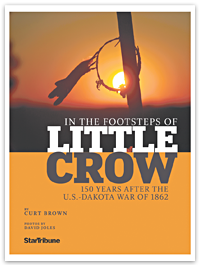
Friday August 10, 2012 Minneapolis Star Tribune journalist Curt Brown appeared on Twin Cities Public Television’s Almanac show in a preview of a six-part Dakota War story set to unfold daily in the Star Tribune, Sunday, August 12 through Friday August 17, 2012.

Leveraging the power of the digital age, the Star Tribune has produced a companion e-book for the series.

Of course, my trusty old Kindle is giving up the ghost. (Everything I try to read is haunted by the image of Mark Twain.) But this is my chance to finally put the free Kindle for PC app on my lap top and read Curt’s book.

In this age of instant gratification, the Strib. is betting readers like me will not want to wait for the next installment when they can pay $2.99 and read the whole thing at once.

Curt was given four months to research and write the series and, as far as I know, he developed this story the journalistic way: reading and interviewing sources –significantly, including some of Little Crow’s descendants –and following up leads to find the story. I can vouch that Curt fact-checked when he realized a statement needed verification –which readers rightly expect.

But there is a tradition in modern journalism that expects reporters to be independent and objective. So newspapers typically don’t ask outsiders to read and fact check a story in its entirety.

That’s quite different from the process a traditionally published book goes through, even for a work released as an e-book, unless it is self-published.

How will journalism read in book form? I need to download that app. and find out.

Posted in Commemorating Controversy, Curt Brown, Little Crow | Leave a comment

Scott W. Berg Interview

I love historiography–the story of how history is made. And I love that in this year of 150th commemorative of the Dakota War of 1862, I live at a crossroads where history is being made.

This interview with Scott W. Berg, author of 38 Nooses: Lincoln, Little Crow, and the Beginning of the Frontier’s End (Pantheon, December 2012), is the first in a series of interviews I’ll be posting with people creating modern Dakota War history.

Scott W. Berg

Scott is in town for upcoming appearances in Bloomington (this Sunday, August 12) and New Ulm (Monday, August 20) –details at the end of this post.

After you read this interview, you’ll understand why I am looking forward to 38 Nooses. I’ve read a lot of new work, some of it scholarly rigorous. But rarely do I find great storytelling based on rigorous research. If the book lives up to its manuscript, in 38 Nooses, Scott W. Berg hits both marks.

*****

CRZ: Scott, the first question everyone asks me this year is, “How did you become interested in the Dakota War?” followed by, “Do you have any family connection to the story?” They’re asking, “What was the genesis of the idea for this book?”

SWB: I don’t have any family connection to the story, if by that everyone means “was your family in southern Minnesota in 1862?” My father’s maternal line, Norwegian farmers, arrived at Kenyon in the late 1880’s; my mother’s lines, German farmers and tradespeople, arrived in Illinois and Iowa a bit earlier than that. But of course everyone raised in Minnesota has a family connection to the story.

I left Minnesota in 1992, when I was 26. I had, over the years, absorbed a very pleasant generalized history that began with a retreating glacier, touched on the voyageurs, and then jumped ahead a few hundred years to Bud Grant. Indians meant moccasins, maize, and place names. Almost completely obscured by that broad-brush painting was the specific origin story of the state. 1858 is an important date, but 1862 far more so. And I never really knew. It wasn’t until I moved away from Minnesota, in fact, that I began to read more broadly and deeply about the Dakota War, and I discovered very quickly that the book I wanted to read about the Dakota War hadn’t yet been written.

That’s how it often begins, I think; you go looking for the book you want to read and you don’t quite find it. In the case of the Dakota War, I spent two decades looking for a nonfiction narrative focused on the last half of 1862 that, number one, didn’t treat the story primarily as a military event, and number two, intertwined the federal, state, and local stories—white and Dakota, as far as possible. This isn’t meant to diminish at all the terrific writing that has happened over the years, but it’s also true that I wasn’t interested in re-writing anyone else’s treatment of the events. I didn’t have a whole lot of answers when I started, but I did have many unanswered questions, and that’s the point of all history writing, right?

CRZ: Is 38 Nooses the book that you imagined, or did it change as it emerged?

SWB: About a year’s worth of work went into the book proposal, including sample chapters, a detailed chapter outline, and a research synopsis. The basic idea remained consistent from conception: several biographical threads covering Lincoln, Little Crow, Sarah Wakefield, Henry Whipple, and to a lesser degree Henry Sibley, John Pope, and John Nicolay, all braided together to juxtapose stories that have been told, and in some cases told quite well, but individually and not so much side-by-side. I had many, many discussions during that year, especially about structure, and the decisions I made then seem more or less to have survived over the past five years of work.

What did change in the writing, somewhat dramatically, was the scope and range of the book. Like all history worth telling it’s an infinite job, but despite that awareness of infinity you still start out the project thinking that you’re going to be the one to say it all. And of course you don’t, can’t, and shouldn’t say it all. Still, when it’s over, you sometimes think more about what you didn’t do than what you did do and you hope people appreciate your choices. The effort to present both the larger sweep of events and many of the close-up details means that each addition and each omission is considered, and often re-considered, with an eye toward maintaining forward momentum and clarity without short-changing the difficult meanings and many ambiguities present in the historical record. That part of writing a book never goes as planned.

CRZ: Tell us about your research for this book.

SWB: The job of a writer of history is to read everything, right? Every letter, every newspaper article, every action report, every memoir, every receipt, every diary. Of course you don’t succeed, but you do spend a lot of time trying to index where “everything” is. I spent a preliminary year just reading biographies and autobiographies: Lincoln, Little Crow, Sarah Wakefield, Henry Whipple, Sibley, Pope, Halleck, Hole in the Day, John Nicolay, the captivity narratives, and others; at the same time, I put together a long and detailed chronology with special emphasis on dates with multiple intersections between characters.

Then it was on to four years in the primary sources and the archives. I corresponded with a lot of scholars and writers at various lengths—some are godsends, many are very helpful, and a few aren’t. I spent day after day in the National Archives and the Library of Congress and, in annual August visits, at the Minnesota Historical Society. I made five or six drives up and down the length of the Minnesota River and took a wonderful paddleboat ride in 2010. And of course I went online—as everyone knows now, it’s almost embarrassing how much material is out there for the viewing, stuff that us over-40 types feel slightly guilty using without leaving our own houses. I also had help from my family in Minnesota—a lot of help, especially of the photocopying variety, a boon never ever to be underestimated.

CRZ: Have you published before?

SWB: Yes. Since 1999, I’ve written feature stories on and off for the Washington Post and the Washington Post Magazine, seventy or so articles to date, many of them on historical topics. My first book was Grand Avenues: The Story of Pierre Charles L’Enfant, the French Visionary Who Designed Washington, D.C., also published with Pantheon and Vintage Books. It’s the story of how Washington, D.C., came to be, viewed through the lens of one brilliant and temperamental designer and his relationships with George Washington, Alexander Hamilton, Thomas Jefferson, and other persons more famous than L’Enfant. What links that book to 38 Nooses, other than a general concern with the actions of less well-known individuals within larger systems, is that both are origin stories—the one a tragedy with a very belated happy ending, the other a tragedy still in search of an ending, an ending that, for all of the well-deserved attention (including my book) now being paid to the 150th anniversary of the Dakota War, seems as elusive as ever.

CRZ: What do you do when you’re not researching and writing books?

SWB: Well, I try to be a good father to my boys, 9 and 7, and a good husband, even during writing deadlines. (I think I hear someone laughing.) I’m on the English faculty at George Mason University in Northern Virginia, twenty-five minutes outside of Washington, D.C.. I teach what they call “creative nonfiction,” including classes in writing narrative history, memoir writing, science writing, and American nonfiction literature. I also coordinate the internship program for our English majors and graduate students. It’s a busy and exciting region of the country for working nonfiction writers—reporters, journalists, writers of history, memoirists, critics, professional and technical writers—as well as for students of writing.

CRZ: When will copies of 38 Nooses be available?

SWB: December 4 of this year, and thanks for asking. Watch for the book at your favorite bookstore (independent or chain), on your e-reader, or in your local library.

CRZ: Where can we find more information about the book and your appearances?

SWB: Come November, one month before publication, we’ll have revamped www.scottwberg.com and launched www.38nooses.com; as they say, coming soon! Those addresses will lead to the same website, and contain information about readings, research, reaction, and more. In addition to my August pre-publication talks in August, I’ll be doing talks and readings in Minnesota, Chicago, DC, and probably New York, all in December and January; those dates and locations will be posted.

*****

Scott W. Berg appearances, August 2012, in Minnesota:

Sunday August 12, 2012 2:00 PM, Scott W. Berg is speaking at the Gideon Pond House in Bloomington, MN on What Makes A Good Story? Writing Narrative History Many people have an idea for a book they’d like to write, but don’t know where to start. Scott W. Berg, author of the forthcoming historical narrative 38 Nooses: Lincoln, Little Crow, and the Beginning of the Frontier’s End and a member of the creative nonfiction faculty at George Mason University in Fairfax, Virginia, talks about the art and craft of moving from idea to book. When do you know that you’ve done enough research to start writing? What is the role of style, plot, setting, and character development in a work of narrative nonfiction? Join us for this second event in the Pond Dakota Society’s “History in the Making” series, featuring a diverse set of practitioners of history taking us behind the scenes of their work.

Monday August 20, 2012 at 1:00 PM at Turner Hall in New Ulm, Minnesota, Scott W. Berg is speaking on Lincoln, Little Crow and the U.S. Dakota War of 1862, followed at 2:00 PM by Gwen Westerman on Choosing Sides 150 Years Ago, both part of the outstanding Legacy-funded Dakota War of 1862 speaker’s series put together by Kris Wiley of the Traverse des Sioux Library System.

Posted in Commemorating Controversy, Scott W. Berg | Tagged | 1 Comment

Finding the Huggins Family

Last Friday morning, six inches of copies richer for having spent Thursday in the library of the Ohio Historical Society in Columbus, Lois and I headed south to Highland County, Ohio.

The 1832-35 Highland County Court House, Hillsboro, Ohio

Thanks to a pre-trip tip from the Highland County Historical Society, we knew the records we hoped to consult were not there, but in the care of the Southern Ohio Genealogical Society (SOGS), housed in the Library of Southern State Community College in Hillsboro.

Lois trolling for Jane Smith Williamson commentary at SOGS.

The SOGS collection runs the gamut from old books to hand-written family genealogies. Although no one has submitted anything on the Huggins family, locally published resources like cemetery transcriptions, county atlases and township histories supplied the data I needed to interpret the land-ownership clues I’d picked up earlier.

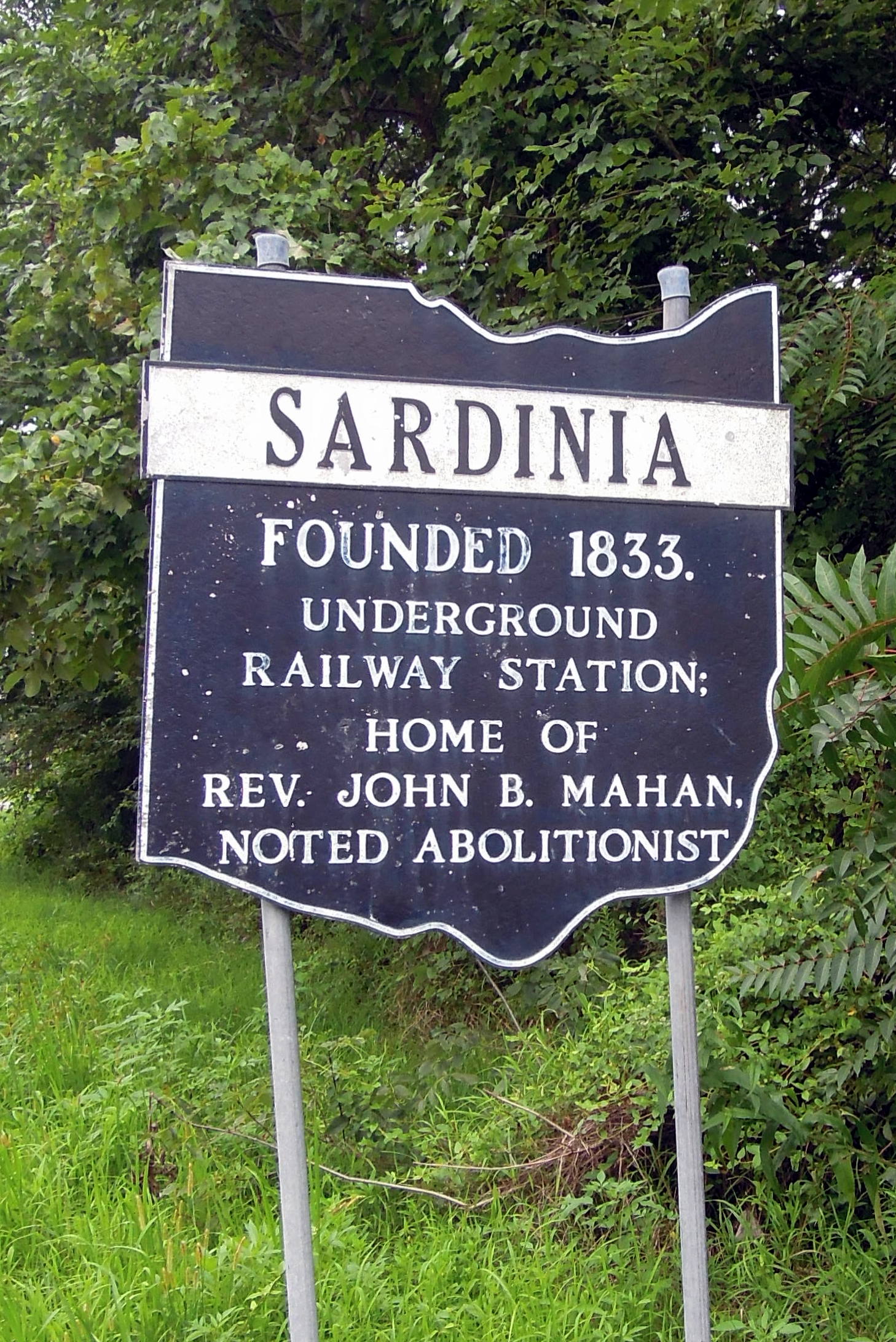
Lois and I navigated from Hillsboro to Buford, Clay Township, a beautiful drive on back country roads. While the village of Sicily existed, south of Buford, it served at the Huggins brothers’ post office address. Before and after Sicily, their letters were addressed to Buford, Highland County, Ohio.

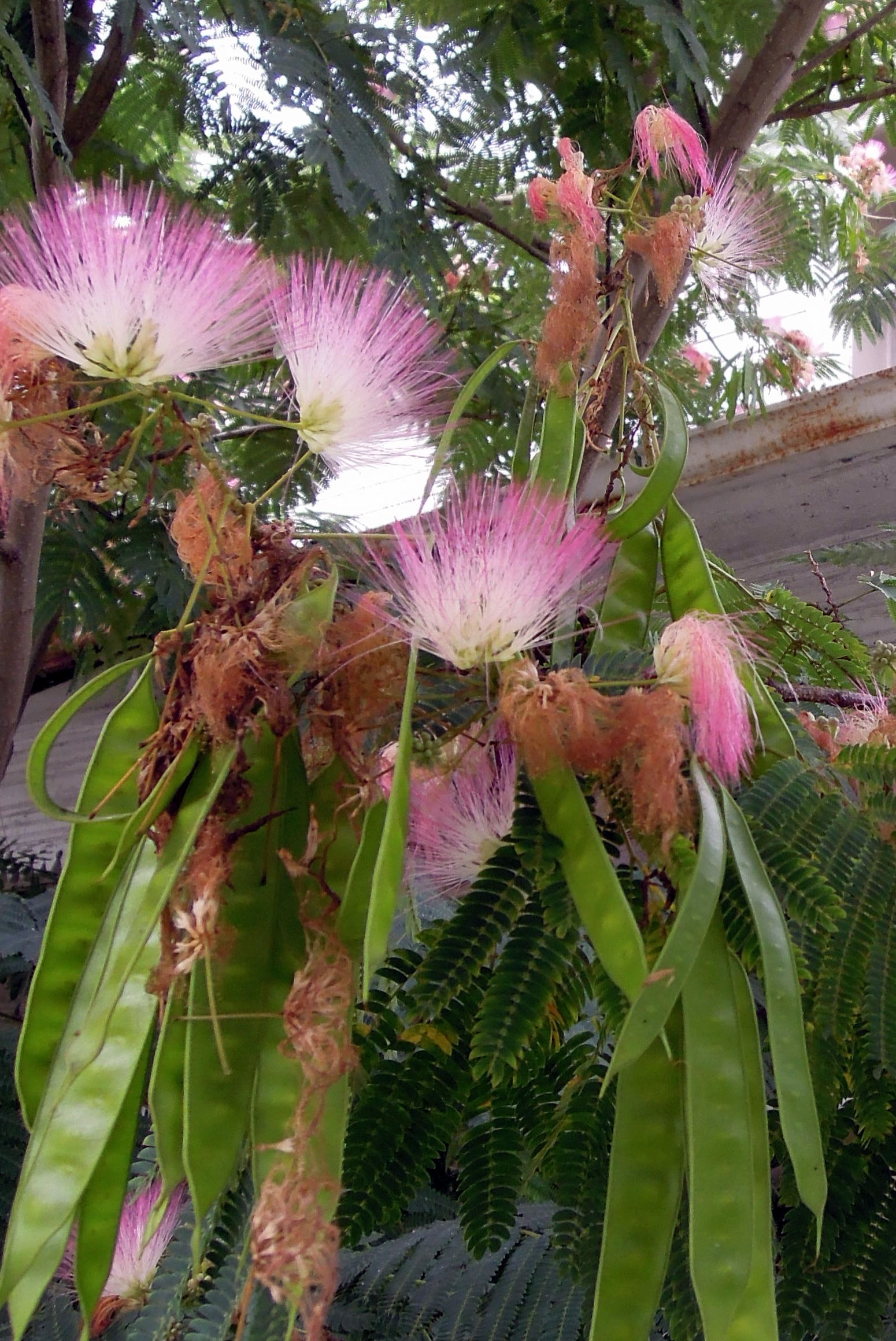
An old abandoned house in Buford caught our attention, its front porch smothered in mimosa. Mimosa and Crepe Myrtle were in bloom, exotic plants to us northerners. I’m sure we looked every inch like tourists snapping photos of local weeds. 

In Buford we put away the Triple-A map and got out a photocopy of a township map from the 1880’s that showed the location of the Huggins family cemetery. Although I have yet to find the Huggins name  on a plat map, I know from period narrative sources that the cemetery was originally located on the land owned by William Alexander Huggins (Alexander Huggins’ father) land later parceled out to his sons.

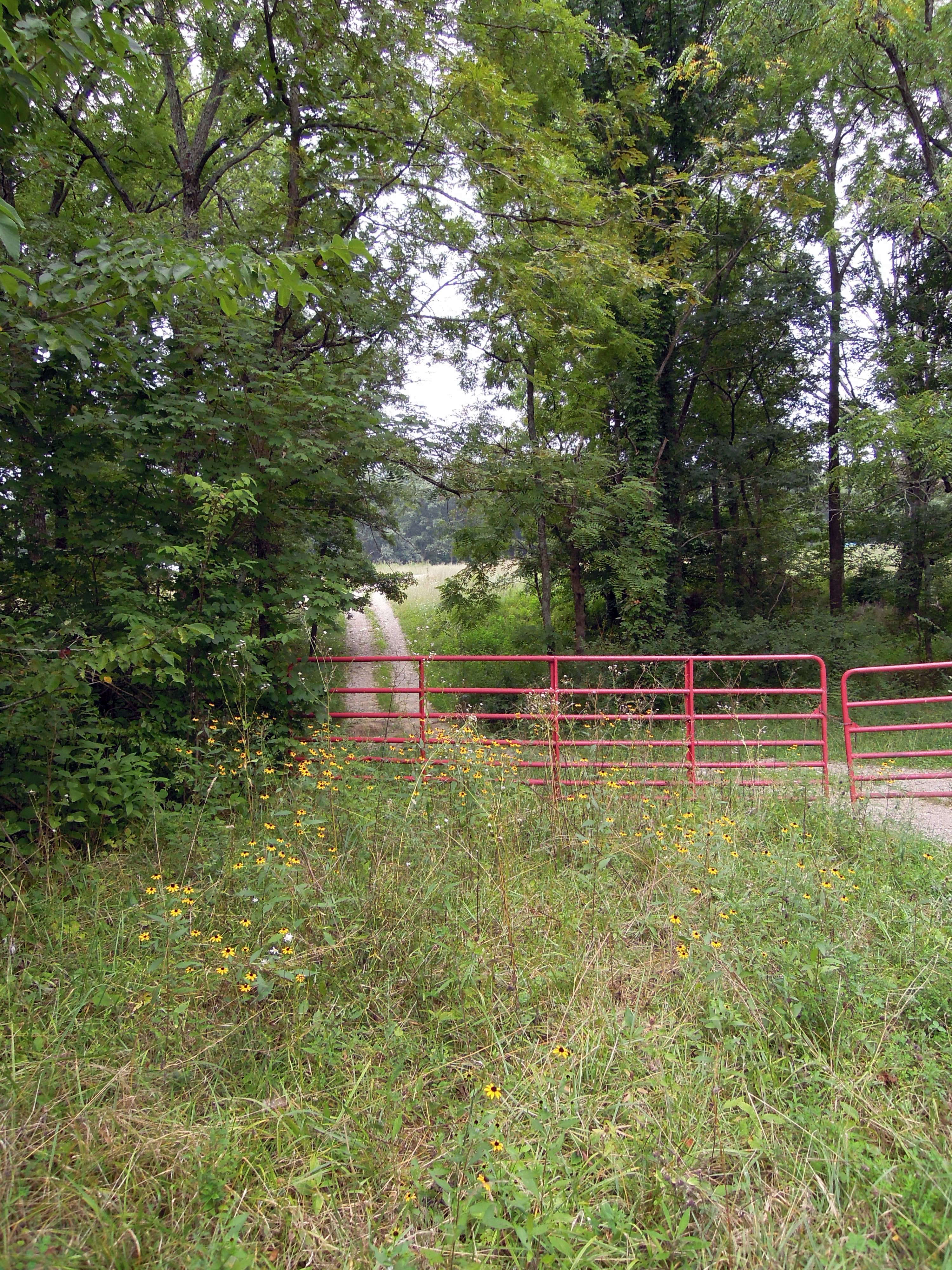
Although the roads have different names now, each one led exactly where the old map said it would: down a dirt road (that is still a dirt road) to this:

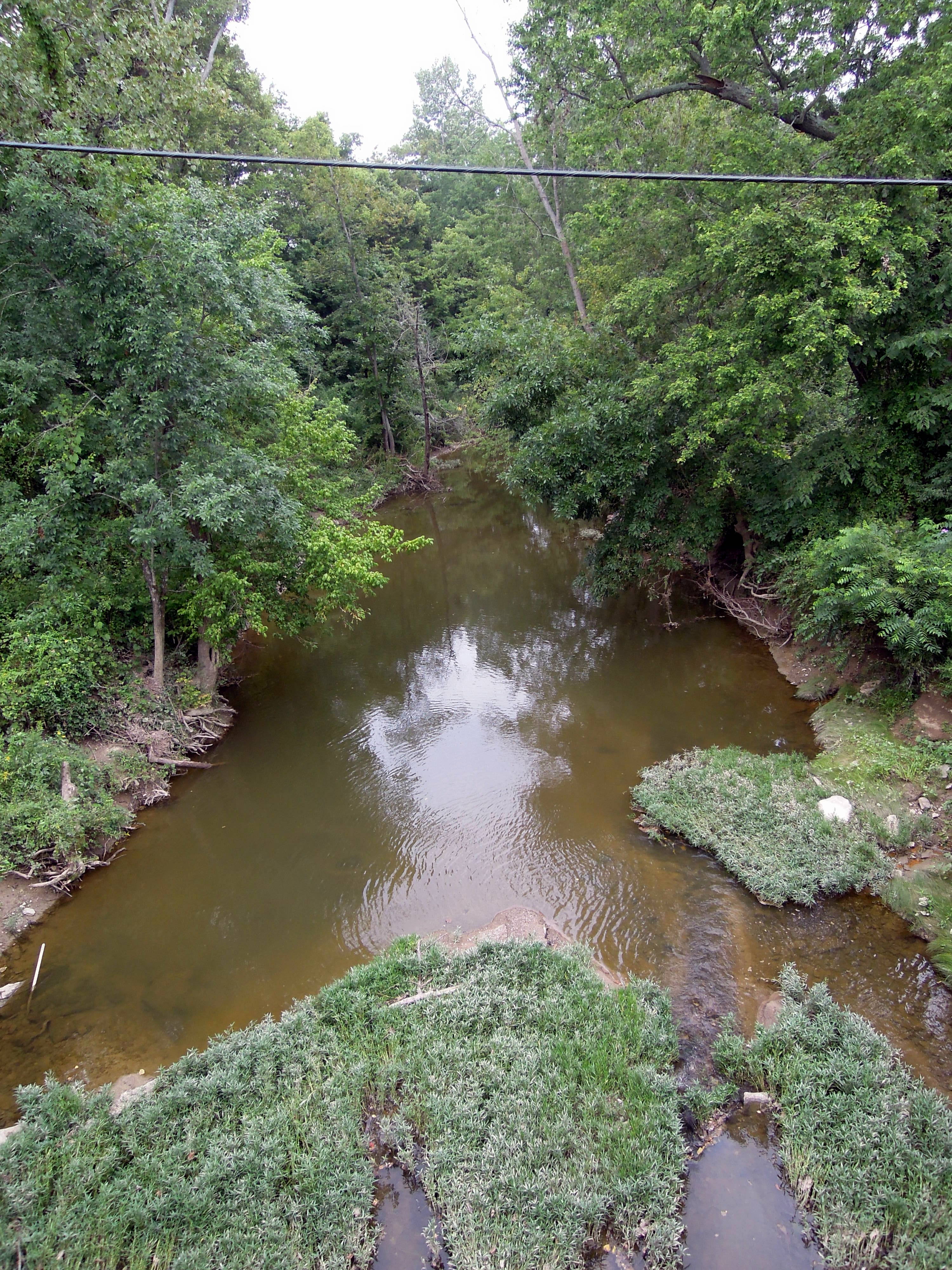
You can’t see the “No Trespassing” sign on the gate in this picture. White Oak Creek meanders through the woods a stones’ throw west of this place.

These horses, if they wished, could nibble grass on the Huggins graves on the hill beyond the “No Trespassing” sign –if the old map is right. A sweet woman who lives across the street told us all the property on the street has changed hands relatively recently and the property owners, in the cases key to my project, do not live on the land. So I will need to do some modern property research to find them.

The neighbor had not heard of a small cemetery in the neighborhood which adds to the mystery: is it really where the old map places it? A 2010 photo on Find A Grave shows similar topography.

But this quest was not really about the cemetery. Finding the private Huggins family cemetery would simply confirm what land-sale records suggest: Alexander and Lydia Huggins walked this road when they were home from Minnesota on furlough. Alexander lived in this place during the months his family waited for permission to admit him to the Lunatic Asylum.

Two of the Dakota young men who went to Ohio in 1842, Lorenzo Towanetiton Lawrence and Henok Mahpiyahdnape, crossed the White Oak on their way to the Presbyterian Church in Sardinia with the Huggins brothers.

The Huggins brothers knew the local Underground Railroad scene so well that one of them would be called as a witness in the defense of John B. Mahan, tried in Kentucky courts for abetting the flight of a human being from slavery.

Posted in Doing Historical Research, Underground Railroad | Leave a comment

The Beacon on the Hill

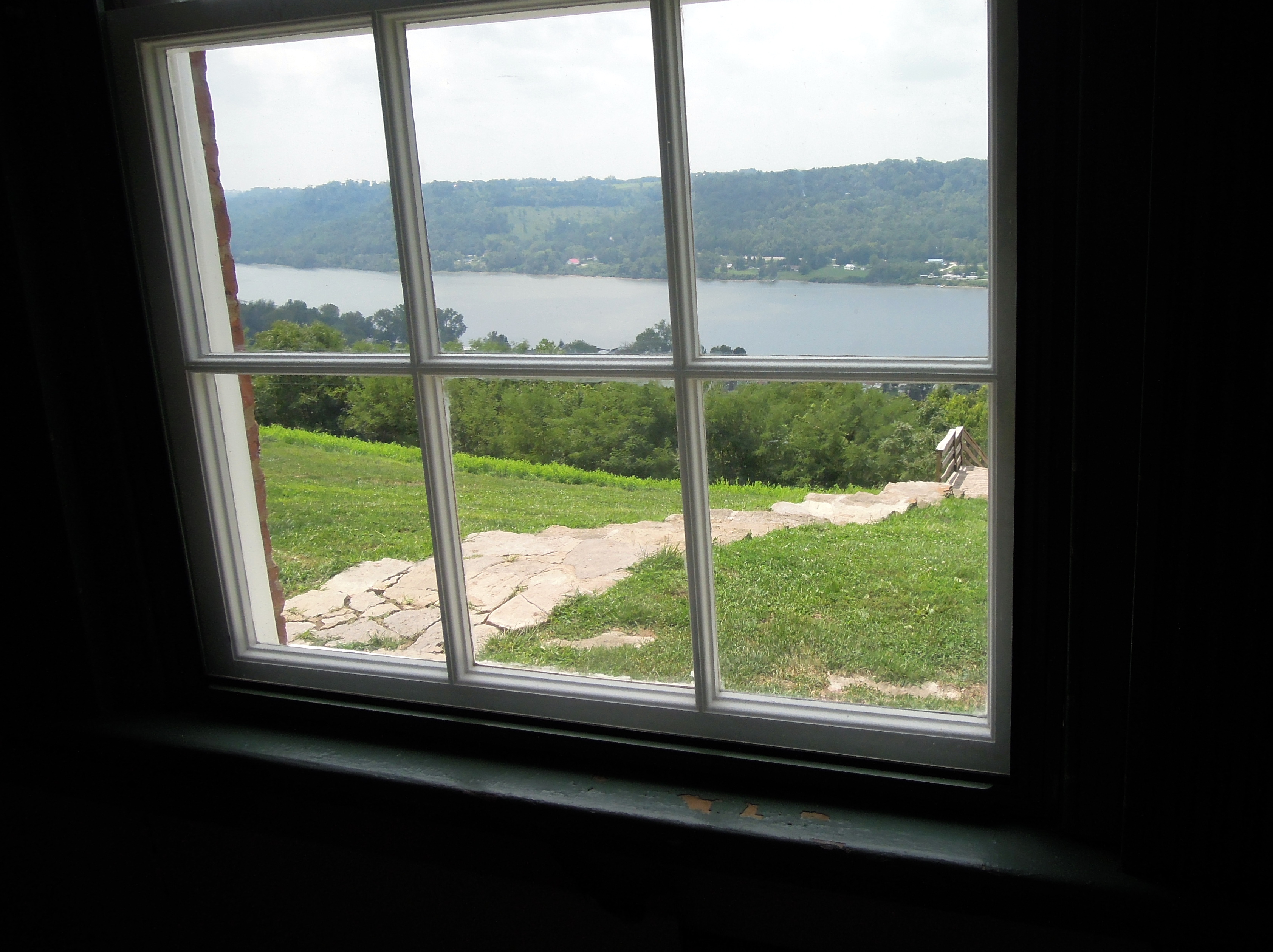
High atop the bluff above Ripley, Ohio, stands the John Rankin House with its front windows looking out over the Ohio River Valley into Kentucky.

A lantern placed in this window at night beckoned people fleeing slavery.

The out-buildings are no longer extant: barns and sheds that sheltered fugitives until they could be safely passed to another “station” further north. But standing here, looking north across the hills of Brown County, I could easily imagine Henry Martyn Huggins’s story about how his father and uncles came to Rankin’s house after the sun went down to offer fugitives safe passage under the false bottom of a wagon they had constructed for that very purpose.

They were Alexander Huggins’s brothers –the family of the man I traveled to Ohio to find.

They were”Mr. H[uggins]’s brothers and cousin near Sardinia” with whom the three Dakota young men spent a year in Ohio in 1842-43. (p. 13-14 of A Thrilling Narrative.)

They were the brothers who sheltered Alexander in their homes –Underground Railroad stations in Clay Township, Highland County, Ohio –in 1857-58, until he could be sent to the Columbus Lunatic Asylum.

That was the year, the family stories say, slavery drove Alexander Huggins insane.

Posted in Underground Railroad | Leave a comment

Gathered at the River

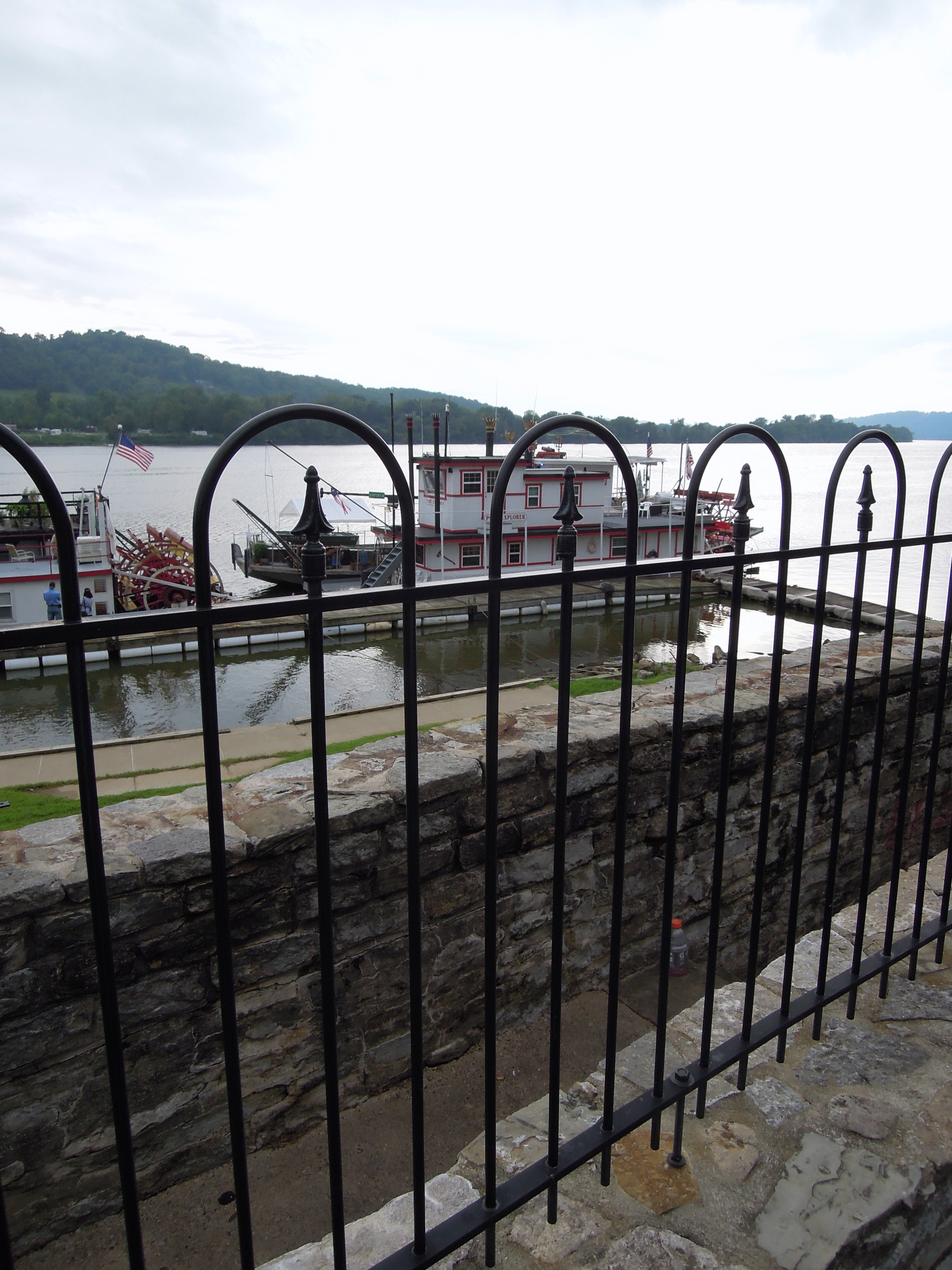
Friday evening after two great days of research, we arrived in Ripley, Ohio, where hundreds of people have gathered to celebrate the 200th anniversary of its founding.

I have no genealogical ties to Ripley. But as Mary Butler Renville’s biographer, I feel like a spiritual descendant of this old town on the Ohio River, the front line in the “war before the War”—the abolition movement that preceded the Civil War.

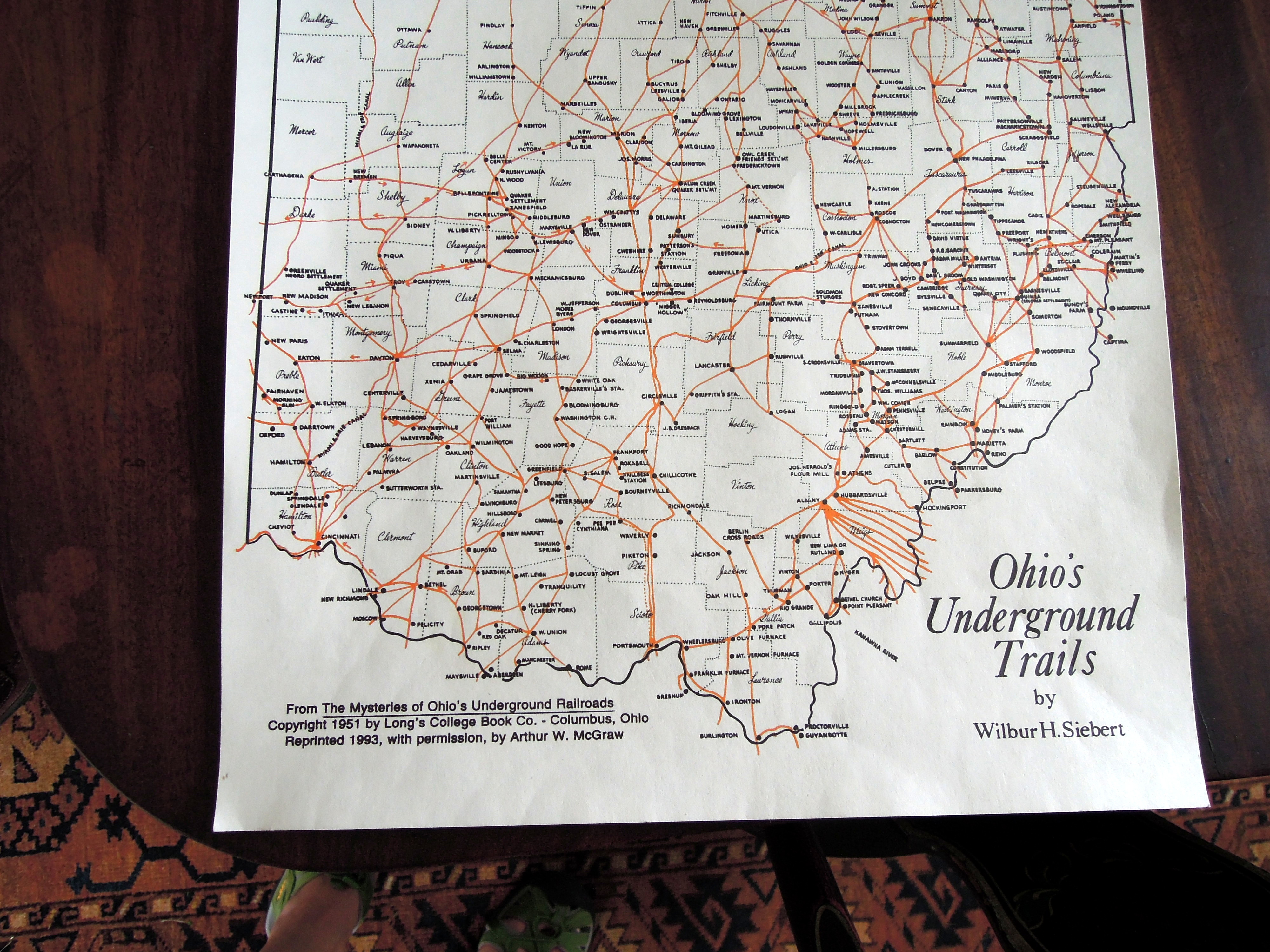
Thursday, I confirmed in the Siebert papers that the networks of the Underground Railroad make it entirely possible that some of the people fleeing slavery who were later aided on their way by the Butlers of Steuben County, Indiana, crossed the Ohio River at Ripley.

Tonight I stood where they stood, at the foot of Mulberry Street and lifted my eyes to the little house atop the bluff, where the Rankin family placed a lantern in the window to beckon freedom-seekers. And I wondered, as do many who stand at this spot, whether the brick house in the foreground sheltered them from them men and dogs in pursuit through the night.

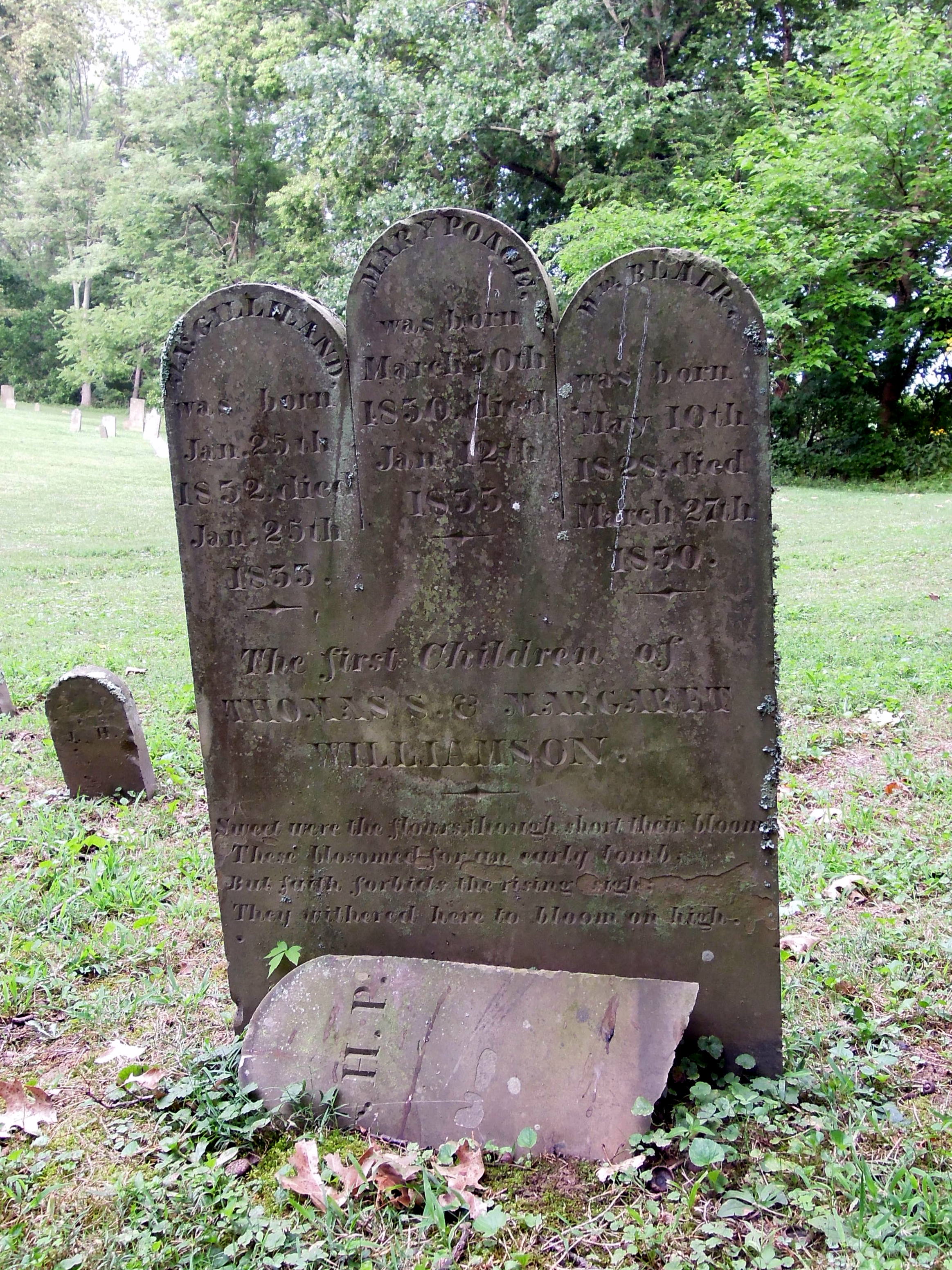
It is known here as the Baird House for its builder. But we call it the Williamson House: the home medical Dr. Thomas S. Williamson purchased in 1831 for his wife Margaret Poage Williamson and their growing family; the home they left behind to move, in 1834, to the place we call Minnesota.

The Williamsons also left this behind: the graves of all three of their children, who died within months of each other in 1832. William Blair Williamason, Mary Poage Williamson and James Gilliland Williamson are buried in the Old Ripley Cemetery, not far from their grandfather James Poage, who exchanged Revolutionary War bounty scrip for 1,000 acres of land in the Virginia Military District and who platted the town that would become Ripley, Ohio. Poage gave the town the land this for its first cemetery.

Hundreds of headstones are gathered here in Ripley on the first rise beyond a river. The Underground Railroad did not exist at the time the first stone was placed.  By the time the last stone was erected, perhaps a thousand enslaved people had crossed the Ohio here, in the words of the old spiritual, bound for Canaan.

Posted in Underground Railroad | Leave a comment