The Peace Coalition Coupon

It was so nice to have a full-house audience this afternoon at the Pond House despite the crazy, icy, mud!

atn-cover.jpg

The coupon code I mentioned is at the bottom of this flyer: 20% off the 2012 edition of A Thrilling Narrative of Indian Captivity. Go to A Thrilling Narrative page on the University of Nebraska Press site, put a copy of the book in your basket, and use the discount code at checkout.

The UNP site also hosts excerpts, including the first 22 pages of my Historical Introduction. Hope you want to keep reading :).

Posted in A Thrilling Narrative | Leave a comment

Thanks, Minnesota! It’s Part of Your Legacy

cross-post from http://www.ponddakotapress.org

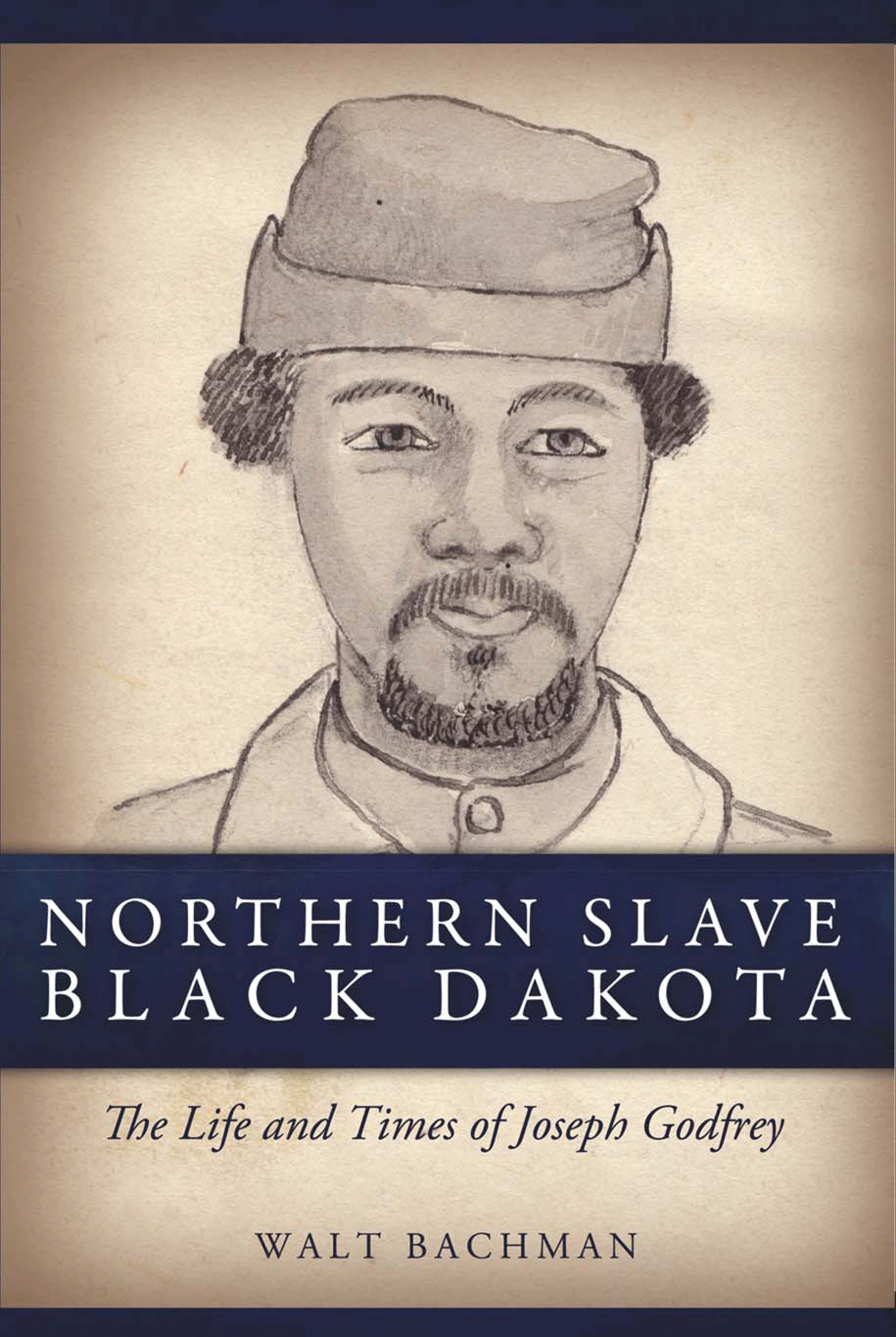
It’s March 12, 2013, the official release date for Pond Dakota Press’s first book, Northern Slave, Black Dakota by Walt Bachman, and I want to say, “Thanks!” to about 500 thousand people.

Did you know that if you pay sales tax in Minnesota, you helped publish this book?

Legacy Ammendment Logo

In November 2008, Minnesota voters voted, “Yes,” to enact the Clean Water, Land and Legacy Amendment to the Minnesota Constitution. Each time I’ve had the chance to share this story publicly, people comment that they had no idea, but are glad to know that something they did in private in a voting booth four years ago, and continue to do invisibly every time they pay sales tax, has tangible results.

This is how I framed it for Bachman’s Bloomington Human Rights Commission audience on February 24, 2013:

“I’m so glad so many of you could join us today because the biggest “thanks” we can convey goes out to you. Fully half of the project expenses of producing this book have been funded by you. On November 4, 2008, Minnesota voters approved the Clean Water, Land and Legacy Amendment to preserve and enhance some of our state’s most important resources, including history. The resulting amendment to the Minnesota Constitution often referred to as the ‘Legacy Amendment,’ created four funds, one of which is the Arts and Cultural Heritage Fund. As a result, funding to support the preservation of Minnesota’s history and cultural heritage is now written into our state constitution, administered through the Arts and Cultural Heritage Fund via the Minnesota Historical Society.

This book is one fruit of your investment. With our Legacy Grants as seed money, we raised the remaining half of the costs to professionally publish this book, an undertaking that was impossible for an organization our size prior to the Legacy Amendment.

Further, the investment of your tax dollars has enabled Pond Dakota Press to make great history accessible to people of all reading abilities. So in about six weeks, Northern Slave Black Dakota will also be available in Large Print, in Braille, in phonetic print for people with dyslexia, in the universally accessible DAISY Talking Book format, and as an electronic book for any e-reader device you own.

Finally, thanks to the generosity of Walt Bachman, who has donated publishing and distribution rights, and customary royalties to the Pond Dakota Heritage Society, all the profits from the sale of Northern Slave, Black Dakota will fund the public history mission of the Society, including its publications initiatives as Pond Dakota Press.”

More than simply say, “Thanks!” we wanted to show it. So we just finished mailing a free copy of Northern Slave, Black Dakota to each region of Minnesota’s statewide library system. So go ahead and ask for the book; your local library will soon be able to fill your request :).

Live outside Minnesota? If you’ve purchased anything in Minnesota since 2009, this is a fruit of your sales-tax investment, too. Your library buys books based in part on patron’s requests. So let your local library know you’d like to read it! You can also check out the great price holding on Amazon.com or click over to the on-line excerpts on www.ponddakotapress.org and start reading.

Posted in accessible publishing, Pond Dakota Press | Leave a comment

The Power of the Written Word

One of the highlights for me of the pre-release weekend for Northern Slave, Black Dakota, was sitting in Gideon and Agnes Pond’s living room talking shop with some of my favorite historians.

You know that tip-of-the-tongue phenomena when you lose a key word at a critical moment and can’t express the thought you meant to articulate?

Well, we historians got onto the subject of tip-of-the-brain phenomena. It happens to all of us. No matter how carefully we try to organize our research, every one of us could share a story about sitting down to write, making a connection that never occurred to us before, and not being able to find the perfect source that flashes to mind to support the connection.

Really not be able to find it. I go down to my file room, kneel in penance before the cabinets and diligently refile everything piled on top — the paper that has come loose or has turned up fresh since my last fetish of can’t-find-something filing. But despite the rituals of restoring order, of vowing that I will refile more often, the missing source eludes me.

A Dakota friend put it this way: We don’t find sources when we’re ready. When they are ready, sources find us.

Last week it happened. A source came back to me, a source I have been waiting on for eight years.

Maybe it took pity on me and figured I’d served my time?

Or maybe it really, really, did not want to be pinned down in note in A Thrilling Narrative and figured now, nine months after the book’s publication, it was safe to show its face.

(This source is too old to know it will go farther on the Internet than in a book.)

*****

One of the themes in my Historical Introduction to the 2012 edition of A Thrilling Narrative of Indian Captivity is Dakota agency –the ways Dakota people appropriated elements of Western culture offered to or imposed upon them, and used them for their own purposes.

You don’t have to look far in the primary literature, like letters written from Dakota country from the late 1830’s through 1862, to see this happening. In fact, it is prominent for the very reason that non-Native observers found it striking–and often, annoying. So they wrote about it.

Unfortunately, the Dakota War of 1862 cast a huge shadow backward obscuring stories like this one. Histories written in the wake of the war –which are most of them –are informed by a chronic sense inevitability: of course Dakota culture would be overrun by white culture; of course Dakota people would be displaced from Minnesota by settlers. The fact that they were made the logic self-evident.

But simply, it is not true.

One way we can see it is to read the letters and other documents Dakota people left us in which they talk about their selective process of adopting elements of white culture. In these documents, Dakota people explain what they were adopting (and not), and often tell us why –their rationale.

Guess what? It isn’t because they admired white people and wanted to be like them.  It was because there was something in it for them. It was a means to an end. 

This is the case of an 1838 letter written in Dakota at Lac qui Parle by Wambdi Okiya –whose name is often rendered in English as “Eagle Help,” following the translation used by the Dakota missionaries. Ella Deloria, who translated Wambdi Okiya’s letter into English, calls him, “Leagued with the Eagle.”

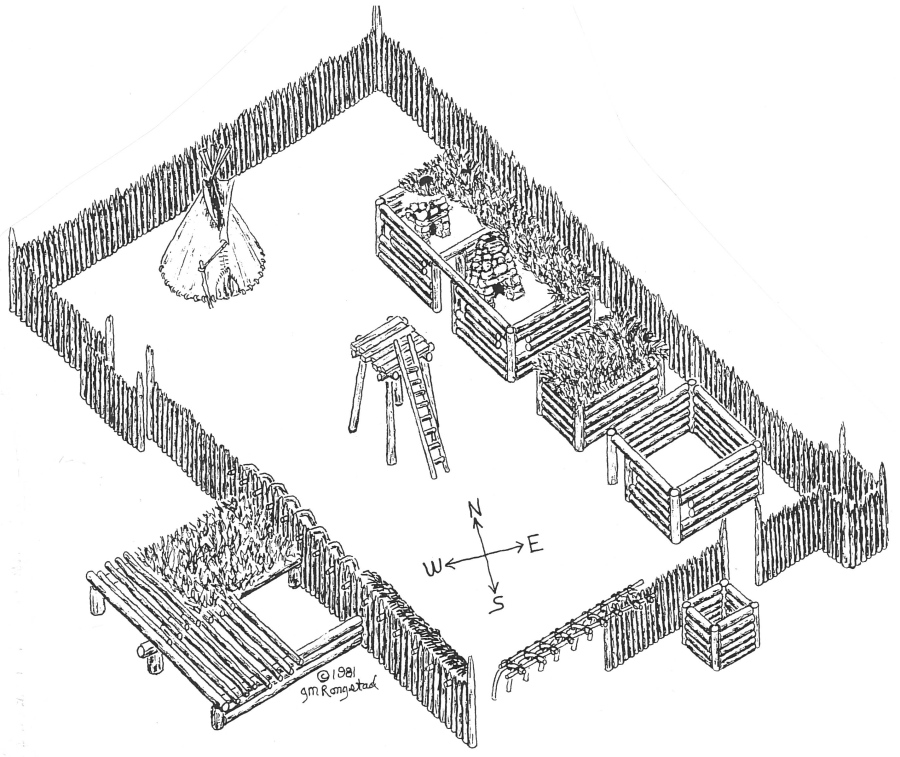
fort-renville-cropped-no-words

Archeologist’s drawing of Fort Renville, Lac qui Parle, MN, where Wambdi Okiya learned to write in Dakota.

Wambdi Okiya was a member of Joseph Renville’s soldier’s lodge at Lac qui Parle and learned to write Dakota in starting in 1835. Three years later, he explained to his missionary teachers why they hadn’t seen him in a while:

“When you first settled here and taught us writing, and you said you were going to teach us everything, at that time, I alone listened to all you said. But you have never heeded anything I have said to you… I supposed that because you taught me writing, therefore what I asked would be granted, and so I bent every effort towards learning, and lo, from that time to this, I am even worse off…. I want you to be kind to me, but you are not, that is why I haven’t come for a long time. What I wanted was for you to give a little pig to my mother.” –“9th letter Wozupi-wi, Omaka 1838,” Ella Deloria translator, A Thrilling Narrative (2012) p. 10.

“I supposed,” Wambdi Okiya said, “that because you taught me writing, therefore what I asked would be granted….”

But what did he mean? What was the relationship between writing and getting what he wanted? In showing an interest in the missionaries’ teachings, was he developing a relationship that he thought might give him favored status?

When I read this letter for the first time in the beautiful old reading room at the American Philosophical Society in Philadelphia eight years ago, a different interpretation came to mind. One of the missionaries had written, somewhere, that in the earliest days of the Presbyterian mission, Dakota people believed that written words were uniquely true. As if writing was a mystery that actualized what was recorded.

I couldn’t remember where I had read that. But I was confident I had and considered the other letters written around this period and translated by Deloria with that idea in mind.

Four years later, when I sat down to write the Historical Introduction, I wanted to use Wambdi Okiya’s letter as a snapshot of that place and time because I understood it was a fleeting moment in history, an idea that Dakota people quickly grew disillusioned with. As Wambdi Okiya, said, writing didn’t work as expected.

But by then, the genie was out of the bottle. Dakota people were writing. Some who had learned it gave it up. Others, like Wambdi Okiya, kept writing for the rest of his life.

But in eight years of trying to file-and-wish the mystery source into appearing, it did not show itself. So I used the letter with no annotation on Wambdi Okiya’s supposition, “that because you taught me writing, therefore what I asked would be granted….”

Last week, it came out of hiding. In 1858, Stephen Riggs, writing about Tunkan Wicasta, one of Wambdi Okiya’s fellow soldiers at Lac qui Parle, commented:

“The first winter the mission was commenced, in 1835, Dr. T. S. Williamson taught the young men of Tokadantee, which was occupied by Mr. Renville’s soldiers. The Dakota language was then unwritten. The strange sounds which occurred in it had not then their representatives fully settled upon. There were, of course, no books. Some lessons prepared by hand with types and brush were the best that could be obtained. Slates and pencils were used, but sometimes it was more convenient to make the letters in the ashes. In the Soldiers’ Lodge many young men learned to read and write their own language before they obtained any idea of the benefits of education. Their first notions of these benefits were very inadequate and often very erroneous; they had often been told that “the book did not lie.” Their inference was that everything written must be so. Accordingly, a man sits down and writes, “Medicine Man [Thomas S. Williamson’s name in Dakota], I want you to give me a piece of meat.” The book tells what it was told to tell, and in that way speaks truth. But the Medicine Man can not give the meat and so the book lies. But by degrees book education came to be better understood.”

Why is this source important? Not because it backs up Wambdi Okiya’s letter. But because Wambdi Okiya’s letter backs up Riggs’s story.

Those of us who work in the records left by the Dakota missionaries can be grateful that they documented daily life as it unfurled around them in the decades they interacted with Dakota people. At the same time, we know how culturally-centric was the missionaries’ point of view. They interpreted things as they understood them, which wasn’t necessarily the way they actually were. Certainly not from a Dakota point of view. For that, we need to listen to Dakota sources.
Posted in Dakota Language, Doing Historical Research, Wambdi Okiya | Leave a comment

Great Price on Northern Slave

Amazon has a fabulous pre-release price on Northern Slave, Black Dakota right now: $23.07 as of this moment, with free shipping options. Even better, Amazon has copies in stock and is already shipping them.

Northern-Slave-postcard-1

Amazon’s typical pricing strategy is to offer a great price on pre-ordered books (orders placed before the official release date) but to raise their price at or before the official release date. For Northern Slave, Black Dakota, that date is March 12, 2013.

So if you’ve been thinking about reading it, this is a great time to buy! The cover price is $34.95. Why not get it for less? Enjoy the price and the story  :).

As for me: I’ll be back to blogging this week, having covered the overwhelming –and overwhelmingly positive –feedback generated by the 150 people who joined us for Walt’s pre-release program on slavery in Free states last week, then went home and told their friends about the book and Walt’s availability to speak. A nice problem to have!

Posted in Slavery in Free states, Walt Bachman | 1 Comment

Review: Dakota Child, Governor’s Daughter by Bruce A. Kohn

Guest Post by Lois Glewwe

DakotaChildcover

Dakota Child, Governor’s Daughter: The Life of Helen Hastings Sibley, by Bruce A. Kohn, Friends of the Sibley House Historic Site, Mendota, MN, 2012

Helen Hastings Sibley was one of the most enigmatic characters in early Minnesota. Born on August 28, 1841, to a daughter of Dakota Chief Bad Hail, she was to spend the majority of her life as a privileged member of Saint Paul, Minnesota’s rising middle class. This transformation was only possible because of the man who was her father – Henry Hastings Sibley, Minnesota’s first State Governor.

Bruce A. Kohn devoted more than two decades of research to learning everything possible about Helen, whose name in Dakota was Wah-ki-ye, or The Bird. He tells her story in a readable, narrative style, adding imagination to his documentation: a wide variety of source documents. Perhaps most interesting to historians is Kohn’s interpretation and discussion of Henry Sibley’s relationship with his Dakota daughter as found in an impressive collection of sources.

Helen was born when Sibley was a 30-year-old, single entrepreneur who managed the trading post in the village of Mendota on the Minnesota River opposite Fort Snelling. His relationship with Helen’s mother, Red Blanket Woman (whom Kohn identifies as Tashinahohindoway in Dakota) apparently resulted in only one child and did not continue after Helen’s birth. Kohn cites several sources, however, which indicated that Sibley kept track of her and Helen even after his marriage to Sarah Steele on May 2, 1843.

By bringing together this rich collection of sources, Kohn allows the reader to come to a fuller appreciation and understanding of the lives of the children that were born to Dakota mothers and white fathers in the earliest years of Minnesota. While some of those children remained with the Dakota all of their lives, many, like Helen, were taken away from their mothers in childhood and sent to live with white families and to attend white schools. In Helen’s case, Sibley took her away from her mother when she was about six years old and paid William Reynolds Brown and his wife Martha to provide her with a white home and white education.

Kohn provides fascinating detail of what Sibley paid for her room and board and offers a list of prices of clothing, shoes and even a melodeon that he bought for Helen over the years. He also provides records of payments to Dr. Thomas Williamson for medical services he provided for Helen, including setting a broken arm.

Despite the evidence of Sibley’s involvement in Helen’s life, he never acknowledged her as his daughter in writing, omitting his name from her baptism certificate and from the scrip claims which he filed on her behalf.

Helen’s story does not have a happy ending. She married a physician, Sylvester Sawyer, on November 3, 1859, and moved to Wisconsin, where they established a modest home and medical practice.  Their first and only child, Helen Mary Sawyer, was born on September 4, 1860, but neither Helen nor the baby survived. Helen was just nineteen years old when she died of scarlet fever on September 6, 1860. Baby Helen died six days later.

Bruce Kohn has made a worthwhile contribution to the story of Minnesota in this highly enjoyable work. The only thing I wished for was some indication of what he may have learned along his journey about the rumors that Sibley had other children with Dakota women. Perhaps he’s leaving that for another volume.

Dakota Child, Governor’s Daughter is available by mail order at http://www.sibley-friends.org/store/ for $14.95 plus Shipping and Handling.

Historian and author Lois Glewwe blogs at Dakotasoulsisters.com.

Posted in Books | Leave a comment

Minnesota Slavery is News

Did you catch Amy Goetzman’s February 22, 2012 MinnPost interview with Walt Bachman?

walt bachman

Walt Bachman, author of Northern Slave Black Dakota: The Life and Times of Joseph Godfrey

““In Minnesota, there were never large gangs of farm workers, or auction blocks. There weren’t those trappings of the worst forms of slavery,” Bachman told Goetzman in a February 20, 2013 interview. “But there is ample evidence of brutality towards slaves in Minnesota, including a slave who was whipped to death by her Army officer master. Slavery, wherever it was practiced, was a pernicious institution, and Minnesota was no exception.””

Goetzman’s article is a great introduction to the story. Join us this Sunday and hear Bachman live as he presents this story publicly for the first time!

Posted in Uncategorized | Leave a comment

Advance Copies of Northern Slave, Black Dakota

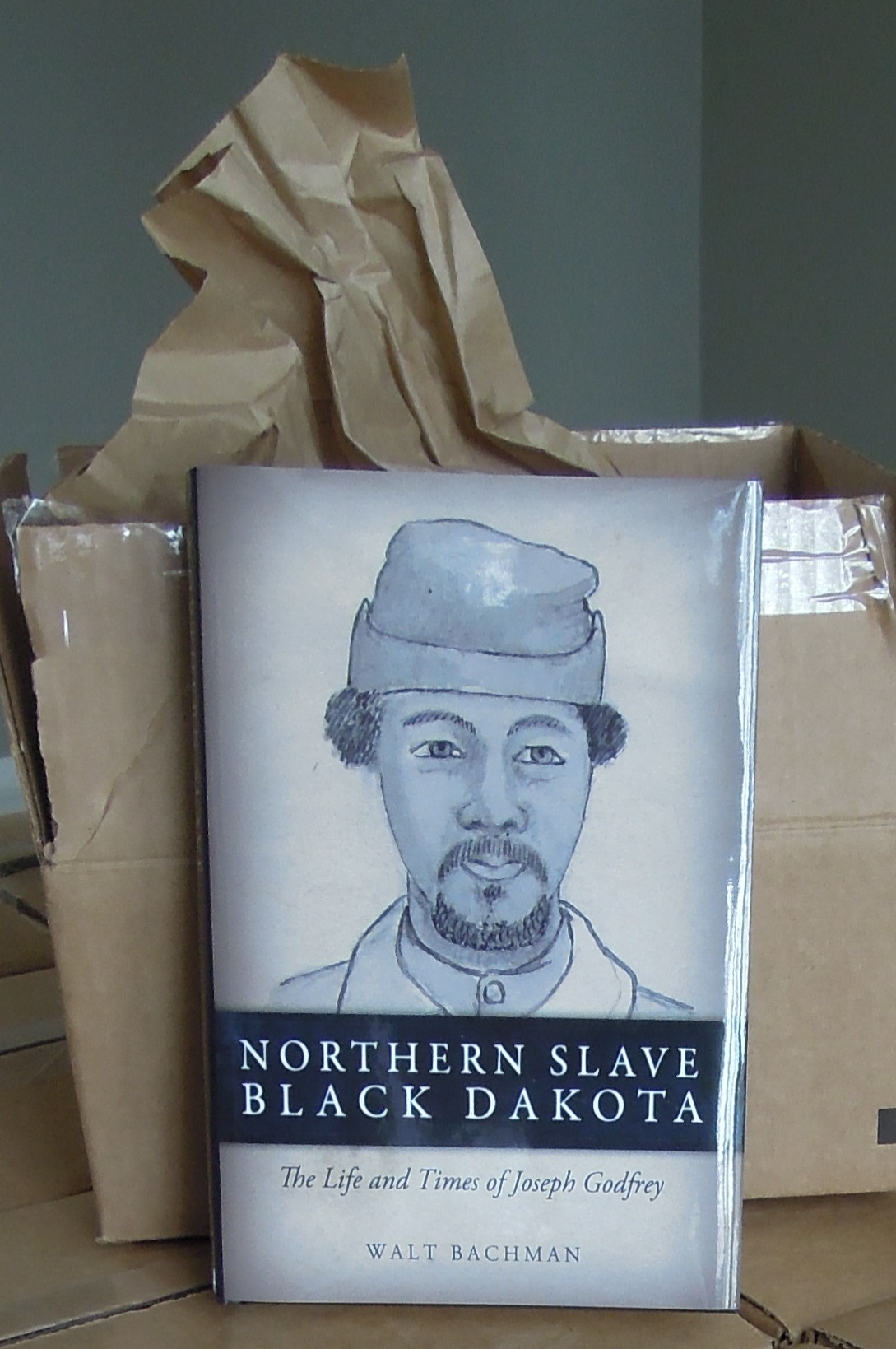
DSCN4774

Advance copies of Walt Bachman‘s Northern Slave, Black Dakota are here! Pond Dakota Press will have copies available for sale and signing this Sunday, February 24, 2013 at Bachman’s Black History Month event, “Northern Slaves: How the U.S. Army Brought Slavery to Minnesota.” Bachman’s talk begins at 2:00 PM. We expect a capacity crowd, so come early to get a good seat.

The book sale opens at 1:30 PM. The cover price is $34.95. But thanks to Legacy Grant and donor funding, we are selling advance copies for $29.95. Northern Slave, Black Dakota is 412 pages in hardcover, with 12 illustrations, 3 maps, bibliography and index. The official release date is March 12, 2013.

Bachman’s talk is sponsored by the Bloomington Human Rights Commission and will be held at the Creekside Community Center, 9801 Penn Avenue South (the corner of 98th and Penn) in Bloomington, MN. The best parking is available in the large lot behind the building (lot entrance on 98th); you can also enter the building from that side.

Hope to see you there!

Posted in Slavery in Free states, Walt Bachman | 1 Comment

To Whose Benefit?

“The famous Lucius Cassius, whom the Roman people used to regard as a very honest and wise judge, was in the habit of asking, time and again, ‘To whose benefit?'”

–Marcus Tullius Cicero, 80 BCE

*****

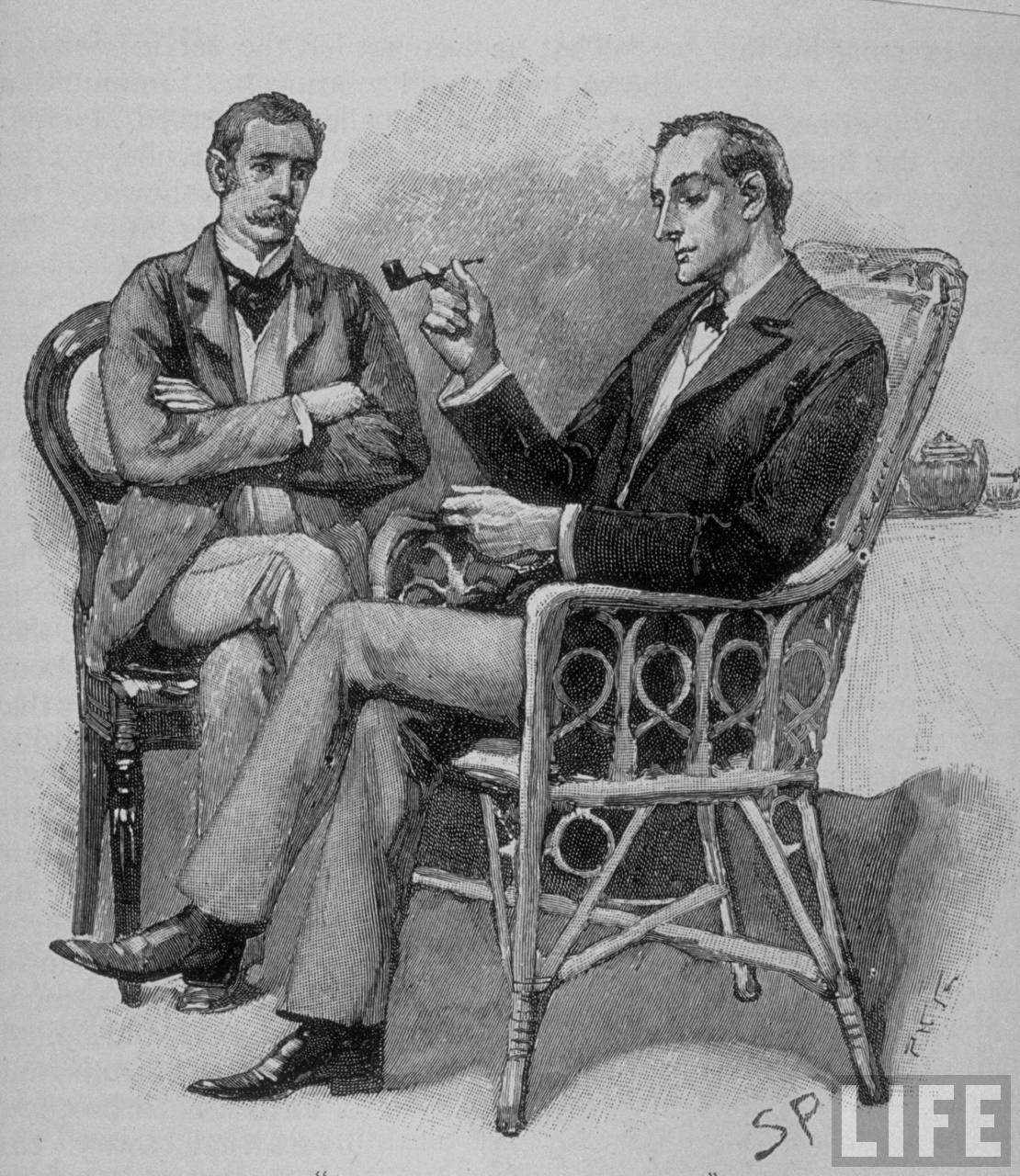
Holmes and Watson

“Answer the question of who benefits or profits most directly from an action, event, or outcome and you always have the starting point for your analysis or investigation, and sometimes, it will also give you the end point.”

–Sherlock Holmes in Sir Arthur Conan Doyle’s “The Adventure of the Naval Treaty” in The Memoirs of Sherlock Holmes, 1893.

*****

So what the big deal about a missing photo? In the end, MHS found a copy in a research file, so it wasn’t really lost? Right?

Wrong. The image of the beam said to be from the scaffold that executed 38 Dakota men at Mankato in 1862 was a public document while it persisted in the Minnesota Historical Society’s cataloged photo collection, and while it remained listed in the MHS on-line Visual Resources Database or VRD.

When the photo was deleted from the VRD, it ceased being a visual resource for the public, and for the MHS staff who use the VRD every day.

That a copy of the lost photo turned up in a research file –a non-public reference maintained by MHS curators for internal use –and that it was discovered in a file for a different object –and that it is now, again, publicly available –are all twists of good fortune.

It speaks to the imagination of MHS Registrar Lolly Lunquist, who decades ago had the foresight to make a paper copy of the beam photo and tuck it into the research file on MHS’s noose. And it speaks to the curiosity of Ben Gessner, who was researching the noose and recognized the importance of the beam photocopy when he found it.

It also speaks to the new culture in the works at MHS. Before I contacted Gessner he’d already reached out and offered the photo to another institution that had research interest in the subject. He was also willing to meet with me and volunteered information that, being from an internal file, he had no obligation to share an outsider under the the old code.

That adds up to: MHS no longer thinks it is in its best interests to withhold the beam photo from the public. Most of us probably agree. (Although it was likely easier to be forthcoming about  a controversial object held by another institution –the Blue Earth County Historical Society –than about one of the equally controversial objects in its own collections.)

But that begs the question: Why was the image removed from the public record after August 2004? To whose benefit was that act of historical erasure?

The only people who can answer that with certainty have moved on.

It has been nine and a half years since the image of the 1862 beam disappeared from the VRD. But the clues suggest one of the  issues is even more resonant today than it was, then: a 1990 law called NAGPRA. And that is in part due to new (ancient), collectively powerful, players in the discussion: the Oceti Sakowin.

In the next part of this post, I will explore the intersection of NAGPRA and the Oceti Sakowin, with the story of the 1862 execution artifacts in the present, including the beam in the missing photo.

Regardless of the benefits motivating the people of the past, I think most of us realize that people in the modern-day are not immune to self-interest. The difference is that until recently, our corner of the history world operated on a polarizing us-versus-them model. The paradigm shift is that some have begun making choices that show them wising-up to the mutual benefit of acting together.

Posted in Blue Earth County Beam, Minnesota Historical Society, NAGPRA, Oceti Sakowin | Tagged | 1 Comment

Image Not Found

So why is the MHS photo purge a story?

It is history in its own right.

It is also emblematic of how history is made.

Third, you voted it so. My Execution Artifacts Report, “A Veiled Cabinet of Curiosities: A preliminary report on Minnesota’s 1862 gallows artifacts,” is one of the most-visited sources on this site. In less than ten months, it has been cited in five print and media articles and one forthcoming book.

The turning point in that story was an Minnesota Historical Society (MHS) employee, Ben Gessner’s, discovery of a photo that MHS believed was lost in the photo purge.  Tim Krohn of the Mankato Free Press summarized in a February 10, 2013 article:

“Early last year, Potter [Director of the Blue Earth County Historical Society] said the timber in her collection could not be from the gallows and instead was likely a beam from a military bridge. She said the timber was not the same one that had been held for years by the University of Minnesota.

But in April of last year Potter confirmed the timber was in fact the same one that had been at the university. The turnaround came after a photograph taken of the timber at the university — thought lost — was found in files at the Minnesota Historical Society. The timber in the photo matches the one now in Mankato.”

How Did MHS Lose the Photo?

The email explaining the MHS photo purge came to my attention in August, 2012 about four months after I published my report. Watch what happens when I lay the chronology in the email on top of the story of the missing photo.

Roll back the clock one year to One Noose, Two Beams: Same Story. On February 10, 2012, the Blue Earth County Historical Society in Mankato, Minnesota, went public with a startling revelation: the huge timber in their storeroom they had previously exhibited as a beam from the 1862 scaffold, and, acting on the advice of the Minnesota Historical Society, were sheltering from non-Dakota researchers as a NAGPRA-protected native funerary object, was not a beam from the gallows after all.

The turn-around did not seem logical to me. In my files I had a copy of a 2004 letter from James Lundgren, then-Director of the Blue Earth County Historical Society, addressed to historian Walt Bachman affirming that the beam in storage at BECHS matched a photo of the beam in the Minnesota Historical Society Visual Resources Database (VRD). Bachman had also given me a copy of the beam image printed off the MHS site bearing a VRD copyright date of 1999.

But the photo of the beam vanished from the VRD sometime after James Lundgren viewed it in August 2004. When had MHS removed the image? Why?

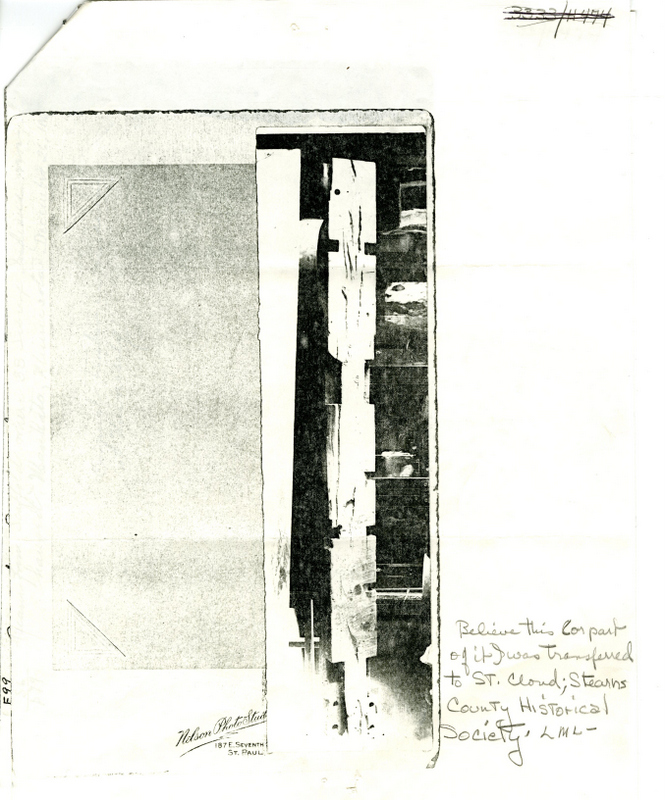
On March 28, 2012, I met with Ben Gessner, MHS Collections Assistant and NAGPRA compliance officer, and mentioned that I had a photo I wanted to show him. We opened our files. I had something he’d never seen: the 1999 VRD image of the beam. And he had something I’d never seen: this photo, from which the VRD image had been cropped:

img001

I asked: Why isn’t the photo currently in the VRD?

Gessner said he didn’t know. He found his copy in MHS’s research file  on a related 1862 artifact, the Arnold noose. Then Gessner made an educated guess: Maybe as a copy, the photo had been removed when MHS weeded its photo collection?

His hypothesis was consistent with my understanding of the photo purge and I included that idea in my report.

Next, Bruce White shared the 2001 MHS email dating the initial photo weeding-discussions to 1997, a process that was referred to in the past tense by the time the memo was written in 2001. That made sense given MHS’s stated purpose: to clean up its photo collection prior to the launch of the on-line VRD.

So the new twist in the story of the lost photo of the beam is that the image actually survived the infamous photo purge, and had been included in the 1999 edition of the VRD. The image was available on line for viewing on the MHS website at least until August 2004.

Then what happened? Ben’s uncropped photo contained two clues: a reference to the University of Minnesota and another to the Stearns County History Museum. Was there any chance MHS, sometime after 2004, had returned the photo to it’s source? I checked. Neither institution has a copy of the photo.

So what happened to the MHS image of the beam labeled as being from the 1862 scaffold–an identity BECHS now proposes is a century-old hoax?

A paper copy of a photo might go missing if it was misfiled. But I think the only way a digital image vanishes is when someone who has access to the system pushes a delete button, then executes a second command confirming the decision to delete.

To whose benefit?

Image Not Found

Posted in Blue Earth County Beam, Commemorating Controversy, Minnesota Historical Society | 2 Comments

The MHS Photo Purge

Christmas-Cards-0209-300x200

You know those photo Christmas cards than land in your mailbox every winter? The smiling third cousins posing on an ocean beach. The friend you haven’t seen since graduation who faithfully sends a visual pastiche of this year’s cute-kids-and-pets.

Do you toss these cards right away? I can’t bring myself to do it. Right away.

But if I let the pictures sit around until about this time every year, I recycle photo cards with only fleeting guilt. After all, somewhere out there, a mom or a sibling has tucked away a copy of this card as a precious memento. But my file cabinets are overflowing; I don’t have the space to be sentimental about storing things that have no intrinsic value to my family.

*****

Then there’s the Minnesota Historical Society. Imagine you are legally designated as Minnesota’s collective historical memory,  Grandma’s Attic for the entire state.

This summer, this request came in from MHS:

“Help! A reporter is asking for that picture of Famous Person and we can’t find it in our collection.”

I tried not to laugh. MHS is trying hard to turn over the proverbial new leaf, going out of its way to try to be helpful, especially to the media. But I did laugh.

“I’m sorry,” I replied. “You will have to send that reporter to the rival newspaper. They are the only ones with a copy of that photo. You can’t find yours because you lost it in the purge.”

The Historical Society was in the same boat researchers have been in for more than a decade since MHS weeded their AV collection. Photos that were once available are now gone.

You guessed right: The newspaper ran the story without the photo of Famous Person.

*****

I began researching at MHS in the early 1990s. A decade later I joined a research group there and discovered it was a great place to ask questions like, “I made a photocopy of this photo five years ago. Despite the MHS call number on my copy, the Library staff can’t find it. How can that be?”

The day I asked that question was the first time I heard the words “photo purge.” Someone explained what it was. Then half a dozen researchers chimed in with stories of important photos that had gone missing.

A year ago I summarized my understanding as: “[A]n event familiarly known in the research community as ‘the photo purge’ –the destruction by MHS of photos in their collection that were not originals. It seems MHS did not have the resources to first ascertain that another copy of each photo existed in another public institution; they destroyed some images for which MHS owned the only known copy.” [1]

In a note on that sentence I commented, “This is my representation of the “photo purge” from my researcher’s point of view. I am not aware that MHS has publicly advanced its institutional rationale.” [2]

I published my report to the Internet and the magic of digital connectivity kicked in. A research colleague, Bruce White, read it and emailed to say that in 2001, frustrated with his inability to locate photos lost in the purge, he had asked MHS to explain its thinking. MHS replied with an email message on the public record. Bruce sent me a copy, and with his permission, I am posting it here.

In an email addressed to Bruce White dated 11 May, 2001, Bonnie Wilson of MHS wrote the text in blue below. She copied the message to then-MHS staff members Tracey Baker, Michael Fox, and James Fogerty.

“I offer the following as the history of the weeding of the historical/documentary photo collection:

Photos removed during the changeover to the Visual Resources Database

Planning for the new access portal to the photo collection began in 1997. A committee/work group met with the database designers and made some strategic plans for improving the photo collection.

One aspect of the photo collection that had always been troublesome was the fact that we did not have source or donor records for items in the collection that were not original to the collection.  It was assumed that materials from other repositories made their way into the collections because they had been used in MHS publication and then passed to the former AV department.  We had no clear title to these materials and sometimes no citations to their original source.  It was decided by members of the work group, including Lila Goff and Michael Fox, that the collection needed to be cleared of material whose ownership was not ours.

In the course of preparing the photo collection for the Visual Resources Database, the curator of Sound and Visual Collections and the AV Cataloger reviewed photos that had been copied from other repositories and institutions.  We removed these materials and sent them to one of several places:

1)      MHS historic site, such as Fort Snelling, if the photo related to the site

2)      County and local historical society if the photo was received from them

3)      Retained in the curator’s lead file until such time as she can write to the source and      request permission to keep the items in the collection

If the photo was of an artwork, it was reviewed by the art curator.  He could keep it in the “Curator’s File” of reference material if he wished.

Photos from Federal repositories or collections were sometimes discarded as they were very old and newer better copies are now available, particularly from the Library of Congress and the National Archives on-line sites.”

*****

The process Wilson outlined sounds reasonable, doesn’t it? But what actually happened to the “weeded” photos? That isn’t clear at all. The plan only called for the return of photos to identified source institutions. You would think those photos would be easy to trace, but they are not.

And what happened to the “troublesome” photos that initiated the purge, those for which MHS, “did not have source or donor records”? MHS’s disclosure statement makes no provision for the disposition of those photos.

The story of one controversial, missing photo is the subject of the next post, Image Not Found. The series concludes with To Whose Benefit?

*****

[1] Carrie Reber Zeman, “A Veiled Cabinet of Curiosities: A preliminary report on Minnesota’s 1862 gallows artifacts,” 2012, p. 24.

[2] Carrie Reber Zeman, “A Veiled Cabinet of Curiosities: A preliminary report on Minnesota’s 1862 gallows artifacts,” 2012, note 55.

[3] Bonnie Wilson email to Bruce White, May 11, 2001. Courtesy of Bruce M. White.

Photo Credit: Google Images

Posted in Minnesota Historical Society | 2 Comments