First Anniversary

anniversary

When I began this blog a year ago, I didn’t really know what I was doing or what niche it might fill in the research world. I only knew that marketing people advised authors to blog and with A Thrilling Narrative about to appear in print, I was an author.

I don’t know if blogging has an effect on sales. But is has been amazing way to connect with other people and their stories, some of which I have sought permission to share.

On this one year anniversary, I’m interrupting the series sharing sources about the leaders of the Peace Coalition in order to share some of those stories, starting with one I never expected hear: what the Minnesota Historical Society was thinking when, a decade ago, it committed an act infamously known in the research community as “the photo purge.”

Posted in Uncategorized | 2 Comments

Peace Coalition Leaders: Lorenzo Lawrence

The second post in a series supplying primary and key secondary sources on 1862 Dakota Peace Coalition leaders. The series is collected in single list on the Sources tab above.

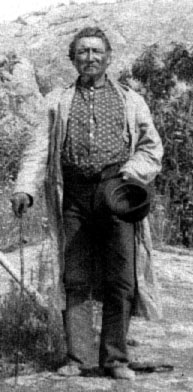
 Lorenzo Towanetiton Lawrence

Lorenzo Alone BW.old

Lorenzo Lawrence, no date. Photo Courtesy Marlin Peterson.


Elden Lawrence Reminiscences http://www.usdakotawar.org/stories/contributors/dr-elden-lawrence/1297

Lorenzo Lawrence Papers, MHS.

Lawrence, Lorenzo. “The Story of Lorenzo Lawrence,” 1895. Dakota Conflict of 1862 Manuscript Collection (M582) MHS.

Lawrence, Lorenzo. Letters to Stephen and Mary Riggs 1863-65. Stephen R. Riggs and Family Papers.

Lawrence, Lorenzo. Transl. by “Tamakochay” [Stephen R. Riggs] “Indian Customs –the Medicine Bag” in the St. Peter (MN) Tribune October 2, 1862 p. 1. Lorenzo Lawrence file, Alan Woolworth Papers, MHS.

“Lorenzo Lawrence, the Citizen Indian’s Story” in the Grant County [SD] Review November 3, 1884.

“Lorenzo Lawrence Dead” in the Grant County [SD] Review April 25 [29?], 1897. Lorenzo Lawrence file, Alan Woolworth Papers, MHS.

Lawrence, Elden The Peace Seekers: Indian Christians and the Dakota Conflict. Sioux Falls, SD: Pine Hill Press, 2005.

Cook, Sydney. Letter to the Editor, “A Good Indian,” the St. Paul Pioneer Press Feb. 10, 1877

DeCamp, Jeannette. “In the Hands of the Sioux” transcript of April 1892 interview in The [Alameda County, California] Call. Brown County Historical Society.

Sweet, Jeannette DeCamp. “Mrs. J.E. De Camp Sweet’s narrative of her captivity in the Sioux outbreak of 1862,” 1894. Collections of the Minnesota Historical Society. St. Paul, Minn: The Pioneer Press Company. p. 354-380.

Richards, Bergmann. “Biographic Notes of ‘Wasicu’ Lorenzo Lawrence, a full Wahpeton,” in Hennepin County History Winter, 1960. p. 7-9. Discusses autobiographical notes located in the Lorenzo Lawrence Papers, MHS.

Manuscript and microfiche sources are available in the Library at the Minnesota Historical Society History Center in St. Paul, Minnesota unless otherwise cited. Printed sources are available through your local library and/or Google Books.

Posted in Lorenzo Lawrence | Leave a comment

Peace Coalition Leaders: Simon Anawangmani

A young man in the front row at the History Center last week asked a perceptive question: “Where can I find a copy of that book?” he said gesturing toward the image of the 1863 edition of A Thrilling Narrative on the screen.

That’s exactly the right question: What are the primary sources on this subject and where can I find them?

By providing a bibliography of primary and key secondary sources on each of the 1862 Peace Coalition leaders I profile in that presentation, I hope to stimulate more research into their stories. First up:

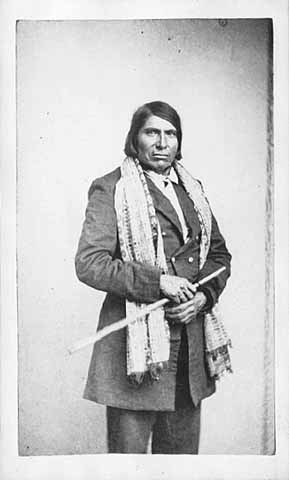
Simon Anawangmani

Anawangmani

Simon Anawangmani, 1858, possibly by photographer Julian Vannerson. usdakotawar.org

Anawangmani, Simon

“A Converted Indian Brave” in the Foreign Missionary 44-45, July 1886, 55-56.

Anawangmani, Simon and Lorenzo Lawrence to Alexander Ramsey. Letter September 2, 1862, in A Thrilling Narrative of Indian Captivity: Dispatches from the Dakota War (2012) Appendix A, 201.

Riggs, Stephen Return, ed. “Simon Anawangmani” in Dakota Grammar, Texts, and Ethnography. Washington: Government Printing Office 1893. 219-223.

Sibley, H.H. to Alexander Ramsey September 11, 1862. Ramsey Gubernatorial Papers. State Archives, MHS.

Williamson, John P. “Simon Anawangmani” and “True Hero of the Dakota Mission” both in The Word Carrier, vol. 20, no. 12, December, 1891. Microfiche, MHS.

Manuscript and microfiche sources are available in the Library at the Minnesota Historical Society History Center in St. Paul, Minnesota. Printed sources are available through your local library and/or Google Books.

Posted in Simon Anawangmani | 1 Comment

Stories of the Dakota Peace Coalition

DSCN4751

Tuesday night at the Minnesota Historical Society’s History Center in St. Paul, I could not have had a more engaged audience for my first presentation of one of my 2013 talks,”Stories of the Dakota Peace Coalition.” Thank you to all of you who attended, and to the Minnesota Historical Society for sponsoring the event!

DSCN4756

As we visited after the talk, I promised I’d post details on a couple of questions here.

Am I presenting this talk again? Yes: My next presentation of “Stories of the Dakota Peace Coalition” will be Sunday March 17 at 2:00 PM sponsored by the Pond Dakota Heritage Society in Bloomington, MN. Location TBA.

Are there any new books you recommend? Yes! Here are some very different books to choose among depending upon your interests.

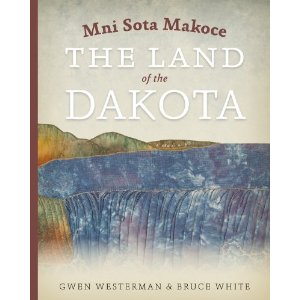
Mni Sota Makoce cover

Mni Sota Makoce by Gwen Westerman (who wrote the forward to the 2012 edition of A Thrilling Narrative) and Bruce White, just announced as a finalist for the Minnesota Book Award, develops in detail the material I only had time to hint at in my opening overview of Dakota people’s relationship to the land.  I mentioned how important of new translations of texts like Mazakutemani’s from the original Dakota manuscript will be to our understanding of history. Mni Sota Makoce contains a great example: Glenn Wasicuna’s translation of the Dakota version of the Treaty of 1851.

North Country Cover

North Country: The Making of Minnesota by Mary Lethert Wingerd is a detailed and nuanced, readable story of multicultural Minnesota in the decades preceding the Dakota War of 1862, lavishly illustrated with color plates compiled by historian Kirsten Delegard. Wingerd develops the Dakota War story in the context of shifting ideas about race and culture, suggesting the war, which unfolds at the end of the book, was the end of a Minnesota we have forgotten existed.

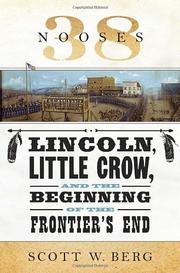
38 Nooses Mankato cover

38 Nooses: Lincoln, Little Crow, and the Beginning of the Frontier’s End by Scott Berg. I mentioned that my first exposure to the Dakota War of 1862 was via Duane Schultz’s 1993 book, Over the Earth I Come. Berg’s 38 Nooses has bumped Schultz’s book off the shelf as the scholarly-researched, compulsively readable story of 1862 for general readers.

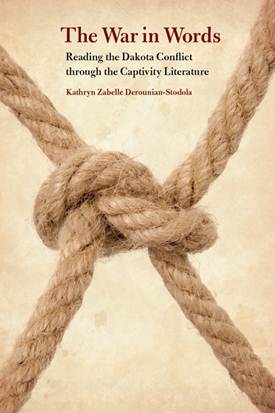
war in words cover

If you are intrigued by the stories of 1862 captivity survivors, my co-editor, Zabelle Stodola’s 2009 book, The War in Words: Reading the U.S. Dakota Conflict Through the Captivity Literature is an outstanding overview of the subject, using the work of twenty narrators, 10 white and 10 Dakota, as examples. Among them, she covers the stories of two Peace Coalition leaders I profiled, Paul Mazakutemani and Lorenzo Lawrence in more detail than I had time to give them.

ATN Cover

And of course  hope I intrigued you to read the 2012 edition of Mary Butler Renville’s A Thrilling Narrative of Indian Captivity: Dispatches from the Dakota War. The “About the Book” tab on the navigation bar at the top of this page will lead you to reviews, excerpts, and other information.

Thanks again for coming!

Posted in A Thrilling Narrative, Books, Dakota Peace Party | Leave a comment

Little Crow Slept Here

Hazlewood Republic MHS

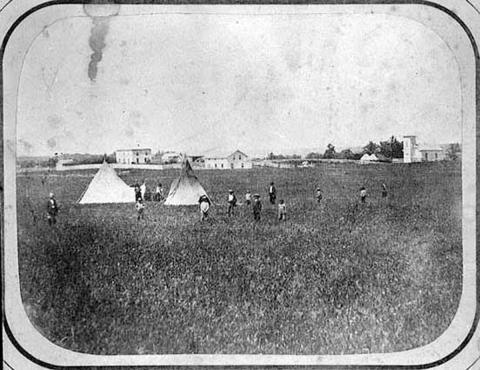
Saturday July 21, 1860, Alfred J. Hill took this photo of the Hazlewood (Hazelwood) Republic on the Upper Sioux Reservation in Minnesota. According to a letter written a few days later by one of the men in the foreground, the photographer’s vantage point was, “on the little mound back of Simon’s.”

Twenty five months later, August 27, 1862, Mdewankanton Chief Little Crow and 2,300 Mdewankanton and Wahpekute Dakotas, with their captives, went into camp, uninvited, on this spot: Simon’s back yard.

Wahpeton Dakota Simon Anawangmani was the President of the Hazlewood Republic. He was also a leader in the war-time Dakota Peace Coalition head-quartered in the mission school boarding house, the two-story building framed by the tipis on the left side of the photo.

Please join me on Tuesday January 29, 2013 at 7:00 PM at the Minnesota Historical Society, for my History Lounge presentation on some of the most unfamiliar stories of the Dakota War of 1862: the stories of the Dakotas who allied for peace.

Image Credit: the Minesota Historical Society, usdakotawar.org

Posted in A Thrilling Narrative, Dakota Peace Party | Leave a comment

The Church Wrestles with Commemoration

RTB38TearsOfBishopWhipple2009_500

“The 38 Tears of Bishop Whipple” by Robert Two-Bears

*****

On April 9,1863, John and Mary Renville closed the final chapter in their Dakota War narrative, “The Indian Captives: Leaves from a Journal,” with a prophetic word:

“May God guide the people of Minnesota, who have suffered deeply, to act wisely in the present instance, and not drive even the friendly Indians to homeless desperation by driving or sending them among the warlike tribes, to dwell upon their wrongs and talk over the injuries inflicted upon them by those they supposed their friends, until the warriors will not heed the counsel of the older ones, and rise in one mass, with all the tribes, and commence a war more terrible than has yet been recorded in history, and thus give the advantage to our Southern rebels, by a two-fold war. And may those who go among the Indians, either for the purpose of trade, or to transact Government business, learn wisdom from the past and lay broad the platform of Justice, Morality and Truth.” (A Thrilling Narrative of Indian Captivity: Dispatches from the Dakota War, 2012, p. 188)

The Renville’s warning of a pan-Indian war did not come true–although nearly three decades of protracted Indian wars in the west, did.

But their picture of homeless, desperate Dakota people, driven out of Minnesota and into the west, “to dwell upon their wrongs and talk over the injuries inflicted upon them,” as it turns out, was apt.

And they rightly called out the responsibility of their “christian” nation, the United States, to heed the Bible’s injunctions for social engagement with the poor and the oppressed from a platform of, “Morality, Justice, and Truth.”

Tragically, Minnesota clergy who publicly wrestled with questions of social justice in the immediate wake of the Dakota War were few: Presbyterian missionary Dr. Thomas S. Williamson and his son, the Rev. John P. Williamson; and Episcopalian Bishop Henry B. Whipple and his protege, the Rev. Samuel B. Hinman.

We need only read their 1862 diaries and sermons to know that many more clergy were shamefully indistinguishable from their parishioners in the race hatred they directed at Dakota people in the wake of the war.

It has been encouraging this year to see some branches of the Church deliberately engaging in dialogue about the Dakota War of 1862. The short review below is not comprehensive. But someday, when we have reached a point where we can reflect on 2012-2013, stories like these will be a starting place for examining the question, “One hundred and fifty years later, how did communities of faith respond to commemorate the tragedies of 1862?”

If you know of links that belong on this list, please send them to me and I will add them.

Westminister Presbyterian Church, Minneapolis, Minnesota

See a series of December 2012 blog posts by Westminister member Duane W. Krohnke, starting here.

The United Methodist Church

Mark Tooley, President of the Institute on Religion and Democracy, lays out his analysis here in response to Andrew Gerns’s blog post below.

The Episcopal Church Diocese of Washington D.C.

Andrew Gerns Remembering the Martyrs of Mankato

Robert Two-Bears Thirty-Eight Tears

*****

Image Credit: “The 38 Tears of Bishop Whipple” by Robert Two-Bears, Oglala Lakota oyate, 2009

Posted in Commemorating Controversy | Leave a comment

Where Are We Going? A Reflection on the “Genocide” Resolutions

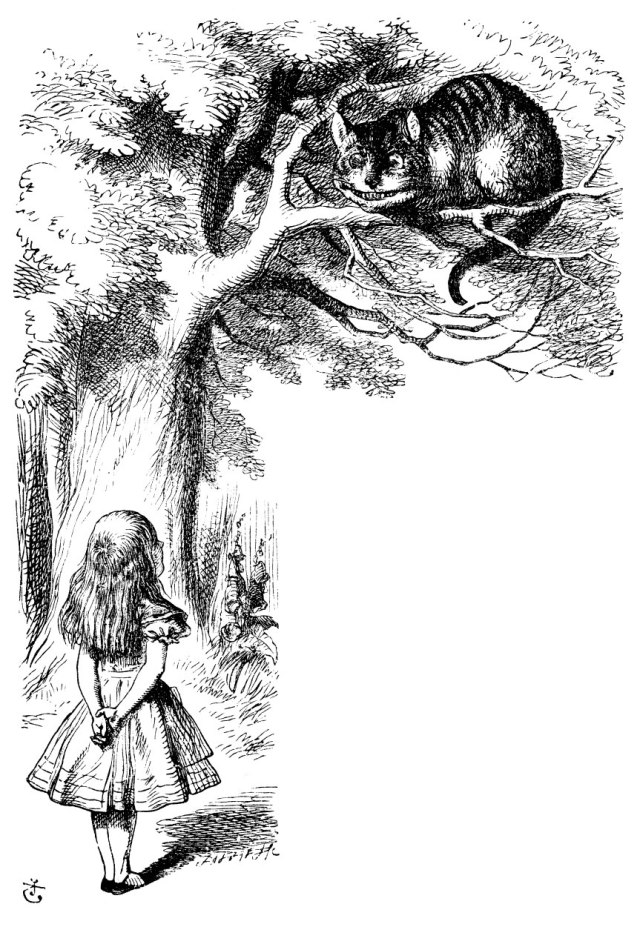
Alice and the Chestshire Cat

“Would you tell me which way I ought to go from here?” asked Alice.

“That depends a good deal on where you want to get,” said the Cat.

“I really don’t care where,” replied Alice.

“Then it doesn’t much matter which way you go,” said the Cat.

Lewis Carroll, Alice’s Adventures in Wonderland (1865)

*****

Three weeks ago, I mused that we are generally unaware of the ways that distortions like racism have invisibly warped and continue to warp history. These distortions have real-world consequences. Giving an example, I wrote, “Politicians advance solemn declarations and advise revising laws based in their good faith understanding that real insights have been gained by re-imagining the past…”

At the time, I had other politicians and declarations in mind; I did not know that the Minneapolis City council was preparing to vote the next day on a resolution declaring December 26, 2012 through December 26, 2013, “The Year of Dakota,” and calling for real world events like, “forums, events, symposia, conferences and workshops….” to educate the public about the content of the resolutions.

You can read the text of the declaration in this blog post by Minneapolis Second Ward Council Member, Cam Gordon, who thoughtfully credited Chris Mato Nunpa for sponsoring the resolution. It appears on the December 14, 2012 Council meeting video here starting at 10:20.

Last week, the St. Paul City Council passed a similar resolution  on January 9, 2013, which you can watch here starting at 5:00.

Speaking generically, another year to dig deeper into the many stories of 1862 is a great idea. But the “Whereas”es in these particular resolutions got me.  “Whereas” means “taking into consideration the fact that…” In other words, it signals that the clauses following the “whereas” are factual.

Factual to whom? That’s the rub.

This 150th commemorative year, I have been encouraged  that in public and in private, Dakota and non-Dakota speakers alike acknowledge that there are many perspectives on the past, and that there is much to be gained from sharing and listening to multiple points of view.

That is a main theme emerging from Truth and Reconciliation efforts in Northern Ireland and South Africa: honoring the memories of multiple, diverse, communities combats the extreme nationalism that leads some to commit genocide against others who do not share their point of view.

But the 1862 resolutions passed by the Minneapolis and St. Paul City Councils are predicated on a singular re-visioning of the past. “Whereas” leaves no room for other, equally necessary, stories; it excludes them as untrue.

Despite the expressed hope of members in both councils that these resolutions will generate healing and reconciliation, international Truth and Reconciliation efforts suggest these resolutions may have the opposite effect.

Privileging any single story leads to division, even violence. Not healing.

John D. Brewer has helped facilitate the Truth and Reconciliation process in Northern Ireland. I have found food for thought and suggestions for meaningful action in Brewer’s article, “Memory, Truth, and Victimhood in Post Trauma Societies” (2006), available for free in the “selected papers available for download” list toward the bottom of the page linked in his name.

7,000 word papers on social psychology are not every reader’s cup of tea. But I hope to entice some of you to read it by excerpting below a passage that illuminates what these resolutions for what they are, even if the council members did not recognize it: a road map to selective nationalism.

Do we want to go there? Again?

Remember the resolutions nationalism birthed in 1862 and 1863? “Kill the whites!” and “Annihilate the Sioux!”

Nation-building has warped this story since 1862. 150 years is long enough.

*****

Excerpt from John D. Brewer, “Memory, Truth and Victimhood in Post-trauma Societies” in G. Delanty and K. Kumar, The Sage Handbook of Nations and Nationalism (London, 2006). Excerpt from pages 4-6 of the text linked here.

“Nations and memory are indivisible. Misztal refers to ‘communities of memory’ (2003: 155), in that memories help to mark social boundaries and define collective identity.  These groups – families, ethnic, racial or religious communities, whole nations or global diaspora networks – are in part constituted by memory – that is, they are made up as units in part from the sense of shared past and common journeying that memories furnish – but these communities also help to constitute memory, in that they socialize us into what should be remembered and what forgotten.  It is for this reason that there is such a strong link between memory and nationalism.

            There are several dimensions to this relationship. Social memories are often linked to features of nationhood, to the physical and symbolic places, landscapes, cultural and historical sites and events that constitute the nation. We have personal memories of places and landscapes that link us collectively to the nation. Nations need a narrative by which to construct a sense of nationhood – a historical narrative of the past, a sense of the travails and triumphs on the journey to nationhood, a sense of collective identity and solidarity and so on – all of which memories help to supply.  Nations require a sense of their past for reasons of social cohesion, memories of which are embodied in acts of public commemoration and in public memorials, in public images, texts, photographs and rituals that socialize us in what to remember.  Nationhood also requires us to forget. Deliberate collective amnesia or denial helps in nation building since it excludes from the national narrative items that in the present here-and-now are problematic. These items might be anything that prevents the construction of the nation as an imagined community and which blur the social boundaries that mark the nation or which disrupt the formation of a common identity. They might also be any items that suggest that the members of the nation do not share a common destiny. Nations need to forget things from the past that dispute a common journeying to nationhood amongst its peoples and things that suggest a parting of the ways in the future….

            The link between memory and communal violence is clear from this summary (for a fuller account see Ray, 2000). Social memory is one of the processes that people go to war about and memories of the violence can keep the enmity going.  A comment on each is appropriate. Memory is often deeply embedded in the conflict precisely because memory defines the boundaries between the included and excluded groups, it shapes the identity of one’s own group and that of the marginalized other. The state or the powerful dominant community can manipulate memories – and history generally – to create an enemy and justify violence against them. Memories help to construct racial separateness; they can divide people into separate and distinct imagined communities. Public acts of remembrance or rituals of commemoration of past wars, usually done in honour of the victor who gets to write history from their point of view, can keep alive old divisions and continually reinforce the cultural inferiority of the vanquished and maintain some ethnic group as despised; and the vanquished can have their own ‘sad celebrations’ to keep alive their servitude and defeat….

            Memories can also be used to develop a sense of vengeful justice, as Ray puts it (1999), in which some group feels ‘good cause’ to attack another to avenge some supposed or real historical affront. Ray explores how senses of the past were used in the Balkans as part of the genocide that befell the collapse of Yugoslavia because some groups had a distorted notion of themselves as having ethnically pure homelands in the past, which they wished to recreate. This analysis has much broader application. Notions of ‘historic homelands’ often lead to contested borders (Robin and Strath, 2003) and thus to violence in the name of justice, revenge, loss or restoration. For these and many other reasons, memory is implicated in war….”
Posted in Commemorating Controversy, Truth and Reconcilliation, truth-telling | 1 Comment

To Be or Not To Be

guest post by Lois Glewwe

Five days before their scheduled execution, 39 imprisoned, condemned Dakota men in Mankato, Minnesota, were asked to make a decision  – to be baptized or not,  and whether to be baptized as a Roman Catholic or as a Presbyterian.

Unfortunately, we may never know what decision was made by the men because the historical sources which refer to the baptisms do not agree.

On Monday, December 22, the 39 condemned men were separated from the other prisoners. At 3:00 p.m. that afternoon, Dr. Thomas Williamson, Rev. Stephen Riggs, Father Sommereisen and Father Augustin Ravoux were all at the Leach Building where the 39 had been moved.

Colonel Stephen Miller, who had been with the prisoners since early November when they were marched from the Lower Sioux Agency to Mankato, had the execution order read to the men in English. Then Stephen Riggs explained what the letter from President Abraham Lincoln said in Dakota. Colonel Miller advised the prisoners to choose a spiritual advisor, either a Catholic or a Protestant, indicating that their advisors would be allowed to minister to them until the time of the execution.

Here’s one version of what happened next, from the Mankato Ledger of March 22, 1916. Major Joseph R. Brown was on hand and made two lists. Twenty-four of the men had their names ascribed on the list for the “black robes” including three mixed-blood Dakota under age twenty who were already Catholics but who had not made their first communion. About a dozen more had their names put on the Protestant list.

But on December 23, 1862, Stephen Riggs wrote to his “Dear Ones at Home”:

“They were then told by the Colonel that man could not help them, and he recommended them to seek the mercy of God through Jesus Christ, that they might select their spiritual advisor. Brown went in afterward and asked each one whom he chose. Twenty-four selected Ravoux, the Catholic Priest, and fifteen chose doctor Williamson.”

On Christmas Day, December 25, Riggs added a postscript:

“Dr. W. came back [to Mankato] last night. The Priest baptized all of his flock, and yesterday they of the Doctor’s wanted to know if I was not going to do the same. I told them the doctor would be here. The catholic religion is better for men in such circumstances than the Protestant. That is pretty much satisfied with a form, and Indians, even under the death pressure will comply with a form eagerly. Poor men—I have tried to point them to Jesus Christ. Perhaps someone will look to and live.”

According to the Ledger story, Father Ravoux rose at 6 a.m. on Christmas morning and gave communion to the three young Dakota men who were already Catholics. He left the prison until 8 a.m. and then at 2 p.m. he and Father Sommereisen returned and baptized thirty of the prisoners. Ravoux also gave conditional baptism to one other who had been baptized four or five days earlier as a Presbyterian.

This man, who apparently covered all of his bases, was Tatemina, who ended up being pardoned at the minute.

The reporter says that of the thirty-eight, thirty-three chose Catholic and one refused Baptism. Sure enough, the official roster of baptisms at Saints Peter and Paul Roman Catholic Church in Mankato, Minnesota, includes not only the names of thirty prisoners, it also adds the English or Christian name that Ravoux assigned to each man up on their baptism. Above the list of their names is written: “The following list of names are the names of the Sioux Indians that were baptized on Christmas Day before their execution at Mankato 1862.” At the end of the list is entered: Very Rev. A. Ravoux baptized and Rev. Sommereisen Assistant.”

No comparable list of any Protestant baptisms appears to exist and years later, the newspaper of the Dakota Missions, Iape Oaye, reported in its July 1873 issue that thirty of the thirty-eight were baptized; five by Williamson; 25 by Father Ravoux.

Whether it was twenty-four, twenty-five, thirty, or thirty-three Catholic baptisms, it is clear that the majority of the men decided that the “black robes” had the best offer. Even Father Ravoux himself wondered at their choice. According to Brian Ojanpa, writing in the Mankato Free Press on December 28, 2002, Ravoux wrote to the Bishop in St. Paul, Minnesota that “I was really surprised that the majority had declared themselves to us, especially after Mr. Williamson and Mr. Riggs had mastered the Sioux language and had spent 25 years among them.”

Both Riggs and Williamson had actually spent more than 25 years with the Dakota but more significantly, Riggs had been with the prisoners when they were brought to Mankato and Thomas Williamson spent weeks with them in the prison. His sister, Jane Williamson, was instrumental in receiving permission for the men to have paper and pencils so they could write to their families being held at Fort Snelling. Jane had also brought them books and hymnals which many received with thanks. Some if not all of the prisoners most likely had learned something of the Dakota alphabet or even spent time in mission schools learning to read and write their own language.

By comparison, Father Ravoux received permission from Henry Sibley to visit the prisoners and met the men for the first time on December 19, 1862.

Mary Wingerd, in her book North Country: The Making of Minnesota, (University of Minnesota Press, Minneapolis, MN, 2010, p. 325) suggests that perhaps the Dakota no longer trusted Williamson because of his affiliation with Riggs.  Riggs’ work with the military commission where the accused had to rely on him to translate their testimony correctly into English, led to 303 of them being sentenced to death.

Another explanation may be discerned from Stephen Riggs’ letter to his wife cited above. He says that Thomas Williamson felt obliged to go home, presumably on December 23. He also says that the condemned men asked Riggs to baptize them but he encouraged them to wait for Williamson to return, which he did on Christmas Eve. But presumably he hadn’t shown up to baptize the men by the time Father Ravoux and Father Sommereisen had already arrived. It could be that the men feared they might run out of time and that being baptized by Catholics was better than no baptism at all.

As for the fact that no list has been found of the men who were baptized by Dr. Williamson, the explanation could be a very simple one. Father Ravoux was baptizing the men into the roles of the Catholic Church where their names were immortalized in eternity by that act. Dr. Williamson was not a pastor of a church, the Dakota mission was in shambles and the men were not, after all, going to live to be members of the Presbyterian Church. So the Protestant act of baptism was significant only to their own sense of spiritual well-being.

Whatever choice the prisoners made in those last fateful hours of their lives, Williamson, Riggs and Ravoux were with the men on the morning of December 26 when their iron shackles were removed, their arms tied behind their backs and white muslin hoods placed on their heads ready to be pulled down over the faces as the nooses were placed around their necks.

Ravoux’s letter to the Bishop reported: “While the executioner put a rope around each neck, I remained on my knees and hoped with all my heart for God’s mercy.”

Historian Lois Glewwe blogs at Dakota Soul Sisters.

Posted in 1862 Dakota War trials | 1 Comment

30 + 12 = 42, not 39

I’m working on my Peace Colaition presentation at MHS January 29, but can’t escape the stories of the 39 Dakota men condemned to death in 1862.

A new friend I met in Redwood falls this summer, Molly Schweinfurter, just mailed me copies of a source I’d never seen in primary form: the Dakota and baptismal names of the condemned men who were baptized Catholic as recorded in the baptismal register from Saints Peter and Paul Catholic Church in Mankato, MN.

The first thing that struck me was the cleric’s difficult Germanic script. Then I tallied the names on the list: 30. The received story tells us that a dozen men were baptized Protestant. 30+ 12 = 42, not 39. How could there be more baptisms than there were condemned men?

I could not find a list of the Protestant baptisms in my files, so asked Lois Glewwe (who has an indexing system that makes me jealous) if she’d ever seen such a list. Lois had not. But she sent back this summary of what she found on the subject.

With her permission, I’m posting it here while I continue to work on deciphering Valentin Sommereisen’s handwriting. My goal is to post a transcription plus page images of the list of Dakota men baptized Catholic less than 48 hours before their execution December 26, 1862.

Posted in 1862 Dakota War trials, Primary Sources | Leave a comment

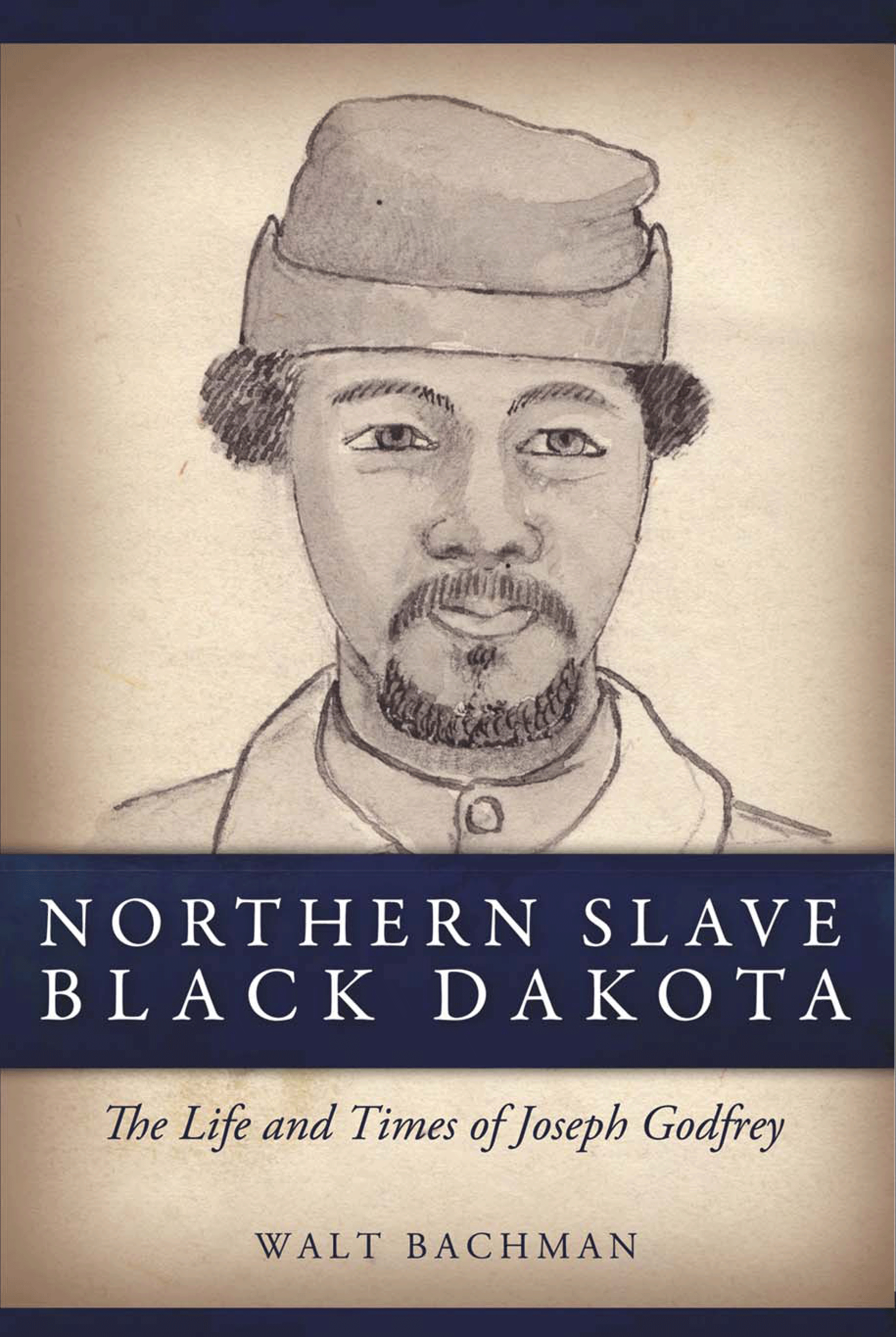
Northern Slaves: How the U.S. Army Brought Slavery to Minnesota

Northern-Slave-postcard-1

Northern-Slave-postcard-2-2

Posted in Joseph Godfrey, Slavery in Free states, Walt Bachman | Leave a comment